








Mundra Port Operations Resume After 13-Day Strike: What It Means for Adani Ports and India’s Logistics Infrastructure
Mundra Port, operated by Adani Ports and Special Economic Zone Ltd. (APSEZ), has resumed normal operations after a 13-day strike by empty-container yard operators was called off on September 10,...

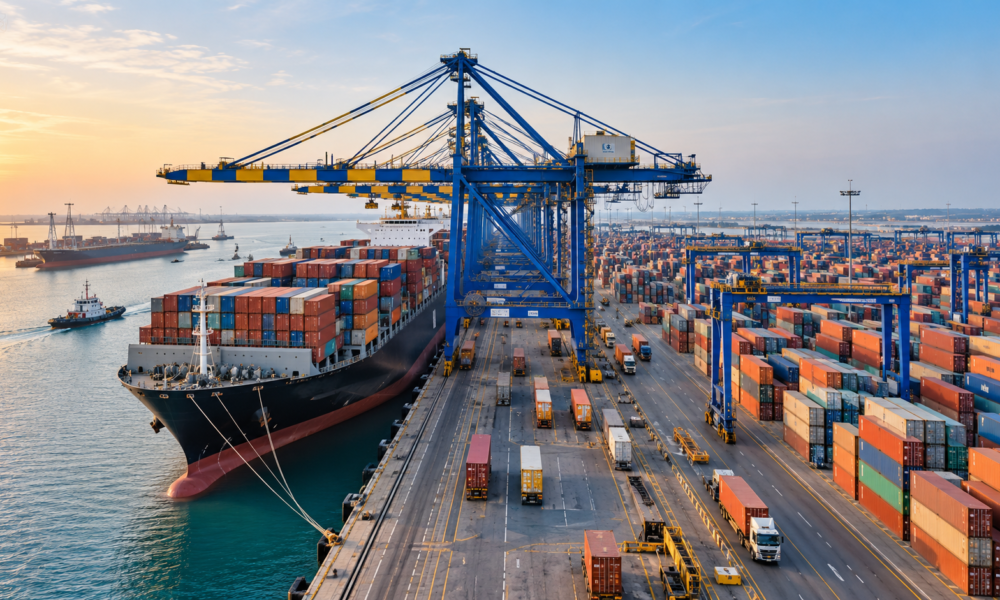
Mundra Port, operated by Adani Ports and Special Economic Zone Ltd. (APSEZ), has resumed normal operations after a 13-day strike by empty-container yard operators was called off on September 10, bringing relief to transporters, freight forwarders, shipping lines and other stakeholders dependent on the port’s logistics ecosystem.
The disruption was linked to APSEZ’s decision to freeze the codes of empty-container yards located outside the port and Special Economic Zone (SEZ) limits. The company had said the move was intended to reduce road congestion, improve vehicle turnaround times, strengthen safety and security, and address the alleged misuse of empty-depot codes.
The Mundra Empty Container Yards & Allied Services Provider Association (MECYASA) announced that operations would resume with immediate effect. According to industry representatives, operations restarted from 10 a.m. on September 10, allowing transporters, empty depots, freight forwarders and other stakeholders to return to regular activity.
The dispute had wider implications for the port’s supply-chain network. From the intervening night of September 1-2, the Kandla Mundra Container Transport Association (KMCTA) also stopped picking up empty containers in support of the empty-yard operators. Industry representatives said the disruption resulted in losses running into crores of rupees, adding pressure on an already challenged logistics environment.
Several rounds of discussions were held to resolve the issue. A key meeting took place in Mumbai on September 7 under the chairmanship of the Director General of Maritime Administration, while another meeting involving MECYASA representatives, Gujarat Chief Minister Bhupendra Patel and Deputy Chief Minister Harsh Sanghvi was reportedly held in Gandhinagar before the strike was called off.
The episode highlights the importance of empty-container management in modern port infrastructure. While loaded containers are central to international trade, empty containers also need to be stored, repositioned and moved efficiently between depots, transporters and terminals. Bottlenecks in this part of the chain can quickly affect trucking, freight forwarding, shipping schedules and cargo evacuation.
Mundra is particularly significant because of its scale. APSEZ says Mundra handles nearly 35% of India’s container trade and is the country’s largest container-handling port. Around 1.6 million TEUs of empty containers are estimated to be handled at Mundra annually, underlining the importance of efficient empty-container operations to the wider logistics network.
The port has four container terminals with a combined capacity of 7.5 million TEUs and serves as a major gateway for cargo clusters in North and Northwest India. Its infrastructure includes multimodal connectivity and double-stack rail operations designed to facilitate faster movement of containers into the hinterland.
The latest development comes as APSEZ continues to expand its integrated transport infrastructure. In FY26, the company handled 500.8 million metric tonnes of cargo, while its all-India container market share stood at 45.5%. APSEZ’s logistics revenue also rose 55% year-on-year to ₹4,478 crore during the year.
APSEZ has also outlined a major capacity expansion programme. As of June 30, 2026, domestic port capacity stood at 653 million tonnes, with the company targeting 1,000 million tonnes of domestic capacity by December 2030.
With the strike now called off, the immediate priority will be restoring the smooth movement of empty containers and clearing any operational backlog created during the disruption. For Mundra, the episode also underlines a broader infrastructure lesson: port efficiency depends not only on berths and cranes, but on the entire network of roads, railways, depots, trucks, terminals and digital systems surrounding the port.
As Mundra resumes normal operations, the resolution could help restore stability across the regional logistics chain while highlighting the need for coordination between port operators and the wider stakeholder ecosystem.









No Comment! Be the first one.