





Noida International Airport first commercial flight
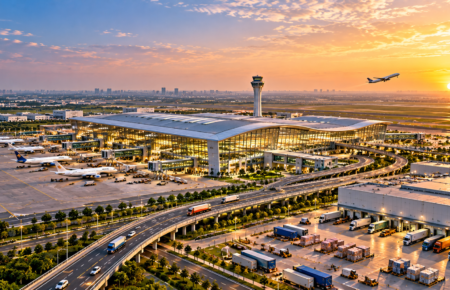
Noida International Airport first commercial flight landed on Monday morning, marking a historic moment not just for aviation but also for the wider network of transport infrastructure being...

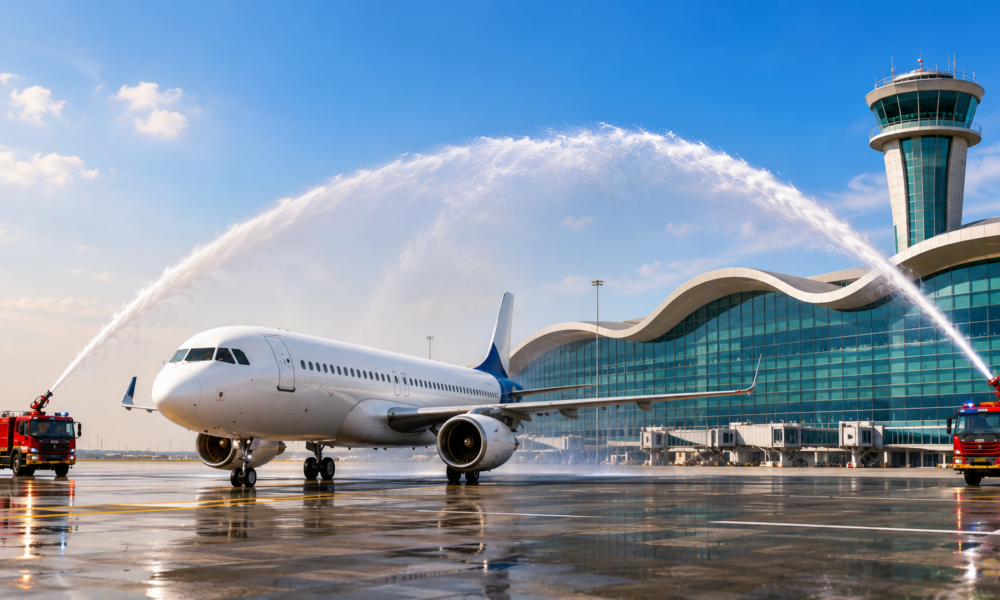
Noida International Airport first commercial flight landed on Monday morning, marking a historic moment not just for aviation but also for the wider network of transport infrastructure being developed around the airport.
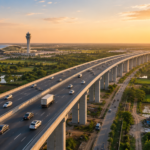
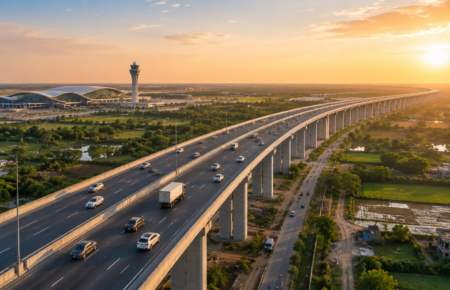
A major focus is now on improving access to the airport from the NCR region to strengthen connectivity. A 31.425 km expressway project worth ₹2,360 crore is under construction to link the airport with the DND-Faridabad Bypass in Haryana and the Delhi-Mumbai Expressway.
The fully access-controlled six-lane corridor will run from Chandawali village in Faridabad to near Dayanapur in Uttar Pradesh’s Gautam Buddha Nagar district. The project will also connect to the Yamuna Expressway and the Eastern Peripheral Expressway, creating a seamless road network for travellers and logistics movement.
The airport can then be directly accessed by commuters from South Delhi, Faridabad, and Gurugram once the project is completed.
The corridor includes four major interchanges at the DND, Sohna Highway, Eastern Peripheral Expressway, and Yamuna Expressway, along with a Dedicated Freight Corridor (DFC) crossing.
Many experts view this infrastructure as a booster for economic development across western Uttar Pradesh and the Delhi-NCR region.
An aerotropolis is a metropolitan region whose infrastructure, economy, and land use are centred around an airport and which eventually functions as a hub for aviation-dependent businesses and residential development.
According to Union Civil Aviation Minister K. Rammohan Naidu, the facility is expected to evolve beyond a transit hub into an international aerotropolis, attracting industries and generating economic activity in the region.
The Yamuna Expressway Industrial Development Authority (YEIDA) has a master plan set for 2041 and wants to create such an aerotropolis in the region to gain from the investments and employment opportunities generated by the project.
The airport recently received its first ceremonial water cannon salute. Prime Minister Narendra Modi laid its foundation stone in November 2021, and the airport was inaugurated on March 28, 2026.
With an estimated cost of ₹11,200 crore, the project has been developed under the public-private partnership model, with the first phase of the airport projected to handle a capacity of 12 million passengers annually.
The capacity is planned to increase to 70 million passengers per annum as future phases are completed.
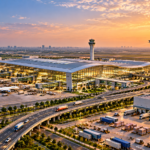
The airport currently features an astonishing 3,900-metre runway, equipped with an Instrument Landing System and advanced airfield lighting, enabling round-the-clock, all-weather operations.
According to YEIDA, the airport is planned to expand to six runways and cover nearly 7,200 acres, making it one of the country’s largest aviation projects ever.
It is also expected that the airport will support industrial, logistical, and commercial growth across the region as it eases pressure on Delhi’s Indira Gandhi International Airport.






No Comment! Be the first one.