








Cabinet Clears ₹9,450 Crore Railway Expansion Across Four States
The Union Cabinet has approved four railway multitracking projects worth about ₹9,450 crore across West Bengal, Odisha, Andhra Pradesh and Tamil Nadu, adding around 410 km to the Indian Railways...

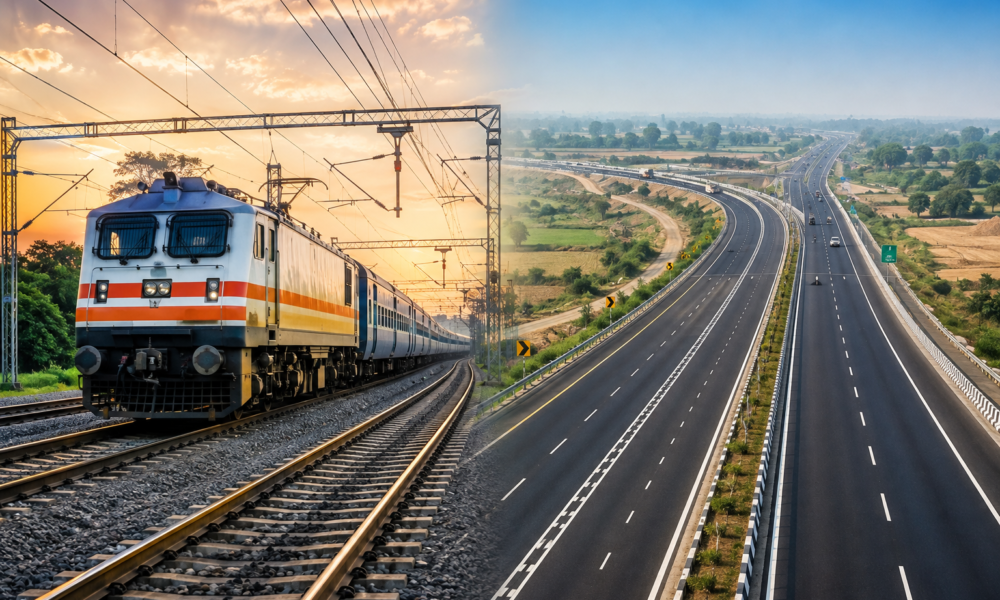
The Union Cabinet has approved four railway multitracking projects worth about ₹9,450 crore across West Bengal, Odisha, Andhra Pradesh and Tamil Nadu, adding around 410 km to the Indian Railways network.
The projects, approved by the Cabinet Committee on Economic Affairs, will cover eight districts and are expected to improve passenger movement, freight capacity and connectivity across several important industrial and economic corridors. The projects are planned under the PM Gati Shakti National Master Plan, which focuses on integrating different modes of transport and improving logistics efficiency.
The approved works include the 173-km fourth line between Kharagpur and Bhadrak, covering parts of West Bengal and Odisha. A 75-km fourth line between Bhadrak and Haridaspur in Odisha has also received approval.
Another major project involves the Gummidipundi-Gudur section, where 90 km of third and fourth lines will be developed across Andhra Pradesh and Tamil Nadu. The fourth project covers the Cuttack-Paradeep section in Odisha, where 72 km of third and fourth lines will be added.
Together, the four projects are expected to improve rail capacity on routes that carry large volumes of passengers as well as industrial goods. The government said the additional lines will help reduce congestion and improve the reliability of railway operations.
The projects will also strengthen connectivity for freight movement. The affected routes are important for transporting commodities including coal, iron ore, cement, iron and steel, containers, automobiles and food grains.
According to the government, the additional capacity could support around 76 million tonnes of extra freight traffic each year. This is expected to help reduce pressure on road transport while improving the movement of goods between production centres, industrial areas and markets.
The railway expansion is also expected to have an environmental impact. The government estimates that the projects could reduce oil imports by around 130 million litres and lower carbon dioxide emissions by about 650 million kg. The reduction in emissions is equivalent, according to the government, to the environmental benefit of planting around 26 million trees.
The projects are expected to improve access to several tourist destinations as well. These include Bhitarkanika National Park, Kuldiha Wildlife Sanctuary, Chandipur Beach, Pulicat Lake, Nelapattu Bird Sanctuary and a number of religious and heritage sites in Odisha, West Bengal, Andhra Pradesh and Tamil Nadu.
Around 6,448 villages with a combined population of approximately 60 lakh people are expected to gain better rail connectivity from the projects.
The expansion will also support the wider logistics network by increasing railway capacity on routes that connect ports, industrial centres and regional markets. For businesses, additional railway capacity can mean more reliable freight movement and potentially lower transportation costs.
The projects are scheduled to be completed by 2030-31. Their implementation will form part of the government’s wider effort to increase railway capacity and address congestion on busy routes.
The latest approvals add another significant investment to India’s ongoing railway infrastructure expansion. With passenger and freight demand continuing to grow, multitracking is increasingly being used to separate traffic flows, improve operational flexibility and create additional capacity on heavily used routes.
For the regions covered by these four projects, the impact will extend beyond new railway tracks. Better connectivity could support industry, tourism, agriculture and logistics while making movement of people and goods more efficient.







No Comment! Be the first one.