








Mega Expressway Nears Completion After Kota Tunnel – Reach Delhi to Mumbai in Just 12 Hours
One of India’s biggest and most ambitious road infrastructure projects, the Delhi-Mumbai Expressway, is now on the verge of becoming fully operational. The expressway is expected to open to...

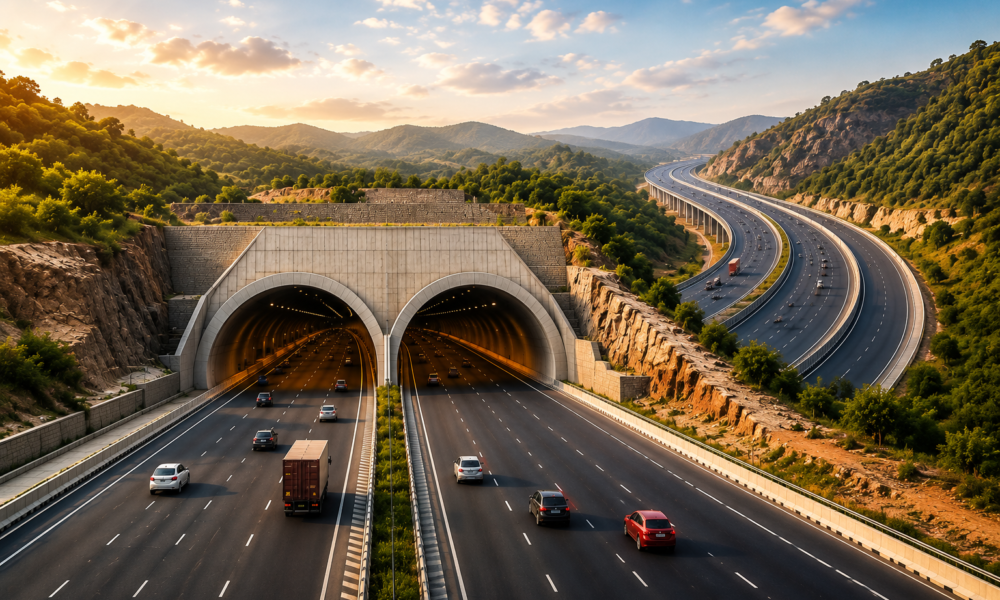
One of India’s biggest and most ambitious road infrastructure projects, the Delhi-Mumbai Expressway, is now on the verge of becoming fully operational.
The expressway is expected to open to traffic anytime after 20 June following the completion of a crucial 4.9-kilometre tunnel near Kota in Rajasthan.
The ₹1 lakh crore Delhi-Mumbai Expressway project is nearing full completion with the construction of the eight-lane, 4.9-kilometre tunnel. The entire 1,386-kilometre corridor is expected to become operational after 20 June, significantly reducing travel time between Delhi and Mumbai to around 12 hours while boosting trade and logistics.
The mega project, which was launched in 2019, is expected to transform passenger and freight movement between India’s two largest economic hubs. Once operational, the expressway is expected to cut travel time between Delhi and Mumbai by half and improve connectivity across several states through which the corridor passes.
The completion of the 4.9-kilometre tunnel near Kota, Rajasthan, marks the final stage in the construction of the nearly 1,400-kilometre Delhi-Mumbai corridor. Officials say that with this crucial section now complete, the project has entered its final phase before opening for uninterrupted travel.
The full commissioning of the project was delayed due to a few pending sections, although a large portion of the expressway connecting Delhi and Gujarat is already operational.
The delay was mainly attributed to land acquisition issues and work on technically challenging stretches. The final missing link has now been completed with the construction of the Kota tunnel.
Why Is the Kota Tunnel Receiving So Much Attention?
Many infrastructure experts have described the tunnel as a landmark achievement. The newly completed tunnel is not just another stretch of road. The eight-lane tunnel passes beneath the Mukundra Hills Tiger Reserve in Rajasthan, making it one of the rare infrastructure projects that minimises disturbance to wildlife.
It is the first eight-lane highway tunnel of its kind in India. The tunnel has been designed to carry high-speed traffic while preserving the ecological environment above ground.
The movement of wildlife has been carefully protected, as engineers avoided constructing a longer route through the hilly terrain and instead opted to build an underground corridor.
The tunnel is also expected to reduce travel time significantly and remove one of the major bottlenecks along the expressway.
Once the entire route becomes operational, commuters are expected to cover the distance between Delhi and Mumbai in around 12 hours. By comparison, the journey currently takes more than 24 hours by road.
The shorter travel time is expected to make long-distance road transport far more efficient and convenient for both private travellers and commercial vehicles.
Apart from benefiting regular travellers, the Delhi-Mumbai Expressway is expected to have a major impact on India’s economy by reducing logistics and transportation costs.
The corridor will help businesses save both time and fuel by significantly improving the movement of goods between key industrial and commercial centres.
Faster cargo movement could also strengthen supply chains and support manufacturing and export activities.
The expressway connects several major states, including Delhi, Haryana, Rajasthan, Madhya Pradesh, Gujarat and Maharashtra. This enhanced connectivity is expected to encourage economic development along the route and create new opportunities for industries, tourism and regional trade.
The Mega ₹1 Lakh Crore Infrastructure Project
The Delhi-Mumbai Expressway is one of the largest infrastructure projects undertaken by the National Highways Authority of India (NHAI). With an investment of ₹1 lakh crore, the project has been regarded as a major step towards modernising India’s road infrastructure since its launch in 2019.
The corridor has been built to support high-speed travel and features advanced safety systems, along with access-controlled entry and exit points, making it one of India’s most significant transport infrastructure projects.








No Comment! Be the first one.