








Delhi data centre fire raises concerns over resilience and disaster recovery
A fire at the STT Global Data Centres facility in Delhi has raised fresh concerns about the resilience of India’s rapidly expanding digital infrastructure. The blaze damaged part of the data...

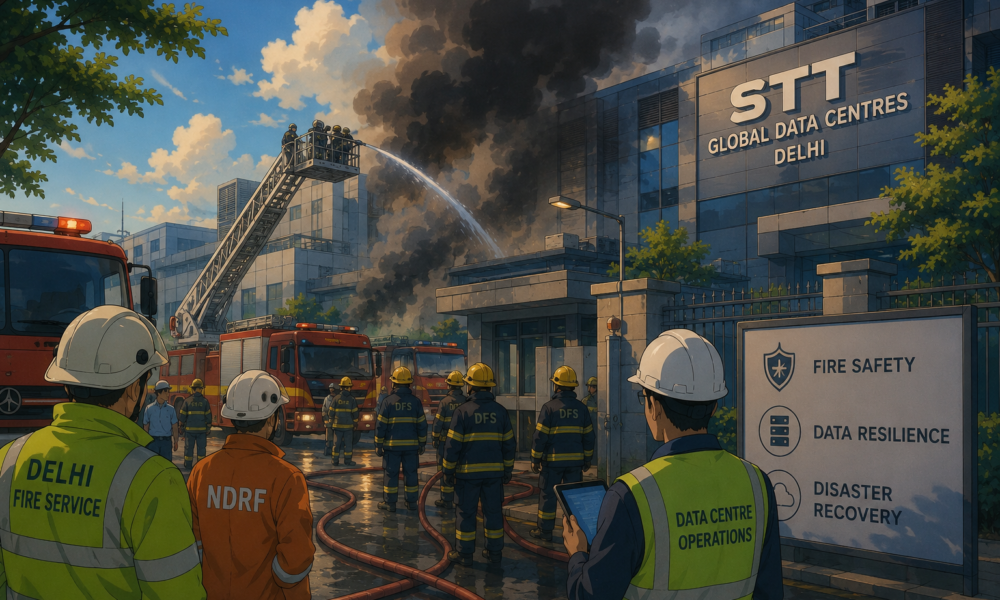
A fire at the STT Global Data Centres facility in Delhi has raised fresh concerns about the resilience of India’s rapidly expanding digital infrastructure. The blaze damaged part of the data centre, while emergency teams responded quickly and brought the fire under control. An investigation is currently underway to determine the exact cause of the incident.
The fire disrupted the operations of several businesses that rely on the facility. Google Cloud reported network issues, while other companies experienced slower or interrupted online services. The incident highlighted how a single disruption at a major data centre can affect multiple businesses at the same time.
Some companies have also expressed concerns about the possible loss of important business data. Data centres store and process massive volumes of digital information used by banks, e-commerce platforms, telecom companies, government departments and AI services. Any disruption to these facilities can have a wide impact across industries.
The incident has also raised several important questions. Experts are asking why the fire caused such widespread disruption, whether backup systems functioned as intended, whether the damage could have been minimised, and whether businesses had adequate disaster recovery plans in place.
Modern data centres are equipped with multiple safety measures, including fire detection systems, fire suppression systems, backup power supplies, battery monitoring systems and emergency response plans. However, the Delhi incident has prompted fresh discussions about whether these safeguards are sufficient as facilities become larger and more complex.
India has emerged as one of the fastest-growing data centre markets, driven by increasing demand for artificial intelligence, cloud computing and digital services. As investment in digital infrastructure continues to grow, operators are expected to place greater emphasis on safety, resilience and business continuity.
The incident could also lead to tighter regulatory oversight. The government may review existing fire safety standards, while data centre operators could face stricter inspections and stronger disaster recovery requirements. New safety guidelines for critical digital infrastructure may also be introduced.
The biggest takeaway from the incident is that expanding data centre capacity alone is not enough. Facilities must also be designed to remain safe, reliable and resilient during emergencies. Protecting customer data, ensuring uninterrupted services and maintaining robust backup systems should remain top priorities for operators.
Industry experts believe the incident will encourage operators across India to invest more in resilience, disaster recovery planning and stronger safety infrastructure as the country’s digital economy continues to expand.










No Comment! Be the first one.