






Mumbai Metro Line 14 gets fresh review after IIT Bombay flags gaps in project report
Mumbai’s ambitious Metro Line 14 project has entered a fresh planning phase after IIT Bombay identified shortcomings in its earlier Detailed Project Report (DPR), prompting authorities to...

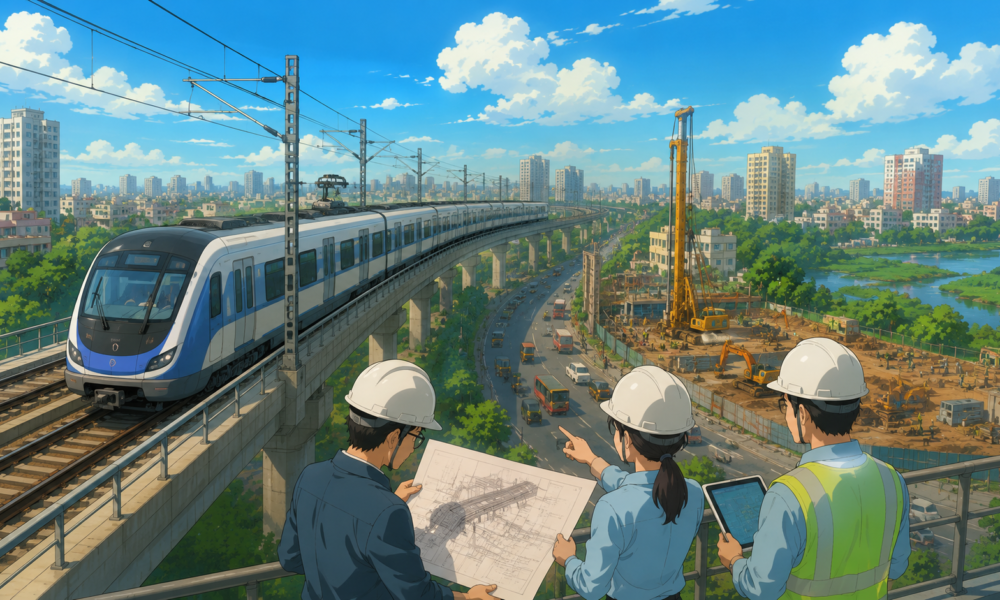
Mumbai’s ambitious Metro Line 14 project has entered a fresh planning phase after IIT Bombay identified shortcomings in its earlier Detailed Project Report (DPR), prompting authorities to commission a revised feasibility study for the proposed corridor.
The Mumbai Metropolitan Region Development Authority (MMRDA) has appointed a new consultant to prepare an updated DPR for the 43.69 km metro line connecting Kanjurmarg and Badlapur. The revised study is expected to reassess passenger demand, project costs, route alignment and financial viability before the project moves to the next stage of approval.
Metro Line 14 is designed to improve east west connectivity across the Mumbai Metropolitan Region while supporting the area’s rapidly growing residential and industrial corridors. Once completed, the line will feature 24 stations and provide seamless links with Central Railway, the Trans Harbour corridor and several existing and planned metro routes, creating a more integrated urban transport network.
The decision to revisit the project reflects an increasing emphasis on evidence based infrastructure planning. According to reports, IIT Bombay highlighted deficiencies in the previous DPR relating to ridership estimates, construction costs and financial projections. Rather than proceeding with outdated assumptions, MMRDA has opted to refine the project using updated demographic, economic and transport data.
The revised consultancy will also evaluate how the metro corridor integrates with other major infrastructure projects currently under development in the region. These include the Virar Alibaug Multimodal Corridor and the Airoli Katai Freeway, both of which are expected to influence future travel patterns and commuter demand across the metropolitan area. Incorporating these developments into the updated study is intended to ensure the metro line remains viable over the long term.
Urban transport experts have increasingly stressed that metro projects must balance engineering feasibility with realistic passenger demand forecasts. Accurate projections help determine station locations, train frequency, investment requirements and operational sustainability. A comprehensive review at the planning stage can reduce the risk of cost overruns while improving long term utilisation of public infrastructure.
The consultant has been given approximately seven months to complete the updated DPR, including the monsoon period. The new report will include revised engineering assessments, updated alignment studies and a fresh financial analysis before the project is submitted for further approvals.
Mumbai continues to expand one of India’s largest metro networks as the city seeks to reduce congestion, improve public transport accessibility and support sustainable urban growth. Metro Line 14 is expected to play an important role in connecting emerging suburbs with employment centres while easing pressure on existing road and rail infrastructure.
The review also highlights a broader trend across India’s infrastructure sector, where project quality is receiving as much attention as project scale. Independent technical assessments, updated planning models and data driven decision making are increasingly becoming standard practice before large public investments move into construction.
Although the fresh review may extend the project’s timeline, it is expected to strengthen its technical foundation and improve long term outcomes. For infrastructure planners, developers and commuters alike, a well designed metro corridor offers greater value than a project that progresses quickly without addressing critical planning challenges.
As India’s cities continue to invest in mass transit, the revised Metro Line 14 study demonstrates how rigorous planning and engineering oversight are becoming central to delivering resilient and future ready urban infrastructure.






No Comment! Be the first one.