







Noida Metro Gets 8.449-km Expansion: Will Better Connectivity Transform Greater Noida’s Property Market?
Noida and Greater Noida are preparing for another major public transport expansion following the Union Cabinet’s approval of an 8.449-kilometre extension of the Aqua Line Metro corridor....


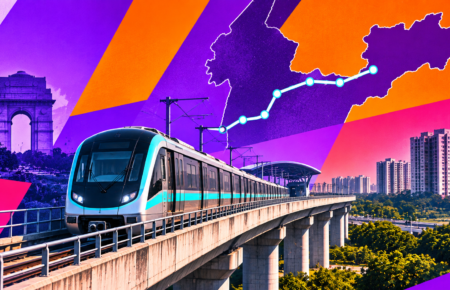
Noida and Greater Noida are preparing for another major public transport expansion following the Union Cabinet’s approval of an 8.449-kilometre extension of the Aqua Line Metro corridor.
Approved on November 11, 2026, the project will connect Noida Sector 51 with Greater Noida Sector 4 through five elevated stations.
The development could improve connectivity between residential neighbourhoods, commercial centres, educational institutions and employment hubs.
However, the bigger question is whether improved public transport can also influence property demand and urban development across the region.
What Has the Government Approved?
According to the Press Information Bureau, the extension will add approximately 8.449 kilometres to the Aqua Line network.
Once operational, the combined active metro network serving Noida and Greater Noida is expected to reach 71.878 kilometres.
The extension is designed to strengthen connectivity in areas where public transport accessibility remains a concern.
It is also expected to improve access to important commercial and employment locations.
The project has received Cabinet approval, but commuters should distinguish this milestone from the start of passenger operations.
Which Areas Could Benefit?
The approved corridor is intended to improve connectivity to several important residential and commercial locations.
These include commercial destinations such as Gaur City Mall, Blue Sapphire Mall, H&S Mall and Golden I.
The government’s announcement also identifies major employment locations, including the Tech Mahindra office and other establishments around Noida Sector 60.
Educational and healthcare facilities in surrounding sectors could also benefit from improved public transport access.
For residents travelling between Noida and Greater Noida, the expansion could create additional commuting options.
Could Metro Connectivity Influence Real Estate Demand?
Metro connectivity can influence residential and commercial property demand by improving accessibility and reducing dependence on private vehicles.
Areas located near convenient stations may become more attractive to commuters seeking access to employment centres, educational institutions and commercial districts.
However, improved connectivity does not automatically guarantee higher property prices.
Real estate outcomes depend on several factors, including housing supply, affordability, neighbourhood infrastructure, project completion timelines and broader market conditions.
For developers, the proposed extension could influence future project positioning and investment decisions.
For homebuyers, the most important consideration will be whether the completed network meaningfully improves daily commuting.
Commercial Infrastructure Could Also Benefit
The proposed extension connects areas containing shopping centres, offices and other commercial establishments.
Better public transport access can potentially improve footfall and expand the catchment areas of commercial destinations.
It could also support businesses that depend on employees travelling from different parts of Noida and Greater Noida.
However, these benefits will depend on station accessibility, feeder transport, pedestrian infrastructure and the reliability of services.
The Last-Mile Connectivity Challenge
A metro station is only one part of an effective urban transport system.
Commuters also require safe pedestrian access, buses, shared mobility services and convenient connections between transport modes.
Without these supporting systems, the benefits of a new metro corridor may be limited.
The success of the expansion will therefore depend not only on construction but also on how effectively the network integrates with existing urban infrastructure.
What Happens Next?
The project will need to progress through implementation and construction before passenger services can begin.
For residents, businesses and property developers, the key developments to monitor will include station planning, construction progress, interchange arrangements and operational timelines.
The Noida Metro expansion is more than a transport project. It is an opportunity to improve the relationship between housing, employment and public mobility.
Whether it transforms surrounding property markets will ultimately depend on how successfully the new corridor improves everyday accessibility.




No Comment! Be the first one.