







Noida Metro Aqua Line Extension Gets Cabinet Approval: ₹2,390 Crore Project to Connect Greater Noida West with Delhi Metro
The long-awaited expansion of metro connectivity in Greater Noida West has moved closer to implementation after the Union Cabinet approved an ₹2,390-crore extension of the Noida Metro’s Aqua...

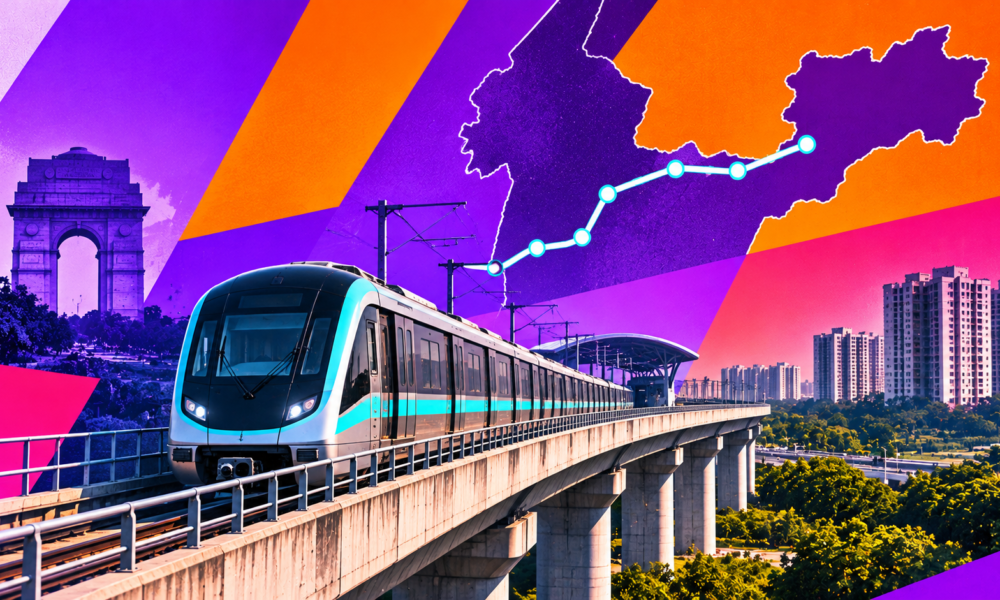
The long-awaited expansion of metro connectivity in Greater Noida West has moved closer to implementation after the Union Cabinet approved an ₹2,390-crore extension of the Noida Metro’s Aqua Line. The proposed 8.449-km elevated corridor will connect Noida Sector 51 with Greater Noida Sector 4, introducing five new metro stations and an interchange with the Delhi Metro’s Blue Line.
The approval was announced on November 11, 2026, following a Cabinet meeting chaired by Prime Minister Narendra Modi. The project is expected to be completed within four years from the commencement of construction. Once operational, the combined active metro network in Noida and Greater Noida will expand to approximately 71.878 km.
Five Stations to Improve Greater Noida West Connectivity
The proposed corridor will include five elevated stations at:
- Noida Sector 61
- Noida Sector 70
- Noida Sector 122
- Noida Sector 123
- Greater Noida Sector 4
One of the most important features will be the interchange at Noida Sector 61, connecting passengers with the Delhi Metro’s Blue Line.
This will provide commuters from Greater Noida West with another route towards Delhi and other major NCR destinations without depending entirely on road-based transport.
The corridor is also expected to improve access to residential societies, educational institutions, hospitals, shopping centres and commercial developments. Areas around Gaur City, Cleo County, Sector 122, Sector 70 and Greater Noida Sector 4 are among the locations expected to benefit.
Why Greater Noida West Needs Better Metro Connectivity
Greater Noida West has experienced substantial residential development over the past decade. Large housing societies, commercial complexes, schools and healthcare facilities have expanded across the region.
However, public transport connectivity has not always kept pace with this growth. Many residents depend on private vehicles, buses, auto-rickshaws and app-based cabs for daily commuting.
Traffic congestion around Parthala Chowk, Gaur Chowk and Ek Murti Circle has also become an important urban mobility concern.
The proposed metro extension could provide an alternative to road travel, particularly for office employees and residents commuting towards Noida’s commercial and employment centres.
For people travelling to Delhi, the Sector 61 interchange will be particularly important because it connects the Aqua Line with the existing Blue Line network.
What Does It Mean for NCR Real Estate?
Metro connectivity can influence residential and commercial property demand by improving accessibility and reducing dependence on private transport.
Greater Noida West already has a substantial residential market. Improved public transport could make selected residential clusters more attractive to homebuyers who commute regularly to Noida and Delhi.
Commercial developments near proposed stations could also benefit from improved accessibility, potentially supporting retail activity, office occupancy and demand for supporting services.
However, metro approval does not guarantee immediate property appreciation. Actual outcomes will depend on construction progress, station accessibility, operational frequency and the quality of surrounding urban infrastructure.
What Happens Next?
The ₹2,390-crore approval is an important milestone, but construction and commissioning will take time.
The Noida Metro Rail Corporation will need to progress through project implementation, tendering, construction, testing and safety approvals.
The government has indicated a four-year completion period from the commencement of work. Therefore, residents should distinguish between the Cabinet approval date and the eventual operational launch.
The Bigger Picture
The Aqua Line extension is more than another metro expansion. It addresses a long-standing gap between residential growth and public transport infrastructure in Greater Noida West.
As Delhi-NCR continues expanding, integrated metro networks will become increasingly important for connecting housing clusters, employment centres and commercial districts.
The project’s real success will ultimately be measured not by kilometres of track constructed, but by how many commuters can access reliable, affordable and convenient public transportation.







No Comment! Be the first one.