





India’s First Bullet Train Takes Shape: Indigenous Train Manufacturing and Seven New High-Speed Rail Corridors Could Transform Connectivity
India is moving towards a new phase of railway infrastructure development, with its first indigenous bullet train taking shape and seven proposed high-speed rail corridors forming part of the...


India is moving towards a new phase of railway infrastructure development, with its first indigenous bullet train taking shape and seven proposed high-speed rail corridors forming part of the country’s wider transport expansion plans. The developments could reshape intercity travel, create manufacturing opportunities and strengthen connectivity between major economic centres.
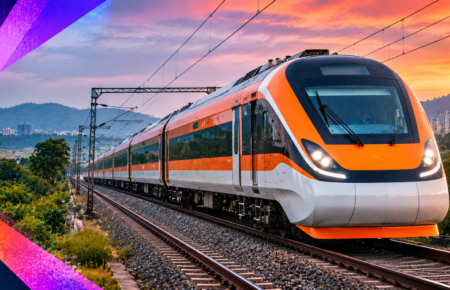
On November 1, 2026, the Press Information Bureau (PIB) published details of India’s first domestically manufactured bullet train, being developed at BEML’s facility in Bengaluru for the Mumbai–Ahmedabad High-Speed Rail project.
What makes India’s new bullet train different?
The train is being designed for Indian operating conditions, combining domestic engineering with technology developed for high-speed railway operations.
According to the Railway Ministry, the train will have a maximum test speed of 280 kmph and a planned operational speed of 249 kmph.
Each eight-coach trainset will be approximately 202 metres long and designed to carry around 557 passengers. It will include seven standard-class coaches and one executive-class coach.
Passenger facilities will include ergonomic seating, onboard information displays, Wi-Fi-based entertainment, charging points and modern toilets.
Accessibility is another important feature. The train is being designed with wheelchair-friendly spaces, accessible toilets, Braille signage and level boarding arrangements.
The train will also use regenerative braking, which recovers some energy during braking and helps improve energy efficiency.
Seven new high-speed rail corridors planned
India’s high-speed rail ambitions extend beyond the Mumbai–Ahmedabad project.
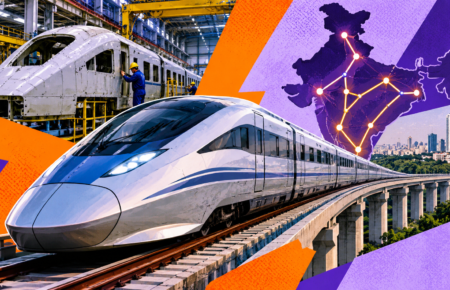
The Union Budget 2026–27 announced seven proposed high-speed rail corridors covering nearly 4,000 kilometres. The government has estimated investment potential of approximately ₹16 lakh crore for these corridors.
The proposed routes are:
- Mumbai–Pune
- Pune–Hyderabad
- Hyderabad–Bengaluru
- Hyderabad–Chennai
- Chennai–Bengaluru
- Delhi–Varanasi
- Varanasi–Siliguri
These corridors are intended to connect major cities, improve regional mobility and support economic activity.
However, their announcement does not mean that all seven projects have received final construction approval. Detailed project reports, technical feasibility, financing and other clearances will influence implementation.
What does this mean for the Mumbai–Ahmedabad corridor?
The 508-kilometre Mumbai–Ahmedabad High-Speed Rail corridor remains India’s first major bullet train project.
It is being developed using Japanese Shinkansen technology and is designed for an operational speed of 320 kmph.
The corridor will have 12 stations and include India’s first undersea rail tunnel beneath Thane Creek.
The first service is targeted for August 2027, according to government information.
The project is also important for India’s manufacturing industry. Its construction involves specialised railway systems, electrical equipment, signalling technology, tunnelling and advanced engineering.
Domestic companies participating in the supply chain could gain experience and technical capabilities that may support future railway projects.
How could ordinary Indians benefit?
Faster railway connectivity could reduce travel times between major cities and make business travel more convenient.
It could also improve access to employment opportunities, educational institutions, healthcare facilities and tourism destinations.
For businesses, better connectivity may support logistics planning, regional investment and movement of skilled workers.
Cities around future stations could attract new commercial developments and residential demand. However, such growth will depend on station locations, local infrastructure and actual project execution.
High-speed rail is also capital-intensive. Land acquisition, construction costs, maintenance, electricity requirements and passenger demand will determine its long-term financial sustainability.
What lies ahead?
India’s bullet train programme is becoming an important test of the country’s ability to develop advanced transport infrastructure and domestic engineering capabilities.
The indigenous train manufacturing programme and proposed high-speed corridors indicate a broader ambition to modernise intercity travel.
But announcements must translate into completed projects, reliable services and affordable connectivity.
For India, the real achievement will not simply be running faster trains. It will be building a railway ecosystem that connects people, businesses and regional economies more efficiently.





No Comment! Be the first one.