








POWERGRID Commissions Major Solar Transmission Project in Andhra Pradesh
India has taken another important step in strengthening its renewable energy infrastructure with the commissioning of a major transmission project by Power Grid Corporation of India Limited, better...

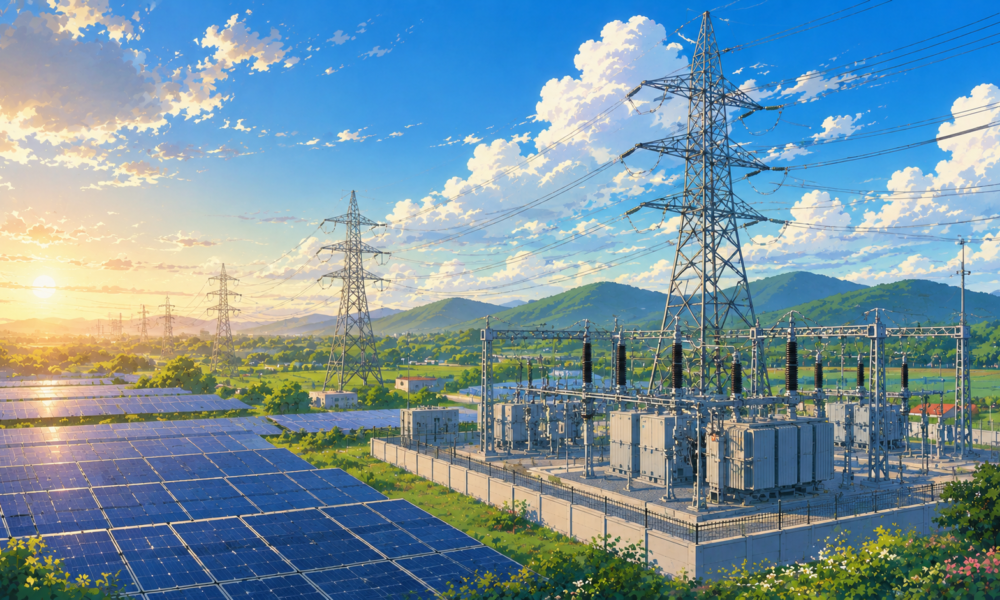
India has taken another important step in strengthening its renewable energy infrastructure with the commissioning of a major transmission project by Power Grid Corporation of India Limited, better known as POWERGRID. The new transmission system has been built to support the evacuation of up to 3,500 megawatts of solar power from Andhra Pradesh, helping clean energy generated in the state reach homes, industries, and businesses across the country. The project reflects India’s continued focus on expanding its electricity network alongside the rapid growth of renewable energy.
The transmission scheme includes new high voltage transmission lines and substations that improve the movement of electricity from solar parks to the national grid. While India has significantly increased its renewable energy generation capacity over the past decade, the expansion of transmission infrastructure has become equally important. Without adequate transmission networks, electricity produced by solar and wind projects cannot be delivered efficiently to consumers. The newly commissioned project addresses this challenge by improving grid connectivity and increasing the reliability of power supply.
India has set ambitious renewable energy targets for the coming years, with solar power expected to play a leading role in meeting rising electricity demand while reducing carbon emissions. As more solar projects are developed across states such as Andhra Pradesh, Rajasthan, Gujarat, and Tamil Nadu, the country also needs stronger transmission corridors to transport electricity over long distances. Investments in transmission infrastructure are therefore becoming a key part of India’s clean energy transition.
The Andhra Pradesh transmission project will also improve grid stability by allowing renewable energy to be integrated more efficiently into the national power system. Renewable energy generation often varies depending on sunlight and weather conditions. A stronger transmission network enables electricity to be shared across regions, reducing the impact of local fluctuations and helping maintain a steady power supply. This improves energy security while supporting the increasing use of renewable sources in India’s electricity mix.
Infrastructure experts believe that transmission projects will become one of the biggest investment opportunities in the Indian power sector over the next several years. Industry estimates suggest that India could invest around Rs 9 trillion in upgrading and expanding its power transmission network as renewable energy capacity continues to grow. These investments will include new transmission lines, substations, transformers, and grid modernisation projects that improve efficiency and reduce transmission losses.
The commissioning of this project also supports economic development by creating better infrastructure for industries that require reliable electricity. Manufacturing, technology, logistics, and data centres all depend on stable power supplies to operate efficiently. Strong transmission systems not only improve electricity access but also attract private investment by providing businesses with dependable energy infrastructure. As India continues to expand its renewable energy capacity, projects such as this will play a critical role in supporting long term industrial growth and digital transformation.
The successful completion of the Andhra Pradesh transmission scheme highlights the growing importance of infrastructure beyond power generation alone. Building renewable energy plants is only one part of the equation. Developing modern transmission networks ensures that clean electricity reaches consumers safely and efficiently. With more projects planned across the country, India’s investment in transmission infrastructure is expected to remain a major driver of sustainable economic growth and energy security.








No Comment! Be the first one.