








India Strengthens Supply Chains With Smarter Customs and Logistics Reforms
India is sharpening its approach to trade and logistics by strengthening customs systems and improving supply chain resilience at a time when global shipping routes continue to face uncertainty. As...

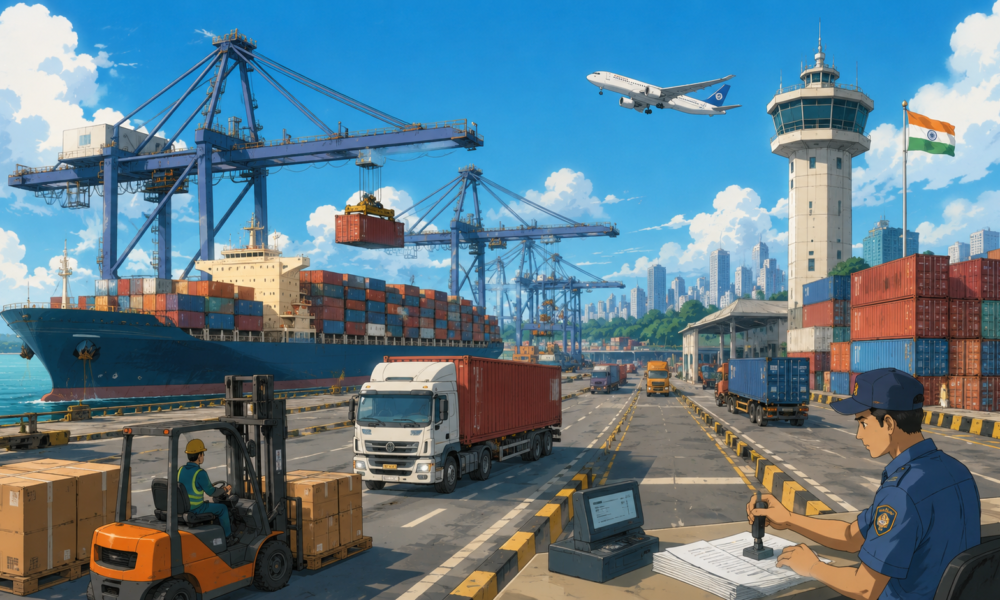
India is sharpening its approach to trade and logistics by strengthening customs systems and improving supply chain resilience at a time when global shipping routes continue to face uncertainty. As geopolitical tensions create disruptions across key maritime corridors, the country’s latest policy focus aims to ensure that manufacturers, exporters and importers can continue operating with fewer delays and greater certainty.
Rather than relying solely on new roads, ports and railways, policymakers are increasingly focusing on making existing infrastructure work more efficiently. Faster customs clearance, better risk management, digital documentation and closer coordination between government agencies are emerging as key tools in reducing logistics costs and improving trade competitiveness. These reforms complement India’s wider infrastructure strategy, which has seen sustained investment in highways, freight corridors, ports, airports and multimodal transport networks.
The renewed emphasis comes as international supply chains continue to adapt to changing geopolitical realities. Disruptions around major global shipping routes have highlighted the importance of resilient trade systems. India’s customs authorities are working to minimise bottlenecks through technology-driven inspections, data sharing and streamlined compliance procedures. This allows trusted businesses to move cargo more efficiently while maintaining strong security standards.
For the infrastructure sector, these developments extend beyond ports and border checkpoints. Efficient customs operations reduce turnaround times for cargo, improve warehouse utilisation and strengthen connections between manufacturing hubs, logistics parks and export gateways. As businesses increasingly seek predictable delivery schedules, seamless movement across the supply chain becomes a major competitive advantage.
Digital transformation is playing a central role in this effort. Automation, electronic documentation and intelligent risk assessment systems are helping reduce manual intervention and improve transparency. Businesses can expect quicker processing times, fewer compliance hurdles and better visibility throughout the import and export journey. These improvements are particularly valuable for industries that depend on just in time manufacturing and integrated global supply chains.
India’s broader infrastructure strategy also supports these initiatives through programmes aimed at integrating road, rail, ports, inland waterways and aviation. Combined with logistics policy reforms, these investments are designed to lower transportation costs, improve connectivity and strengthen the country’s position as a global manufacturing and export destination. Continued investment in digital infrastructure further enhances the efficiency of goods movement across the country.
Industry experts believe resilient supply chains will become one of the defining strengths of modern economies. Infrastructure is no longer measured only by physical assets but also by the efficiency of systems that connect them. Faster customs processes, smarter logistics planning and stronger coordination between public and private stakeholders can significantly improve the ease of doing business while supporting long term economic growth.
As India continues to modernise its logistics ecosystem, the combination of world class infrastructure and efficient trade facilitation could help businesses respond more effectively to global market changes. The result is a supply chain that is not only larger, but also smarter, more reliable and better prepared for future challenges.









No Comment! Be the first one.