





Namo Bharat Trains Can Run Every Three Minutes as Ridership Grows: NCRTC
The National Capital Region Transport Corporation (NCRTC) has said that Namo Bharat train services can be operated at intervals of as little as three minutes if passenger demand continues to rise,...

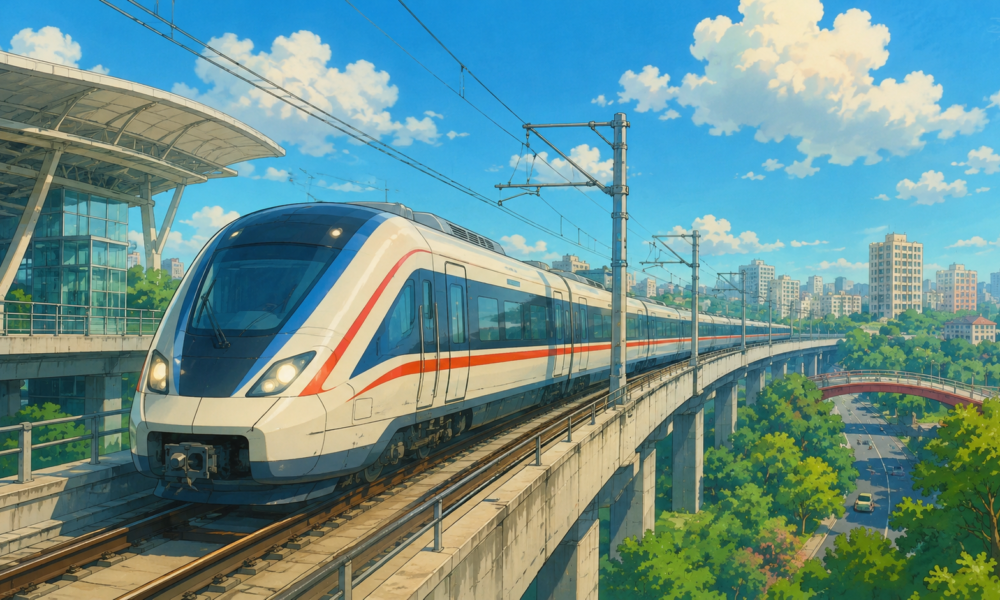
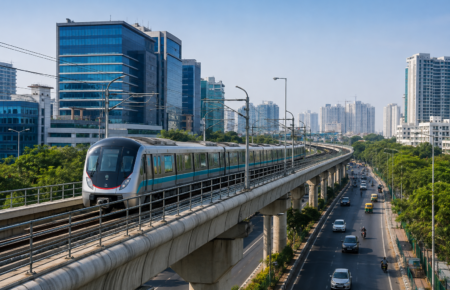
The National Capital Region Transport Corporation (NCRTC) has said that Namo Bharat train services can be operated at intervals of as little as three minutes if passenger demand continues to rise, highlighting the system’s built-in capacity to support future growth.
Speaking about the Delhi-Ghaziabad-Meerut Regional Rapid Transit System (RRTS), NCRTC Managing Director Shalabh Goel said the corridor currently serves nearly one lakh passengers every day, with trains operating at around 10-minute intervals. The existing schedule comfortably meets present demand, but the network has been designed to allow much higher service frequency whenever required.
To accommodate increasing commuter traffic, NCRTC recently introduced 18 additional services during peak hours between Sarai Kale Khan and Meerut South. The move comes as daily ridership continues to climb, while cumulative passenger journeys on the corridor have crossed 3.5 crore.
Goel said the project was planned with long-term regional mobility in mind and includes provisions for future capacity expansion. According to him, infrastructure, signalling systems and operational planning have been developed to support significantly higher passenger volumes over the coming years.
A major focus for NCRTC has been seamless integration with other public transport systems. Namo Bharat stations have been connected with Indian Railways, Delhi Metro, interstate bus terminals and city bus networks wherever possible to make travel easier for commuters.
One of the key improvements was the opening of the travelator-equipped foot over bridge connecting Sarai Kale Khan Namo Bharat Station with Hazrat Nizamuddin Railway Station in May 2026. NCRTC said this connection resulted in nearly a 30 per cent rise in passenger footfall. Similar pedestrian links have also been developed at New Ashok Nagar and Ghaziabad Metro stations, while Anand Vihar offers direct access to the railway station, metro services, ISBT and city buses.
According to Goel, stations offering such multimodal connectivity now account for nearly 40 per cent of the corridor’s ridership. He said better integration makes public transport more convenient and encourages commuters to shift away from private vehicles.
NCRTC also highlighted India’s growing manufacturing capability, stating that all Namo Bharat trainsets are being produced at Savli in Gujarat. The corporation believes domestic manufacturing strengthens the country’s rail ecosystem while supporting large-scale infrastructure development.
The corporation has also adopted advanced rail technologies for the corridor, including ETCS Level 2 Hybrid Level 3 over LTE radio signalling, making it one of the most technologically advanced regional rail systems in the country. NCRTC said the experience gained from planning, construction, operations and maintenance of the Delhi-Ghaziabad-Meerut corridor positions it well to contribute to future regional transit projects across India.
As passenger numbers continue to increase, NCRTC’s ability to reduce train frequency to every three minutes could play an important role in supporting sustainable urban mobility and reducing congestion across the National Capital Region.




No Comment! Be the first one.