








Western Railway to Raise Tracks at Vasai and Nalasopara to Build Climate-Resilient Rail Network
Western Railway has announced a major infrastructure upgrade to improve the resilience of Mumbai’s suburban rail network after heavy monsoon flooding disrupted services earlier this month. The...

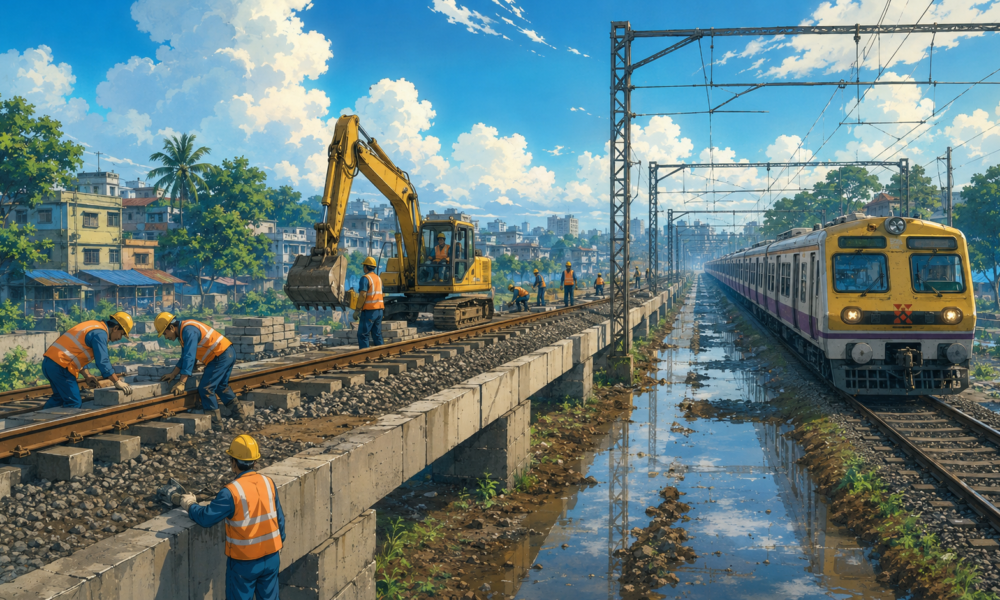
Western Railway has announced a major infrastructure upgrade to improve the resilience of Mumbai’s suburban rail network after heavy monsoon flooding disrupted services earlier this month. The railway will raise track levels at flood-prone locations between Vasai and Nalasopara, aiming to reduce waterlogging and ensure smoother train operations during future monsoons.
The decision follows one of the worst weather-related disruptions on the Western Railway corridor in recent years, when intense rainfall left tracks submerged and halted train movement for several hours. Thousands of commuters were stranded overnight as services were either delayed or suspended due to unsafe operating conditions.
To prevent similar incidents, Western Railway has prepared a two-phase flood mitigation plan. The first phase focuses on raising the railway tracks in the most vulnerable stretches where rainwater frequently accumulates. The second phase will involve complementary engineering measures to improve drainage and strengthen the surrounding infrastructure, allowing rainwater to flow away from the tracks more efficiently.
Mumbai’s suburban railway is among the busiest commuter rail systems in the world, carrying millions of passengers every day. Even short service interruptions have a significant impact on daily travel, business activity and emergency services. As rainfall patterns become more unpredictable due to climate change, infrastructure owners are increasingly shifting from reactive maintenance to long-term climate adaptation.
Track elevation has become an important engineering solution for railway systems operating in flood-prone regions. By increasing the height of the rail formation above expected water levels, operators can reduce the risk of submerged signalling equipment, damaged electrical systems and track instability. When combined with improved drainage channels and regular desilting, elevated tracks help maintain safe train operations during periods of heavy rainfall.
The latest initiative also reflects a broader trend in India’s infrastructure sector, where resilience is becoming as important as expansion. Railways, highways, airports and metro systems are now being designed with greater emphasis on extreme weather preparedness. Engineering standards are evolving to account for higher rainfall intensity, urban flooding and changing climate conditions.
For Mumbai, where monsoon flooding has repeatedly disrupted transport over the years, investment in preventive infrastructure offers long-term benefits beyond passenger convenience. More reliable railway services reduce economic losses, improve commuter confidence and minimise pressure on alternative transport networks during extreme weather events.
Infrastructure experts believe that climate-resilient upgrades will become a standard feature across major transport projects in the coming years. As cities continue to expand and weather events become more frequent, transport networks will require stronger foundations, smarter drainage systems and continuous monitoring to maintain reliable operations throughout the year.
Western Railway’s latest announcement signals that future investment will increasingly focus not only on expanding capacity but also on protecting critical transport assets against the growing challenges posed by climate change. By strengthening vulnerable sections of one of India’s busiest rail corridors, the project represents another step towards building infrastructure that is better prepared for the future.






No Comment! Be the first one.