





PM Modi Flags Off India’s First Hydrogen-Powered Train, Launches ₹24,800 Crore Infrastructure Push Across North India
India has taken a major step towards sustainable transportation and modern infrastructure as Prime Minister Narendra Modi flagged off the country’s first hydrogen-powered train and launched...

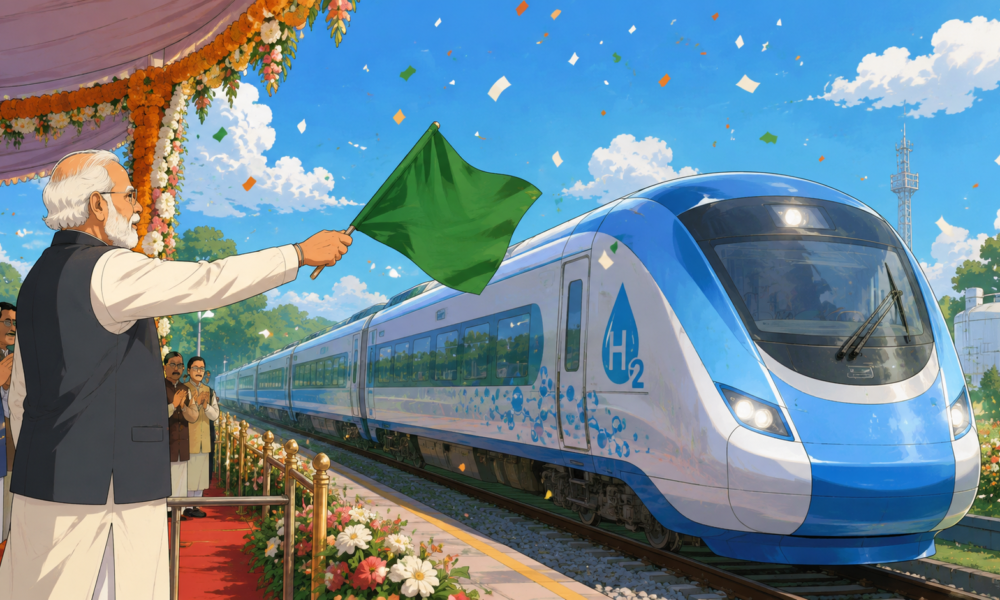
India has taken a major step towards sustainable transportation and modern infrastructure as Prime Minister Narendra Modi flagged off the country’s first hydrogen-powered train and launched development projects worth over ₹24,800 crore across Haryana, Punjab and Chandigarh.
The projects cover railways, highways, healthcare and education, reflecting the government’s continued focus on improving connectivity while promoting cleaner modes of transport.
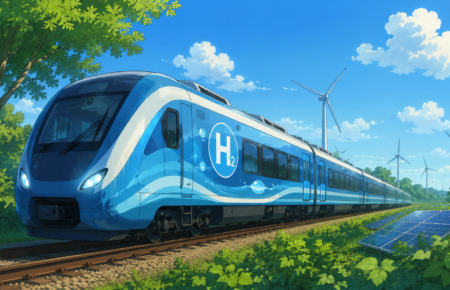
The centrepiece of the announcement was the launch of India’s first indigenously developed hydrogen-powered passenger train from Jind, Haryana. Powered by hydrogen fuel cells, the train produces only water vapour as an emission, making it a clean alternative to diesel-powered trains operating on non-electrified routes.
The train consists of two hydrogen-powered driving coaches and eight passenger coaches, with a carrying capacity of around 2,600 passengers. It has a top operating speed of 75 km/h. To support operations, Indian Railways has also developed a dedicated hydrogen production, storage and refuelling facility in Jind.
The project is part of India’s broader push towards green mobility under the National Green Hydrogen Mission. By introducing hydrogen-powered rail transport, the country joins a small group of nations exploring hydrogen technology for passenger rail services.
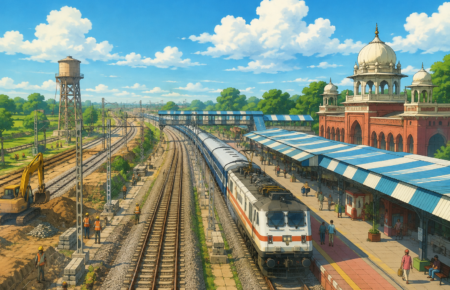
Apart from the hydrogen train, the Prime Minister inaugurated and laid the foundation stone for several transport projects aimed at strengthening regional connectivity. These include new national highway projects, railway line upgrades, station redevelopment works under the Amrit Bharat Station Scheme and other public infrastructure initiatives.
The investment is expected to improve passenger travel, reduce logistics costs and support industrial growth across northern India. Better connectivity is also likely to enhance freight movement between manufacturing centres and key consumption markets.
Hydrogen fuel cell technology is increasingly being viewed as a practical solution for railway routes where complete electrification may not be immediately feasible. The technology generates electricity through a chemical reaction between hydrogen and oxygen, producing only electricity, heat and water.
For Indian Railways, the hydrogen train serves as an important pilot project that could pave the way for wider deployment across selected routes in the future. If adopted on a larger scale, hydrogen-powered trains could help reduce diesel consumption while supporting India’s long-term carbon reduction goals.
The wider infrastructure package reflects India’s continued investment in transport networks that support economic growth. Improved highways, railway infrastructure and public facilities are expected to create new opportunities for logistics, manufacturing and regional development.
As India continues to modernise its transport network, the launch of its first hydrogen-powered train marks an important milestone in building cleaner and more sustainable infrastructure for the future.




No Comment! Be the first one.