






India Plans Dedicated Power Grid for Data Centres as AI and Cloud Demand Accelerates
India is preparing for its next phase of digital infrastructure growth by planning a dedicated power strategy for data centres. As artificial intelligence, cloud computing and digital services...


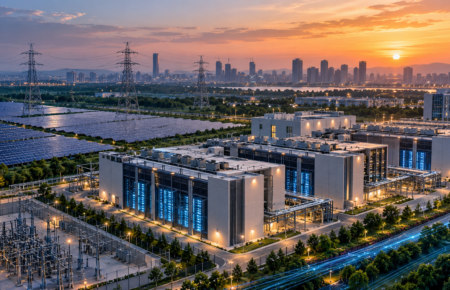
India is preparing for its next phase of digital infrastructure growth by planning a dedicated power strategy for data centres. As artificial intelligence, cloud computing and digital services continue to expand, the Ministry of Power has started discussions with industry stakeholders to ensure the country’s electricity network can support future demand.
Internal government estimates suggest that electricity demand from data centres could reach 26 GW by 2032 before rising further to 35.7 GW by 2040. This represents one of the fastest-growing sources of power consumption in India’s infrastructure landscape.
The move highlights a significant shift in how digital infrastructure is now being viewed. Data centres are no longer seen only as technology assets. They have become a critical infrastructure that requires long-term planning similar to highways, airports, ports and industrial corridors.
India’s data centre market has expanded rapidly over the past few years, supported by increasing internet usage, enterprise cloud adoption, digital payments, 5G networks and government backed digital initiatives. Metro cities such as Mumbai, Chennai, Hyderabad, Bengaluru, Delhi NCR and Pune continue to attract large investments from both domestic and global operators. The Ministry of Electronics and IT recently stated that India’s installed data centre capacity has grown from around 375 MW in 2020 to more than 1,500 MW by 2025.
Artificial intelligence is expected to push demand even further. AI workloads require high-performance computing infrastructure, advanced cooling systems and uninterrupted electricity supplies. Unlike conventional office buildings, hyperscale data centres operate around the clock and consume large amounts of power while maintaining strict uptime requirements.
Industry experts believe future infrastructure planning will need closer coordination between power utilities, renewable energy developers, transmission companies and data centre operators. Reliable electricity, faster grid connectivity and sustainable energy sources will become major factors in deciding where new facilities are built.
The government’s discussions are also expected to address renewable energy integration. Many global technology companies have committed to operating their facilities on clean energy, making solar, wind and battery storage increasingly important for India’s expanding digital economy. Dedicated transmission infrastructure could help improve reliability while supporting these sustainability goals.
For infrastructure developers, the opportunity extends beyond the data centre buildings themselves. Growth in digital infrastructure creates demand for transmission networks, substations, utility corridors, cooling infrastructure, industrial parks and supporting transport connectivity. This creates fresh opportunities across engineering, construction and power equipment sectors.
The initiative also aligns with India’s broader infrastructure strategy, where physical and digital assets are being developed together to improve economic competitiveness. As businesses continue shifting towards cloud services and AI-driven operations, power infrastructure will play an increasingly important role in enabling digital growth.
With demand expected to multiply over the next decade, India’s planning today could determine how successfully it supports one of the world’s fastest-growing digital economies. The focus is no longer only on building more data centres, but on ensuring the energy infrastructure behind them is equally prepared for the future.






No Comment! Be the first one.