








Tata Power Wins 324 MW SECI Award as Pumped Storage Becomes India’s Next Big Infrastructure Bet
India’s energy transition received another boost after Tata Power secured a Letter of Award (LoA) from the Solar Energy Corporation of India (SECI) to supply 324 MW of power from its 1,000 MW...

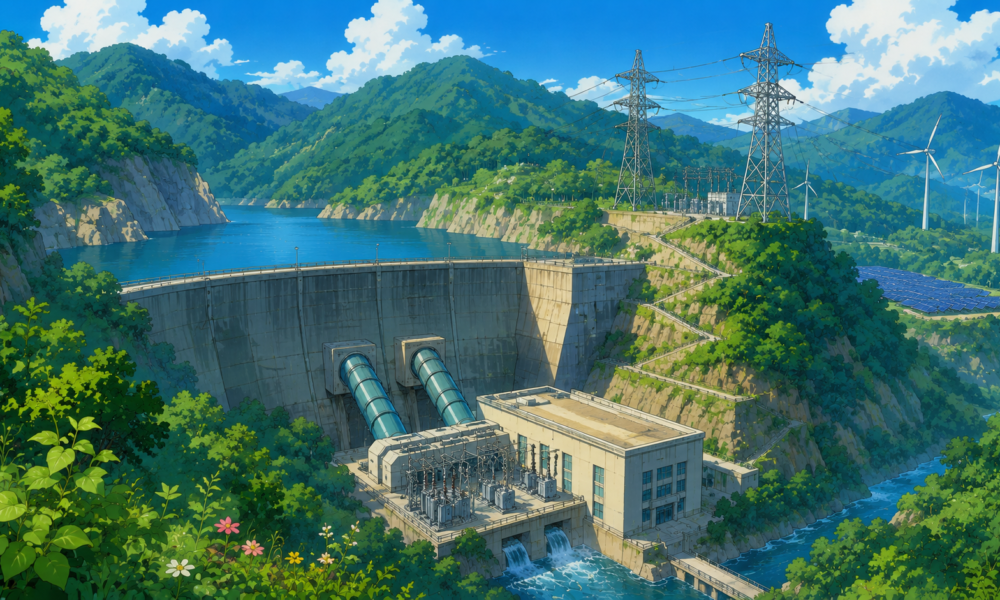
India’s energy transition received another boost after Tata Power secured a Letter of Award (LoA) from the Solar Energy Corporation of India (SECI) to supply 324 MW of power from its 1,000 MW Bhivpuri Pumped Hydro Storage Project in Maharashtra. The development underlines the growing importance of long-duration energy storage as renewable energy capacity continues to expand across the country.
The Bhivpuri project, located in Raigad district, was awarded through SECI’s tariff-based global competitive bidding programme for pumped storage projects. It will operate under a 40-year Pumped Storage Purchase Agreement and is expected to become operational by 2029. Developed under the Build, Own, Operate model, the facility will provide eight hours of energy storage, helping utilities deliver reliable electricity during peak demand periods.
Unlike conventional hydropower plants, pumped storage projects act as giant energy reservoirs. During periods of low electricity demand, excess renewable power is used to pump water to an upper reservoir. When demand rises, the stored water is released to generate electricity. This enables renewable energy generated during sunny or windy periods to be supplied even after sunset or during periods of low wind generation.
As India rapidly expands its solar and wind generation capacity, energy storage is becoming a critical part of the country’s infrastructure. Renewable energy production is often intermittent, creating challenges for maintaining grid stability. Pumped hydro storage offers a proven solution by storing surplus electricity and releasing it whenever required, reducing dependence on conventional thermal power plants during peak consumption hours.
The Bhivpuri project will connect to the 765/400 kV South Kalamb Inter-State Transmission System substation, allowing stored electricity to be supplied efficiently across the national grid. The project is expected to strengthen grid flexibility while supporting India’s ambition of increasing renewable energy deployment without compromising power reliability.
Government data indicates that pumped storage is emerging as one of India’s fastest-growing infrastructure segments. At present, 11 pumped storage projects with a combined capacity of 15,870 MW are under construction, while another six projects totalling 8,140 MW have already received technical concurrence and are expected to move towards construction. Regulatory reforms, faster environmental clearances and transmission incentives are further encouraging investment in the sector.
For infrastructure developers, the opportunity extends beyond power generation. Every pumped storage project requires significant investment in dams, tunnels, reservoirs, transmission infrastructure, civil engineering and specialised electro-mechanical equipment. This creates business opportunities across construction, engineering, manufacturing and grid infrastructure companies.
The SECI award also strengthens Tata Power’s clean energy portfolio, which now includes a substantial pipeline of renewable and storage assets. As India moves towards a cleaner electricity mix, projects combining renewable generation with large-scale storage are expected to play an increasingly important role in ensuring reliable power supply while supporting industrial growth and rising electricity demand.
With renewable energy becoming the backbone of India’s future electricity system, pumped hydro storage is no longer viewed as a supporting technology. It is rapidly becoming a core infrastructure asset that will help balance the grid, improve energy security and accelerate the country’s transition towards a low-carbon economy.









No Comment! Be the first one.