








₹8,970-Crore Guwahati-Tezpur Highway Gets Cabinet Nod, Set to Transform Assam Connectivity
The Union Cabinet has approved a ₹8,970.20-crore project to develop a 135.87-kilometre, four-lane access-controlled corridor between Guwahati and Tezpur in Assam. The project will be built along...

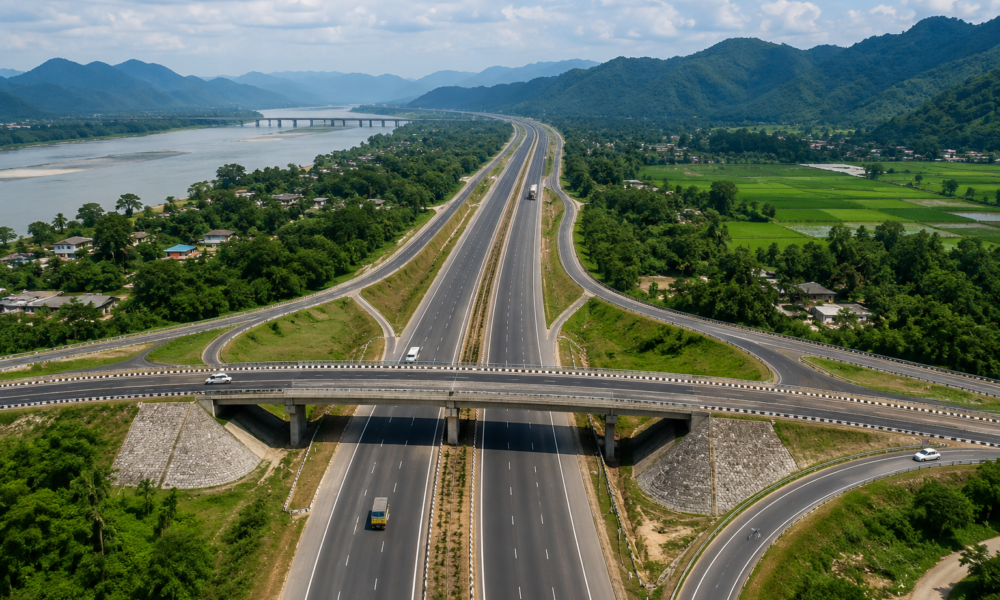
The Union Cabinet has approved a ₹8,970.20-crore project to develop a 135.87-kilometre, four-lane access-controlled corridor between Guwahati and Tezpur in Assam. The project will be built along National Highway-15 and is expected to improve travel, reduce congestion and strengthen road connectivity across the northeastern state.
The corridor will be developed under the Build-Operate-Transfer (BOT) toll model, a structure in which the private developer funds construction and operates the road in return for toll collection rights for a defined period. The project is part of efforts to encourage greater private participation in large-scale highway development.
One of the biggest features of the project is its five major bypasses, covering a combined 58.7 kilometres. These will help divert through traffic away from densely populated areas around Baihata Chariali, Sipajhar, Kharupetia, Dekiajuli and Tezpur. The corridor will also include 15 major bridges, 30 minor bridges, 19 flyovers and 46 underpasses.
The project has also been designed with strategic and environmental considerations in mind. A 4.9-kilometre Emergency Landing Facility will be constructed on the Tezpur bypass in coordination with the Indian Air Force. An elephant underpass is also planned, highlighting the need to accommodate wildlife movement alongside expanding transport infrastructure.
Around 210 kilometres of service roads will form part of the corridor. These roads are expected to help local traffic access nearby settlements and businesses without entering the main access-controlled highway. This separation of local and long-distance traffic could improve safety and reduce interruptions on the main carriageway.
The government expects the project to double average travel speeds and reduce journey time by around half. Better road conditions and smoother traffic movement are also expected to improve fuel efficiency and lower vehicle operating costs. For freight operators, these changes could make movement across Assam more predictable and efficient.
The corridor is also important beyond Assam. The government expects it to strengthen links between Assam and Arunachal Pradesh while improving access to industrial, logistics, tourism and social infrastructure across the region. It will connect with eight PM Gati Shakti economic nodes, including industrial parks, as well as seven logistics hubs.
Tourism could be another beneficiary. Improved road access will support connectivity to major destinations including the Kamakhya Temple, Kaziranga National Park and Orang National Park. The project also covers parts of Darrang and Udalguri, two aspirational districts identified for development support.
For the Northeast, the project represents more than another highway expansion. Better road infrastructure can influence the movement of goods, access to markets, tourism flows and the location of new businesses and logistics facilities.
The project also signals a renewed push towards the BOT model for Indian highways, with private investment expected to play a larger role in financing and operating major transport corridors. If delivered on schedule, the Guwahati-Tezpur corridor could become an important road link supporting Assam’s economic growth and strengthening the wider Northeast transport network.









No Comment! Be the first one.