








Bengaluru Weather and Urban Infrastructure: Why Heavy Rain Continues to Test the City’s Drainage Network
Bengaluru faced another spell of rain and waterlogging on September 29, with heavy overnight showers disrupting traffic during the morning peak period, particularly around parts of the city’s...

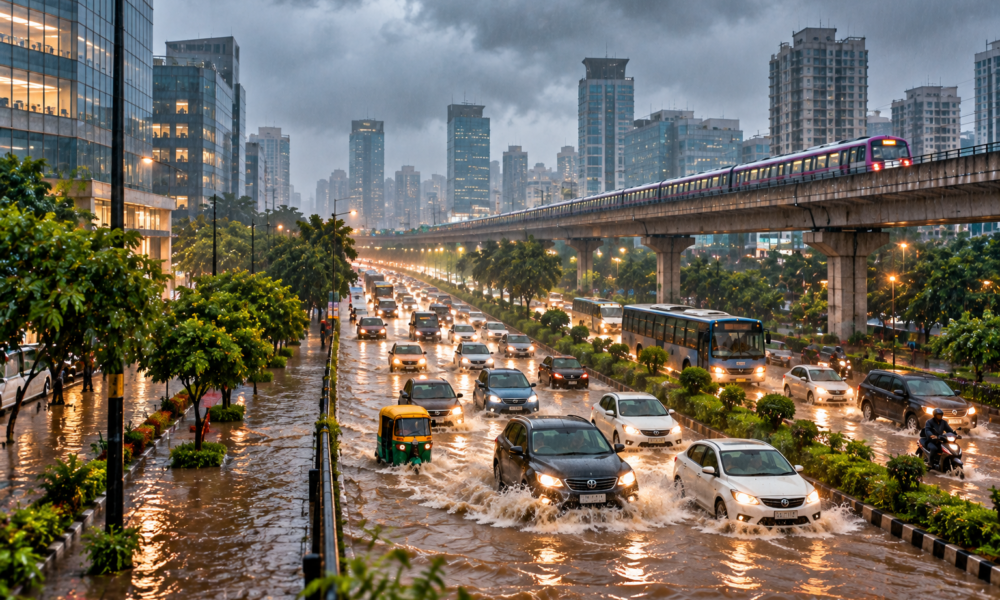
Bengaluru faced another spell of rain and waterlogging on September 29, with heavy overnight showers disrupting traffic during the morning peak period, particularly around parts of the city’s technology corridor. The India Meteorological Department has forecast further rainfall over South Interior Karnataka, including Bengaluru, through the coming days.
The immediate disruption is familiar to Bengaluru residents: waterlogged roads, slower traffic and difficulties in moving through major employment corridors.
But the recurring problem points to a larger urban infrastructure challenge. Bengaluru has expanded rapidly, with residential, commercial and technology development increasing pressure on roads, stormwater drains and natural water channels.
The IMD’s Bengaluru forecast illustrates why drainage capacity remains important even toward the end of the monsoon season. Its September 26 city forecast showed light rain possibilities continuing through September 29 and into early October, while the South Interior Karnataka warning indicated heavy or very heavy rain around September 28-30.
Urban drainage systems are designed to move rainwater away from roads and built-up areas. However, when rainfall intensity exceeds the capacity of drains, or when channels are obstructed, water can accumulate rapidly.
The problem becomes more complicated when urban expansion reduces permeable surfaces. Concrete roads, parking areas, buildings and other hard surfaces prevent rainwater from naturally soaking into the ground. More runoff consequently reaches stormwater systems within a shorter period.
Bengaluru’s geography adds another layer. The city historically relied on interconnected lakes, valleys and stormwater channels to manage rainfall. Development around these systems can reduce the space available for water to move naturally.
The current episode therefore raises questions beyond drain cleaning. Urban infrastructure planning has to consider drainage capacity when approving new developments, road projects and high-density construction.
Technology can also play a role. Real-time rainfall monitoring, flood sensors, traffic-management systems and predictive alerts can help authorities identify vulnerable locations before waterlogging becomes severe.
Road infrastructure needs to be designed around these realities as well. A road that remains technically intact but becomes unusable after a few hours of heavy rain still represents a connectivity failure from the perspective of commuters.
For Bengaluru, the infrastructure conversation is increasingly shifting from simply adding roads to making the entire urban system more resilient.
The latest rain may eventually disappear from the headlines, but the infrastructure question remains: can the city absorb increasingly disruptive rainfall without repeatedly bringing its transport network to a standstill?




No Comment! Be the first one.