







Why India Needs More Earthquake-Resilient Infrastructure
Earthquakes cannot be prevented, but the scale of damage caused by them can be reduced significantly through better infrastructure planning, engineering and enforcement. For India, earthquake...

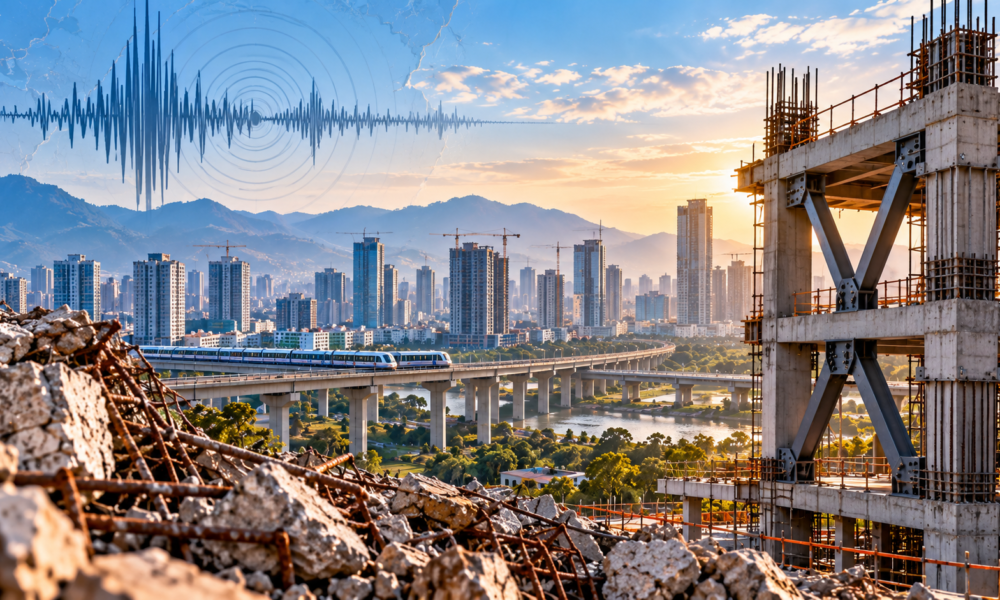
Earthquakes cannot be prevented, but the scale of damage caused by them can be reduced significantly through better infrastructure planning, engineering and enforcement.
For India, earthquake resilience is especially important because the country has several seismically active regions, including the Himalayan belt and parts of northern and northeastern India.
The infrastructure challenge is not limited to skyscrapers. Schools, hospitals, bridges, roads, railway infrastructure, water systems, power networks and communication facilities all need to remain functional during and after major seismic events.
Building codes play a central role.
The Bureau of Indian Standards has developed seismic design standards including IS 1893, which provides criteria for earthquake-resistant structural design. Other standards address the evaluation, repair and strengthening of existing structures.
This distinction is critical because India’s earthquake challenge involves two different tasks: building new structures correctly and upgrading older structures.
A newly designed building can incorporate seismic considerations from the beginning. An older building may require structural assessment, retrofitting, strengthening of columns and beams, improved connections or other interventions.
Infrastructure resilience also depends on the ground beneath a structure. Soil conditions can influence how earthquake waves affect buildings. Issues such as liquefaction can create additional risks in vulnerable areas.
Urban planning therefore has to be part of earthquake resilience.
Cities should identify high-risk buildings, critical infrastructure and evacuation routes. Hospitals and emergency facilities need continuity plans. Roads and bridges must be capable of supporting emergency response after a disaster.
The cost argument is often misunderstood. Earthquake-resistant construction can increase upfront costs, but rebuilding damaged infrastructure can be far more expensive. Disruption to businesses, transport, electricity and public services creates additional economic losses.
India’s rapid urbanisation makes the issue even more important. Millions of people are moving into cities, and much of the country’s future infrastructure has not yet been built.
This creates an opportunity.
Instead of treating resilience as an additional feature added after construction, India can integrate it into the basic design of roads, buildings, bridges, utilities and public infrastructure.
The goal should not simply be structures that survive an earthquake. The larger objective should be cities that can recover quickly after one.






No Comment! Be the first one.