







Riyadh King Khalid International Airport Expansion: Terminal Upgrades Target 56 Million Passengers
Riyadh King Khalid International Airport (KKIA) is upgrading its terminal operations and infrastructure to accommodate growing passenger demand, improve domestic and international connections, and...

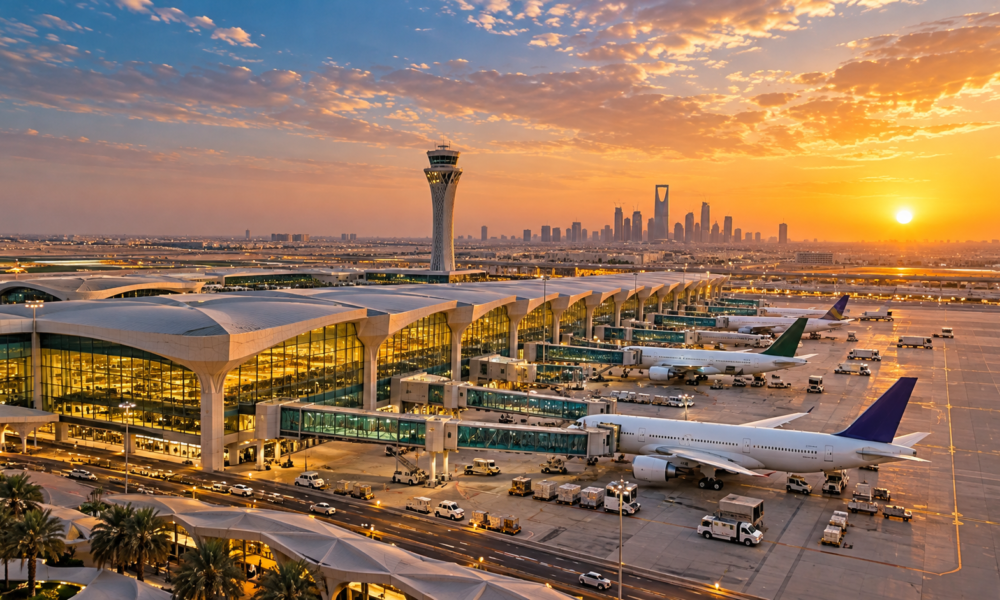
Riyadh King Khalid International Airport (KKIA) is upgrading its terminal operations and infrastructure to accommodate growing passenger demand, improve domestic and international connections, and strengthen Saudi Arabia’s aviation network.
Located in the Saudi capital, King Khalid International Airport is a major gateway for business travel, tourism and international connectivity. Managed and operated by Riyadh Airports Company, the airport is undergoing operational changes intended to make better use of its existing terminals while preparing for further growth.
Terminal Reorganisation Completed in February 2026
One of the airport’s most significant recent developments was its terminal transition project, conducted between February 16 and 25, 2026. According to the airport’s official announcement on February 26, the transition was completed successfully, with airlines redistributed across the terminals to improve passenger movement and operational efficiency.
Under the revised arrangement, Terminals 1 and 2 serve international flights operated by Saudi national carriers, while Terminals 3 and 4 handle their domestic flights. Terminal 5 is assigned to international flights operated by foreign airlines.
The reorganisation is intended to make domestic and international connections more convenient, reduce waiting and transfer times, and improve the use of available airport infrastructure. During the transition period, the airport handled more than 1.04 million arriving and departing passengers across over 7,650 flights, according to its official figures.
Capacity Expansion Targets 56 Million Passengers
KKIA’s development programme also focuses on expanding the capacity of its existing terminals. Riyadh Airports Company identifies the expansion and upgrade of Terminal 2 as a project involving the replacement or rehabilitation of electromechanical, information, security and telecommunications systems, alongside improvements to interior spaces and commercial areas.
The airport has also outlined plans to expand Concourse H at Terminal 4 to increase the number of gates and accommodate forecast passenger growth. These improvements are intended to support higher traffic volumes without compromising operational performance.
In February 2026, the airport said the terminal transition was expected to increase the annual capacity of Terminals 3 and 4 from 16 million to 25 million passengers. It also set out a target of increasing the airport’s overall annual capacity from 42 million passengers in 2025 to 56 million by the end of 2026. This is a stated target, not confirmation that the full capacity has already been achieved.
Supporting Saudi Vision 2030
Airport development is part of Saudi Arabia’s wider ambition to strengthen aviation, tourism, logistics and international connectivity under Vision 2030. The country’s 2025 Vision 2030 annual report highlights the role of airports in connecting Saudi Arabia with global markets and supporting passenger and cargo activity.
For Riyadh, improved airport capacity can support business travel, tourism, conferences and wider economic activity. Better terminal coordination is also important as passenger volumes increase and airlines expand their networks.
However, achieving these goals depends on more than terminal space alone. Baggage handling, security processing, staffing, transport links and reliable flight operations will remain essential to delivering a smooth passenger experience.
What Comes Next?
King Khalid International Airport’s next phase will depend on the delivery of planned upgrades, effective use of existing facilities and the airport’s ability to manage rising demand. The 2026 terminal reorganisation establishes a new operational arrangement, while further infrastructure improvements are intended to expand capacity.
For passengers, the practical takeaway is to check their airline’s latest terminal information before travelling, as terminal assignments can affect check-in, transfers and airport journeys.
As Riyadh develops its role as a regional and international hub, KKIA’s progress will be an important indicator of how Saudi Arabia is translating its aviation ambitions into operational infrastructure.







No Comment! Be the first one.