






Why City Roads Flood During Heavy Rain
Urban stormwater drainage begins at street level. Rainwater must flow from the road surface into an inlet, through a drain and then to a place where it can discharge. When one part of that route...

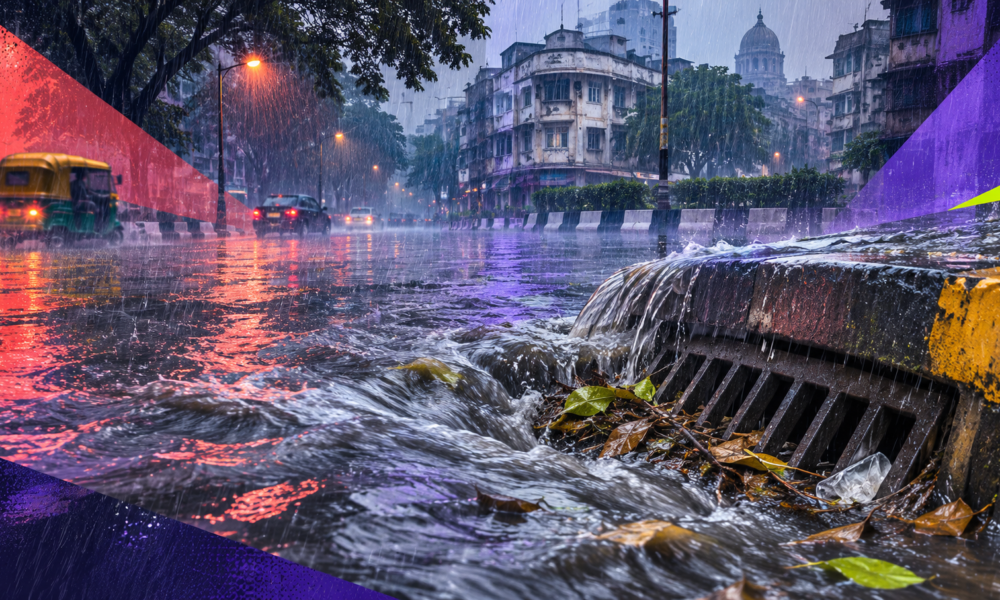
Urban stormwater drainage begins at street level. Rainwater must flow from the road surface into an inlet, through a drain and then to a place where it can discharge. When one part of that route loses capacity, water can collect at junctions, underpasses and other low points. India’s stormwater drainage guidance treats the full route, including the downstream outlet, as part of the design.
Paved Surfaces Send More Water Into Drains
Roofs, roads and paved plots leave less ground available for water to soak into. More rainfall then flows across the surface and reaches drains in a shorter period. As an area becomes more built up, the same stretch of road can receive runoff from more hard surfaces than it did when its drains were designed.
That is why drainage capacity depends on the area feeding a drain, as well as the size of the drain itself. A junction may collect runoff from several adjoining streets, even if the heaviest rain fell elsewhere in the neighbourhood.
Blockages Can Start at the Street or Downstream
Silt, litter and construction debris can obstruct the flow of rainwater. At street level, a blocked grate can keep water from entering a drain. Farther along, a restricted channel or outlet can slow discharge even if the roadside inlet is clear. static.pib.gov.in
Those two problems can look identical from the street. Finding the cause means following the runoff route from the flooded stretch to the point where the drain empties.
Why Cities Need to Plan Across the Whole Catchment
A drainage catchment is the area that sends runoff to the same channel or outlet. Mapping it helps municipal teams identify which roads feed the same drain, where runoff gathers and which sections carry water from several neighbourhoods. India’s national guidance supports catchment-based planning for urban flood management.
This matters when cities resurface roads, approve new developments or upgrade drains. A street-level fix can clear one junction while leaving the downstream bottleneck in place. For a road that floods repeatedly, the first question is where the water is supposed to go after it leaves the street.







No Comment! Be the first one.