








Cyclone-Resilient Infrastructure: How Indian Coastal Cities Can Prepare for Extreme Weather
From cyclone shelters and stronger power networks to flood-resistant roads and coastal ecosystems, India needs infrastructure that can withstand increasingly disruptive weather events. India’s...

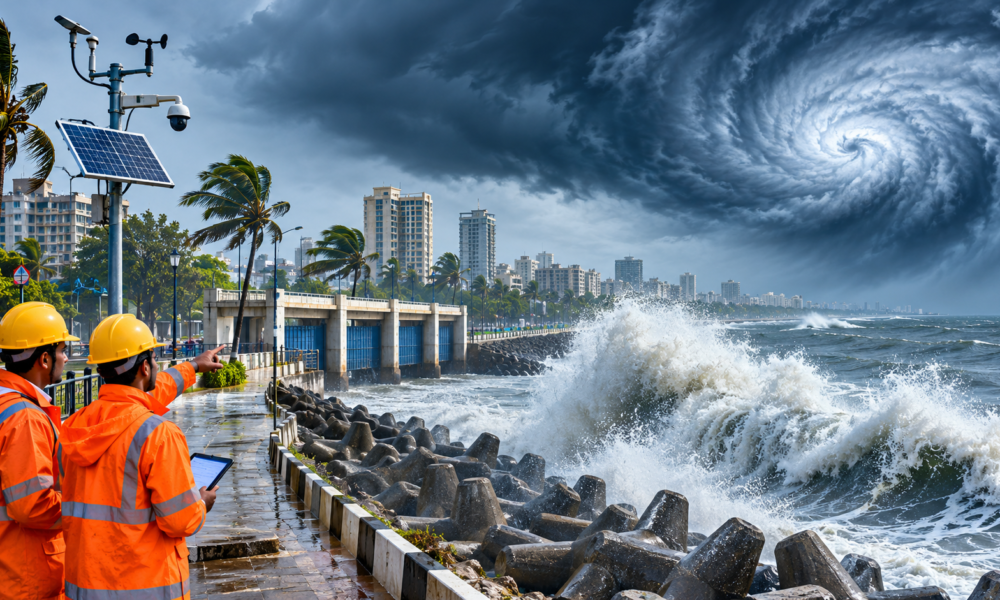
From cyclone shelters and stronger power networks to flood-resistant roads and coastal ecosystems, India needs infrastructure that can withstand increasingly disruptive weather events.
India’s coastline supports major ports, industrial centres, fishing communities, tourism destinations and densely populated cities. But coastal development also faces exposure to cyclones, storm surges, intense rainfall, flooding and erosion.
Recent cyclone warnings, including the alert for Cyclone Murasu in November 2026, bring attention to a critical question: how can Indian coastal cities protect people, property and essential infrastructure when extreme weather strikes?
The answer lies in moving beyond emergency response towards long-term infrastructure resilience.
Why coastal infrastructure is vulnerable
Cyclones can affect several urban systems at the same time. Strong winds can damage buildings, power lines and communication towers. Heavy rainfall can overwhelm drainage networks, while storm surges can inundate low-lying coastal settlements.
The consequences can spread beyond the immediate impact zone. Electricity failures can interrupt drinking-water supply and healthcare services. Flooded roads can delay emergency response and damage supply chains.
This interconnected risk means that infrastructure planning must consider how roads, power, water, communications and public services function together during a disaster.
India’s investment in cyclone risk mitigation
The National Cyclone Risk Mitigation Project was designed to reduce vulnerability in cyclone-prone coastal states.
Its first phase covered Andhra Pradesh and Odisha, while the second phase included Goa, Gujarat, Karnataka, Kerala, Maharashtra and West Bengal.
The programme supported early-warning dissemination systems, multipurpose cyclone shelters, evacuation roads and bridges, saline embankments, underground cabling and disaster-management capacity building.
These interventions demonstrate that cyclone resilience is not limited to constructing stronger buildings. It also requires the systems that help people receive warnings, move to safety and access essential services.
Five infrastructure priorities for coastal cities
- Stronger power distribution
Electricity networks need to account for local wind and flood risks. Vulnerable poles, substations and distribution lines require regular assessment and upgrades.
Underground cabling can reduce exposure in selected high-risk locations, although its feasibility depends on cost, soil conditions, maintenance requirements and local geography.
- Reliable drainage and flood management
Urban drainage systems must be designed around local rainfall patterns, natural water channels and the risk of coastal backflow.
Blocked drains, encroached wetlands and poorly planned construction can worsen urban flooding. Regular maintenance is as important as new construction.
- Accessible evacuation infrastructure
Cyclone shelters need to be located where vulnerable communities can reach them safely. Evacuation roads, bridges, public transport arrangements and emergency signage should be planned as one connected network.
- Nature-based coastal protection
Mangroves, wetlands and coastal vegetation can help reduce exposure to certain coastal hazards while supporting biodiversity and local livelihoods.
Their protection should complement, rather than replace, engineered infrastructure and official disaster-management planning.
- Resilient public buildings
Hospitals, schools, emergency facilities and water-treatment plants need appropriate structural design, backup power, protected equipment and continuity plans.
The failure of a critical facility during a cyclone can create risks long after the storm has passed.
The importance of maintenance and local planning
Infrastructure resilience is not achieved at the moment a project is inaugurated. Shelters must remain usable, drainage systems must be cleared, warning equipment must function and emergency personnel must be trained.
Local authorities also need updated hazard maps and land-use plans that account for flood-prone areas, coastal ecosystems and vulnerable settlements.
Building coastal cities for the future
India’s coastal cities will continue to play an important role in trade, industry and urban growth. Protecting their infrastructure is therefore both a public-safety priority and an economic necessity.
The most resilient cities will be those that combine reliable engineering, effective governance, ecosystem protection and community preparedness.
Cyclone resilience should not be treated as a project that begins when a storm approaches. It must be built into every major decision about how coastal cities grow.






No Comment! Be the first one.