








India’s Rooftop Solar Rules Could Change
India’s Rooftop Solar Revolution Faces a New Challenge: Centre Proposes Battery Storage Rules and Changes to Electricity Payments India’s rooftop solar expansion is creating new...


India’s Rooftop Solar Revolution Faces a New Challenge: Centre Proposes Battery Storage Rules and Changes to Electricity Payments
India’s rooftop solar expansion is creating new opportunities for households, businesses and renewable energy companies. However, the rapid growth of distributed solar power is also creating new challenges for electricity distribution networks.
The Union Power Ministry has proposed amendments to the Electricity (Rights of Consumers) Rules, 2020, that could change how rooftop solar systems interact with the electricity grid.
The proposed changes would allow state electricity regulators to require battery storage in certain rooftop solar installations and introduce charges for some consumers exporting surplus electricity to the grid.
The proposals come as India’s distributed solar capacity reaches 33.41 GW, highlighting the growing scale of decentralised electricity generation.
The Indian Express
Why Is the Government Reviewing Rooftop Solar Rules?
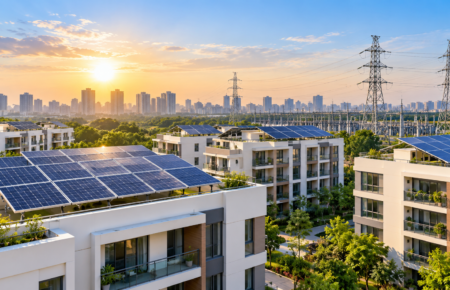
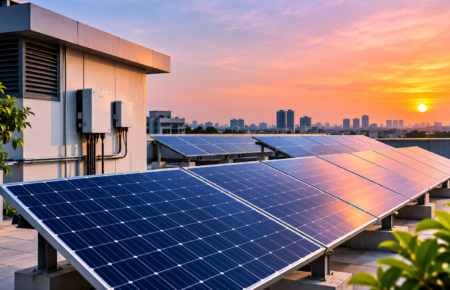
Rooftop solar allows households and businesses to generate electricity through photovoltaic panels installed on buildings.
Under existing grid-connected arrangements, consumers can use the electricity they generate and export surplus power to the distribution network, depending on the applicable state regulations and metering arrangements.
This has helped make rooftop solar attractive to consumers looking to reduce electricity bills.
However, the growing number of installations is changing the way electricity distribution networks operate.
During sunny periods, large volumes of rooftop solar electricity can flow into local distribution networks. This creates challenges involving grid management, voltage stability and the timing of electricity consumption.
The proposed amendments seek to address these emerging concerns.
The Indian Express
Battery Storage Could Become More Important
One of the most significant elements of the proposal involves battery energy storage.
State electricity regulators could be allowed to require storage systems for certain rooftop solar installations.
Battery storage would enable consumers to retain surplus solar electricity during daylight hours and use it later, particularly during evening demand periods.
This could reduce the amount of electricity exported to distribution networks when solar generation is high.
It could also create opportunities for battery manufacturers, inverter companies, electrical equipment suppliers and renewable energy service providers.
However, battery systems add to installation costs. Their economic viability will depend on equipment prices, electricity tariffs, incentives and individual consumption patterns.
Will Consumers Have to Pay for Excess Electricity?
Another important aspect concerns the treatment of surplus electricity exported to the grid.
The proposed changes would allow state regulators to introduce charges for certain consumers feeding excess electricity into the distribution network.
The proposal also discusses accounting for network losses and allowing electricity grids to function as a mechanism for storing surplus daytime generation for later consumption.
This could change the economics of rooftop solar for some consumers.
Currently, the financial attractiveness of rooftop installations depends partly on how state-specific net metering and export compensation arrangements operate.
If the proposed amendments are adopted, consumers may need to pay greater attention to self-consumption, battery storage and the timing of electricity use.
Importantly, these are proposed amendments, not a blanket nationwide rule already in force. Their eventual impact will depend on the final regulatory framework and state-level implementation.
What Does This Mean for India’s Solar Industry?
The proposed changes could create opportunities for companies offering integrated rooftop solar and storage solutions.
Instead of selling solar panels alone, companies may increasingly focus on complete systems combining generation, battery storage, inverters and energy management software.
Electricity distribution companies could also benefit from improved demand management and reduced pressure during periods of high solar generation.
For residential developers, rooftop solar and battery-ready building infrastructure could become more important considerations in future projects.
Commercial buildings, housing societies and industrial facilities may also explore energy storage to improve electricity management.
PM Surya Ghar Is Driving Rooftop Solar Adoption
The expansion of rooftop solar is also supported by the PM Surya Ghar: Muft Bijli Yojana.
According to the reported figures, approximately 65 lakh households had adopted rooftop solar by November 2026, with more than 13,000 rooftop systems reportedly being installed every day.
This growing adoption highlights the importance of developing electricity networks that can accommodate decentralised generation at scale.
The Road Ahead
India’s rooftop solar market is moving from an early adoption phase towards a more complex energy ecosystem.
The next challenge will be integrating millions of individual solar installations into the country’s electricity network without compromising grid stability.
Battery storage, smarter electricity management and updated regulations could play an increasingly important role.
For consumers, developers and energy companies, the message is clear: the future of rooftop solar may depend as much on storing and managing electricity as on generating it.





No Comment! Be the first one.