






India’s metro network becomes world’s third largest as urban transport expansion gathers pace
India’s urban transport network has entered a new phase of expansion, with the country now operating the world’s third largest metro rail network. The milestone reflects more than a...

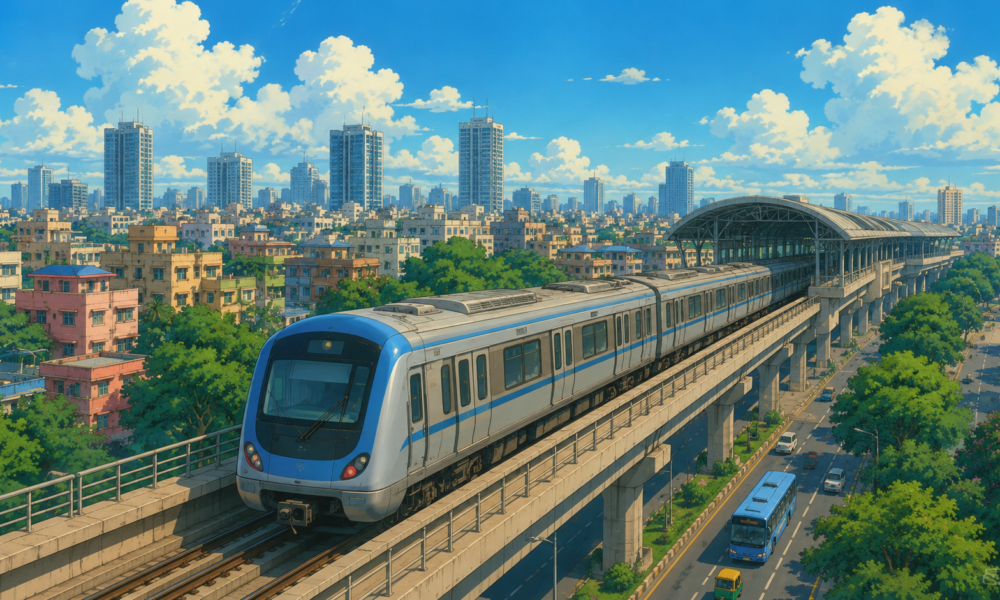
India’s urban transport network has entered a new phase of expansion, with the country now operating the world’s third largest metro rail network. The milestone reflects more than a decade of sustained investment in mass rapid transit systems, as cities increasingly turn to metro rail to tackle congestion, reduce travel time and support sustainable urban development.
According to the government’s latest infrastructure review, the operational metro rail network has crossed approximately 1,150 km, serving 26 cities across the country. The expansion places India behind only China and the United States in terms of operational metro rail length, underlining the rapid pace at which urban transport infrastructure has grown in recent years.
Metro systems have become an integral part of mobility planning in major metropolitan regions, including Delhi, Mumbai, Bengaluru, Hyderabad, Chennai, Kochi, Nagpur, Pune and Ahmedabad. Several Tier II cities have also joined the network, demonstrating a shift towards modern public transport beyond traditional metropolitan centres.
The expansion has been supported by increased public capital expenditure on infrastructure, integrated planning under the PM GatiShakti National Master Plan and growing emphasis on multimodal connectivity. Metro stations are increasingly being linked with buses, suburban rail services, airports and commercial hubs to create seamless travel for commuters.
The rapid growth of metro infrastructure has also generated significant opportunities for engineering, construction, signalling, rolling stock manufacturing and urban development. Large-scale civil works involving elevated corridors, underground tunnels, viaducts, stations and depot facilities continue to drive demand across the infrastructure sector.
Indian companies have expanded their capabilities in metro construction through the use of tunnel boring machines, precast segment technology and advanced signalling systems. Indigenous manufacturing of coaches under the Make in India initiative has also strengthened the domestic supply chain while reducing dependence on imports.
Beyond improving commuter convenience, metro rail systems are expected to contribute to lower vehicle emissions and reduced traffic congestion. As urban populations continue to rise, governments are increasingly prioritising public transport solutions that are efficient, energy-efficient and capable of handling large passenger volumes.
The government’s infrastructure review also highlights that airport numbers have increased to 165, while India’s railways are nearly fully electrified and the national highway network has expanded significantly. Together, these developments reflect a broader strategy of building integrated transport infrastructure across the country rather than isolated projects.
Despite the progress, experts believe the next phase will focus on improving operational efficiency, last-mile connectivity and financial sustainability. Expanding feeder bus services, integrating ticketing systems and encouraging transit-oriented development around metro stations are expected to play a crucial role in maximising the benefits of these investments.
Several metro projects remain under construction or in various stages of planning, indicating that India’s urban rail network will continue to grow over the coming years. As cities seek cleaner and faster transport alternatives, metro rail is expected to remain one of the country’s most significant infrastructure priorities, supporting economic growth while improving the quality of urban life.




No Comment! Be the first one.