








India’s Sports Infrastructure Economy: How Cricket and Football Are Creating New Commercial Opportunities
Sports are becoming an important part of India’s entertainment and business economy. Cricket continues to attract large audiences, while football is developing dedicated fan communities across...

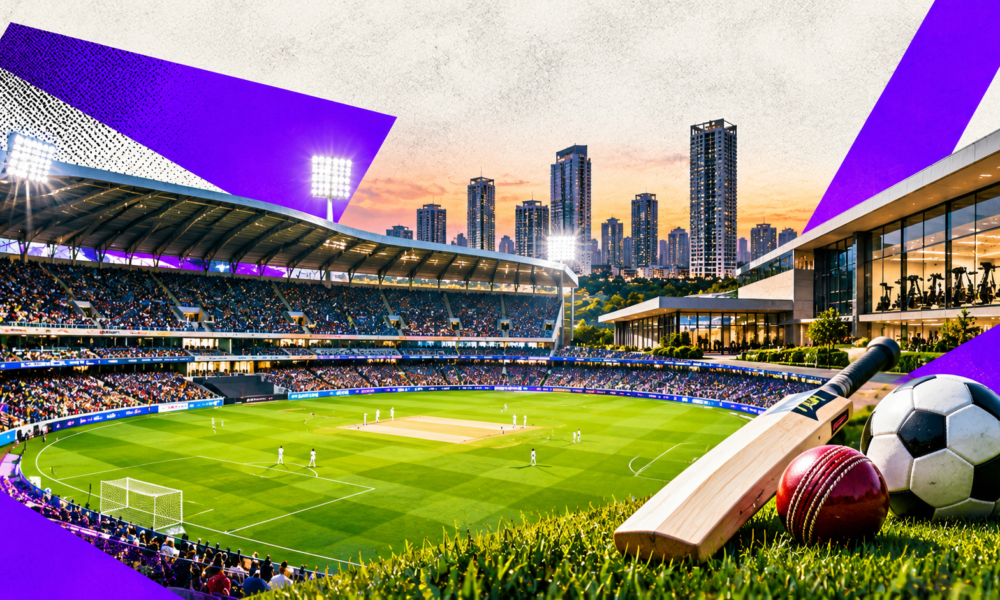
Sports are becoming an important part of India’s entertainment and business economy. Cricket continues to attract large audiences, while football is developing dedicated fan communities across different regions.
Matches involving India A and Pakistan A, Liverpool and Manchester United, or Barcelona and Villarreal regularly attract attention from sports fans.
However, the business of sports extends far beyond the matches themselves.
Stadiums, training facilities, broadcasting infrastructure, hospitality spaces and commercial partnerships all contribute to the wider sports economy.
The Growing Business of Sports in India
India’s sports industry has expanded through sponsorships, broadcasting, digital platforms and professional competitions.
According to WPP Media’s Sporting Nation 2025 report, India’s sports economy reached approximately ₹18,864 crore in 2025, marking a 13.4% increase over 2024.
Cricket accounted for approximately 89% of the total market value.
These figures highlight the commercial importance of sports in India.
The growth of professional leagues and sporting events also creates demand for better infrastructure.
Why Stadium Infrastructure Matters
Modern stadiums are more than venues for sporting competitions.
They include seating facilities, lighting systems, digital scoreboards, security arrangements, broadcast equipment and hospitality spaces.
Large stadiums also need reliable transport connections and parking facilities.
These requirements create opportunities for construction companies, engineering firms, technology providers and facility management businesses.
A well-designed stadium can host sporting events, concerts and other commercial activities.
This can help improve the utilisation of the facility beyond match days.
Cricket’s Commercial Infrastructure
Cricket has developed a large commercial ecosystem in India.
Professional tournaments and international matches attract broadcasters, sponsors, advertisers and hospitality businesses.
The popularity of players such as Abhishek Sharma, Rinku Singh and Tilak Varma also contributes to fan engagement and brand visibility.
Behind this ecosystem are training academies, practice grounds, stadiums and sports technology facilities.
The development of these facilities requires investment in land, construction, equipment and maintenance.
Football and the Global Sports Connection
Football offers another opportunity for India’s sports infrastructure sector.
International competitions involving clubs such as Liverpool, Manchester United and Barcelona attract significant global attention.
Their popularity creates interest in football academies, training facilities, merchandise and sports broadcasting.
In India, football has strong regional followings, particularly in states such as Kerala and West Bengal.
Better local infrastructure could support grassroots development and provide young players with access to professional training environments.
Commercial Opportunities Beyond the Stadium
Sports infrastructure can generate business opportunities across several industries.
Hotels and restaurants can benefit from visitors attending major events.
Transport companies may experience increased demand during tournaments.
Advertising agencies, broadcasting companies and technology providers also contribute to the sports ecosystem.
Real estate development around major sports facilities can create additional commercial opportunities, although these depend on location, planning and actual demand.
Challenges Facing Sports Infrastructure
Building and maintaining sports facilities requires substantial investment.
Many facilities also need professional management to remain financially sustainable.
Access to sports infrastructure outside major cities remains an important challenge.
Developing affordable training facilities and encouraging private investment can help expand participation.
Conclusion
India’s sports economy is creating opportunities beyond professional competitions.
Cricket and football are supporting demand for stadiums, training facilities, broadcasting systems and commercial services.
As the sports industry expands, infrastructure investment will become increasingly important.
The next phase of growth will depend on building facilities that support professional competitions while also making sports more accessible to young athletes across the country.





No Comment! Be the first one.