






Delhi–Meerut RRTS corridor reaches major milestone
The Delhi–Meerut Regional Rapid Transit System (RRTS), branded Namo Bharat, has crossed a significant operational milestone, marking the first time India’s National Capital Region has a high-speed...

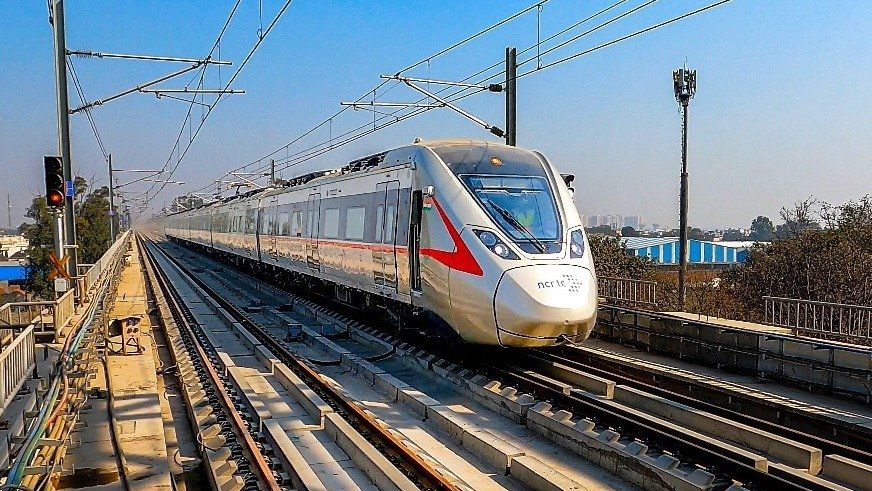
The Delhi–Meerut Regional Rapid Transit System (RRTS), branded Namo Bharat, has crossed a significant operational milestone, marking the first time India’s National Capital Region has a high-speed regional rail link designed for daily intercity commuting rather than long-distance travel.
Officials confirmed that the 82-km corridor is now functionally integrated, enabling end-to-end transit between Delhi and Meerut in under an hour, a journey that routinely exceeded three hours by road. The system combines dedicated high-speed tracks, multimodal interchange points and transit-oriented development nodes intended to reshape commuting patterns across the NCR.
Urban planners view the corridor as a structural intervention rather than a transport upgrade. By compressing travel time between satellite towns and the capital, the line is expected to influence housing demand, decentralize office clusters and reduce vehicular congestion along one of North India’s most burdened road corridors.
The project is also being framed within India’s broader low-emission mobility transition. Electrified rapid rail, integrated with metro networks and last-mile systems, is projected to lower per-capita transport emissions while improving regional productivity.
Transport economists caution that long-term impact will hinge on fare calibration, feeder connectivity and land-use planning around stations. If these align, the RRTS could serve as a template for high-speed regional mobility in other urban clusters.







No Comment! Be the first one.