








Rajasthan Accelerates Solar Infrastructure Expansion as Renewable Energy Capacity Grows
Rajasthan is strengthening its position as India’s renewable energy leader with a fresh wave of investments in solar infrastructure, transmission networks and energy storage projects across the...

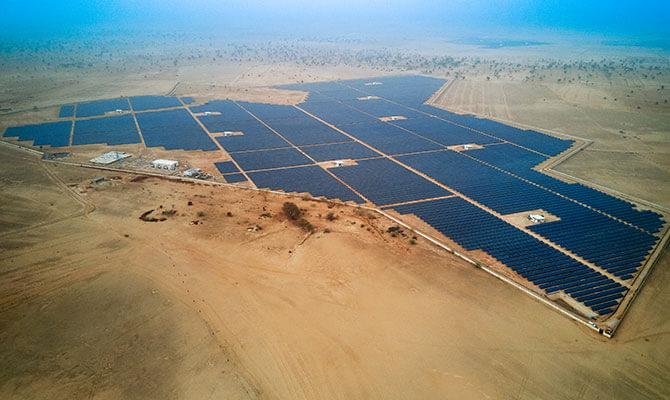
Rajasthan is strengthening its position as India’s renewable energy leader with a fresh wave of investments in solar infrastructure, transmission networks and energy storage projects across the state.
Known for its vast desert landscape and high solar radiation levels, Rajasthan has emerged as one of the country’s most important destinations for large-scale renewable energy development. Over the past decade, the state has attracted significant investments from public and private sector developers looking to expand solar power generation capacity.
Infrastructure experts say the conversation around renewable energy is no longer limited to power generation alone. As solar capacity increases, attention is shifting towards supporting infrastructure such as transmission corridors, grid modernization and energy storage systems that can ensure reliable electricity supply.
Several districts, including Jaisalmer, Barmer, Bikaner and Jodhpur, have become major hubs for renewable energy projects. The expansion has created demand for improved roads, substations and logistics infrastructure to support construction and long-term operations.
Officials believe renewable energy infrastructure could play a key role in driving economic activity across rural regions. Large projects often generate employment opportunities during construction while attracting related industries and service providers to nearby areas.
Industry observers note that India’s clean energy ambitions depend heavily on states such as Rajasthan, which possess the land resources and climatic conditions required for large-scale solar deployment. The state is expected to remain central to national efforts aimed at increasing renewable energy capacity over the coming years.
The growth of renewable infrastructure is also creating new challenges. Experts point to the need for stronger transmission networks capable of transporting electricity from remote generation sites to urban and industrial centres where demand is highest.
As the energy transition accelerates, investments in supporting infrastructure are expected to become just as important as investments in power generation itself.
For Rajasthan, the renewable energy boom represents more than an environmental initiative. It is increasingly becoming a major infrastructure story that could influence economic development, industrial growth and energy security for years to come.






No Comment! Be the first one.