








India’s First 8-Lane Tunnel Beneath a Tiger Reserve Opens, Marking a New Phase in Green Infrastructure
India’s infrastructure story reached another milestone on Friday with the opening of the country’s first eight-lane road tunnel beneath the Mukundra Hills Tiger Reserve in Rajasthan. The...

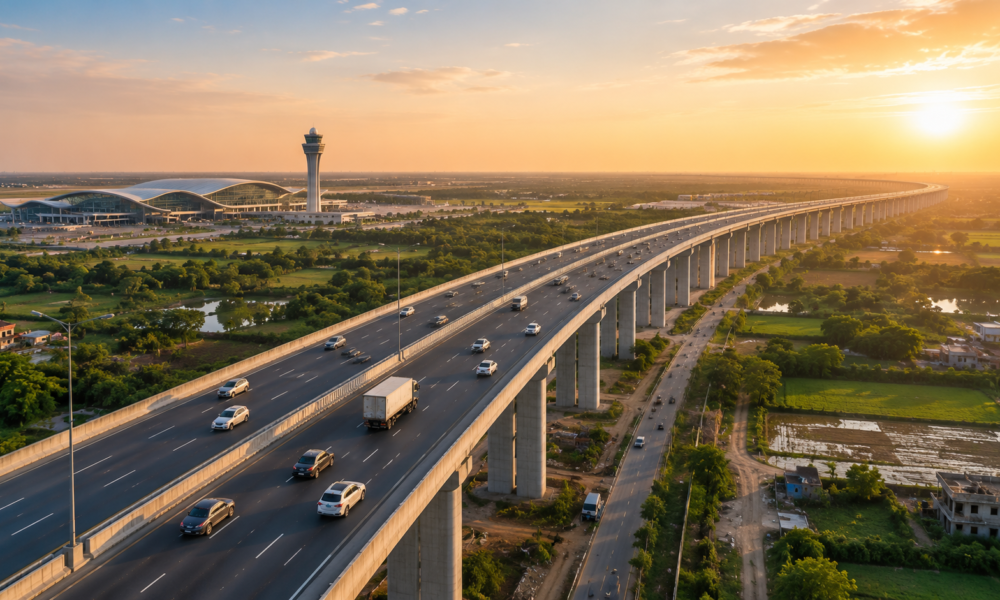
India’s infrastructure story reached another milestone on Friday with the opening of the country’s first eight-lane road tunnel beneath the Mukundra Hills Tiger Reserve in Rajasthan. The tunnel forms a critical part of the Delhi-Mumbai Expressway, one of India’s most ambitious highway projects, and highlights the country’s growing focus on combining modern transport infrastructure with environmental sensitivity.
The 4.9-kilometre tunnel near Kota has been built as part of the 1,386-kilometre Delhi-Mumbai Expressway that connects the national capital with the country’s financial hub. Once the entire corridor becomes operational, the road journey between Delhi and Mumbai is expected to come down from over 24 hours to nearly 12 hours. The expressway traverses six states and has been designed to improve connectivity, reduce logistics costs and facilitate faster movement of goods and passengers.
What makes the Kota tunnel particularly significant is its location. Constructing an eight-lane tunnel beneath a protected tiger reserve required engineers to balance transportation needs with ecological preservation. Instead of cutting through forest land or creating a surface corridor that could disrupt wildlife movement, the underground alignment allows animals to continue using the habitat above with minimal disturbance.
For India’s infrastructure sector, the project represents more than an engineering achievement. It reflects a broader shift in the way large infrastructure projects are being conceptualised and executed. Earlier generations of transport projects often treated environmental considerations as constraints. Increasingly, infrastructure planning is now attempting to integrate sustainability into project design itself.
The Delhi-Mumbai Expressway is also expected to generate substantial economic benefits. The corridor passes through major industrial and agricultural regions in Haryana, Rajasthan, Madhya Pradesh, Gujarat and Maharashtra. Faster travel times and improved connectivity can significantly lower freight transportation costs and strengthen supply chains. Better road infrastructure often attracts investments in logistics parks, warehousing facilities, manufacturing clusters and commercial development along the corridor.
The project also demonstrates India’s expanding engineering capabilities. Building an eight-lane tunnel beneath an ecologically sensitive area required advanced construction techniques, complex geological assessments and careful project planning. Such capabilities are increasingly becoming essential as India undertakes infrastructure projects in difficult terrains, including tunnels in the Himalayas, highways in the North East and urban transport projects beneath densely populated cities.
For investors, contractors and infrastructure companies, the tunnel serves as an indicator of where the sector is heading. Future infrastructure projects are likely to place greater emphasis on sustainable construction practices, environmental mitigation measures and technologically sophisticated engineering solutions.
As India continues to expand its expressway network and modernise transport infrastructure, the Mukundra tunnel offers a glimpse of the country’s next phase of development. It is not merely another stretch of road. It is evidence that large-scale infrastructure and environmental stewardship can increasingly move together, setting a new benchmark for how critical infrastructure projects may be designed in the years ahead.








No Comment! Be the first one.