








India plans standard designs for seven new bullet train corridors to accelerate high speed rail expansion
India is preparing to take a significant step in the next phase of its high speed rail programme by developing standardised engineering designs for seven proposed bullet train corridors. The move is...

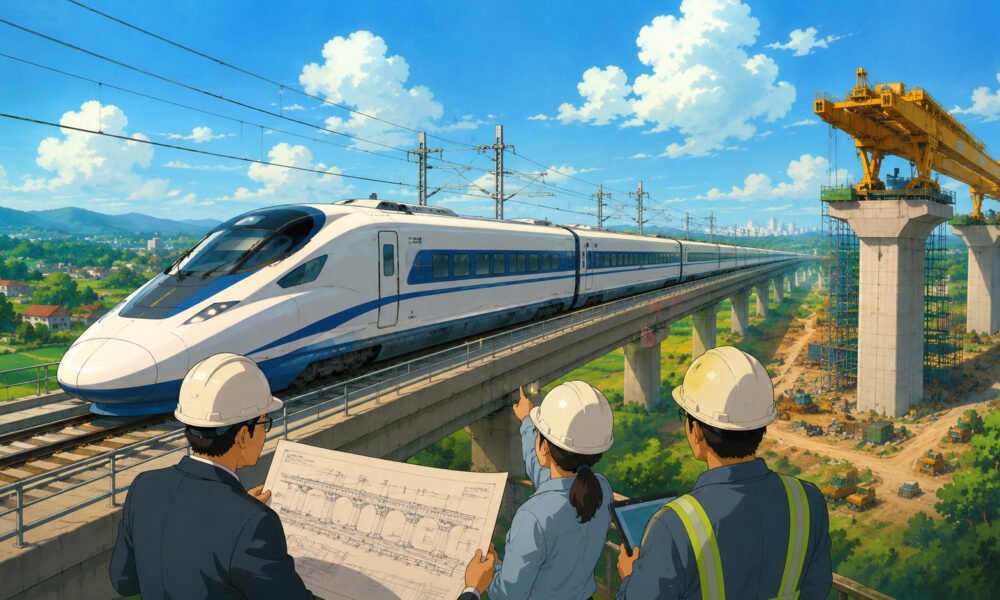
India is preparing to take a significant step in the next phase of its high speed rail programme by developing standardised engineering designs for seven proposed bullet train corridors. The move is expected to reduce construction timelines, improve cost efficiency and strengthen the country’s growing expertise in large scale rail infrastructure.
According to recent reports, the government is working on indigenous design standards for key civil infrastructure, including bridges, viaducts, tunnels, stations and elevated sections. These standards will replace the practice of relying extensively on foreign specifications, creating a unified engineering framework for future bullet train projects.
The initiative builds on the experience gained from constructing the Mumbai Ahmedabad High Speed Rail corridor, India’s first bullet train project. Engineers and infrastructure agencies have accumulated valuable technical knowledge during the project’s execution, allowing future corridors to adopt designs that are better suited to Indian terrain, climate and construction practices.
Standardisation is expected to deliver several operational benefits. Using common engineering templates can simplify project planning, speed up approvals and enable contractors to replicate proven construction methods across multiple corridors. It may also lower project costs by reducing the need for repeated design work while ensuring consistent quality and safety standards.
Industry experts believe the approach could strengthen India’s domestic infrastructure ecosystem. Engineering consultants, construction firms and manufacturers would be able to work with familiar specifications, helping improve productivity and encouraging greater localisation of specialised components required for high speed rail.
The government’s broader vision also aligns with the Make in India initiative, which aims to expand domestic manufacturing and reduce dependence on imported technologies. Developing homegrown standards for bullet train infrastructure represents another milestone in India’s efforts to build indigenous engineering capabilities for complex transport projects.
The proposed corridors are expected to connect several major economic centres across the country in the coming years. Although individual projects will continue to undergo detailed feasibility studies and approvals, a common engineering framework could help authorities launch construction more efficiently once they receive the green light.
Beyond faster passenger travel, high speed rail has the potential to generate substantial economic benefits. Large infrastructure projects create employment during construction, stimulate demand for steel, cement and engineering services, and improve regional connectivity. Better transport links can also encourage investment, tourism and urban development around future stations.
The standardisation effort reflects a broader transformation taking place across India’s infrastructure sector. In recent years, policymakers have increasingly focused on creating repeatable project models that reduce execution risks while improving delivery speed. Similar approaches have already been adopted in highway construction, metro rail systems and airport development.
As India continues investing in modern transport infrastructure, the adoption of standard bullet train designs could become a defining feature of the country’s next generation of high speed rail projects. By combining indigenous engineering expertise with lessons learned from its first bullet train corridor, India is positioning itself to expand its high speed rail network with greater efficiency, consistency and long term sustainability.
If implemented successfully, the initiative could not only accelerate future projects but also establish a robust domestic knowledge base capable of supporting high speed rail development for decades to come.






No Comment! Be the first one.