







Indian Railways Approves ₹175 Crore Electric Locomotive Facility at Raipur to Strengthen Freight Infrastructure
Indian Railways has approved a ₹175 crore infrastructure project to expand electric locomotive homing and maintenance facilities at Raipur in Chhattisgarh, reinforcing the national transporter’s...

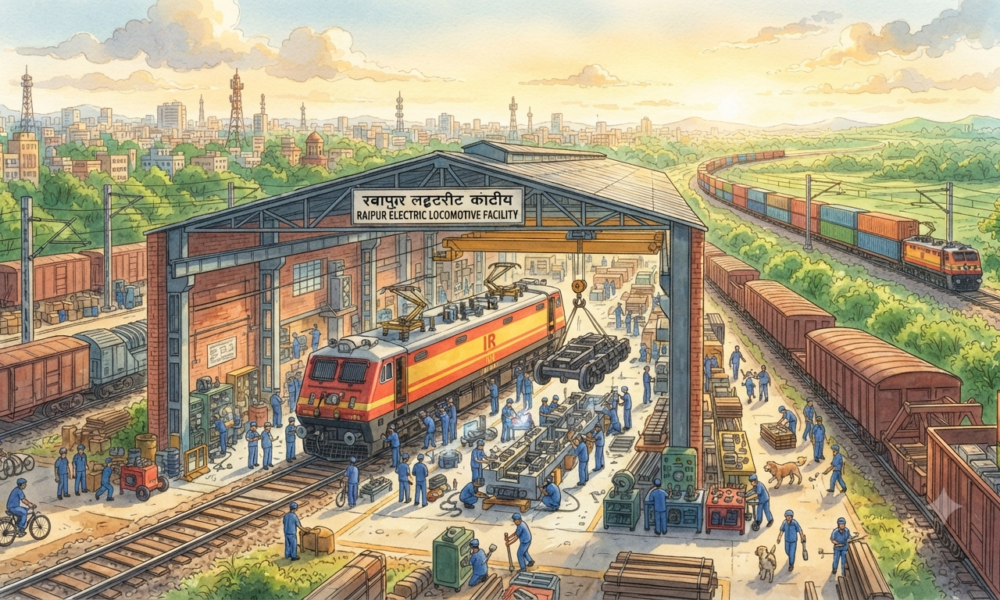
Indian Railways has approved a ₹175 crore infrastructure project to expand electric locomotive homing and maintenance facilities at Raipur in Chhattisgarh, reinforcing the national transporter’s strategy to improve freight operations and support the transition towards an all-electric railway network. The project will enhance the High Horse Power (HHP) locomotive shed under the South East Central Railway (SECR), enabling it to maintain and operate up to 250 three-phase electric locomotives.
The investment comes as Indian Railways continues to modernise its operational infrastructure to accommodate the growing fleet of electric locomotives replacing diesel-powered engines across the country. With freight volumes increasing and new Dedicated Freight Corridor sections becoming operational, demand for efficient locomotive maintenance facilities has become a critical component of railway infrastructure planning.
The approved project includes the construction of additional maintenance bays, inspection lines, testing facilities, administrative buildings and supporting utility infrastructure. Once completed, the upgraded depot will improve locomotive availability, reduce turnaround times and strengthen operational efficiency across one of India’s busiest freight corridors.
Raipur occupies a strategic position within India’s industrial belt, serving steel plants, mining operations, cement manufacturers and power generation facilities. The region contributes significantly to the country’s freight movement, making reliable locomotive maintenance essential for uninterrupted logistics operations.
Expanding the maintenance capacity is expected to support faster deployment of electric locomotives while improving reliability for freight services carrying coal, iron ore, finished steel, cement and other industrial commodities. Better maintenance infrastructure also reduces downtime, enabling Indian Railways to maximise asset utilisation and improve network productivity.
The project presents new opportunities for engineering companies, civil contractors, electrical system providers and railway equipment manufacturers. Construction activities will involve specialised industrial buildings, heavy-duty inspection systems, electrical installations, overhead equipment and digital monitoring technologies required for modern locomotive servicing.
The investment also supports Indian Railways’ broader sustainability objectives. Electric locomotives produce lower operating emissions than diesel engines and offer higher energy efficiency, lower maintenance costs and improved hauling capacity. As railway electrification expands across the country, maintenance infrastructure will play an equally important role in ensuring dependable operations.
Infrastructure experts note that railway depots and maintenance facilities are often overlooked despite being critical assets within the transport ecosystem. While new railway lines and stations receive public attention, maintenance infrastructure directly influences operational performance, punctuality and freight capacity.
The latest approval aligns with the government’s continued investment in railway infrastructure through network expansion, station redevelopment, signalling upgrades and electrification projects. Together, these initiatives aim to create a faster, cleaner and more efficient transport system capable of supporting India’s long-term economic growth.
For the infrastructure sector, the Raipur project represents another example of backend investments that strengthen the country’s logistics network. Improved locomotive maintenance capacity will help Indian Railways accommodate rising freight demand while supporting industries that depend on reliable rail connectivity for supply chain efficiency.
As execution begins, the project is expected to enhance operational resilience across the South East Central Railway zone and contribute to India’s ongoing transition towards a modern, fully electrified railway system.







No Comment! Be the first one.