






Ballari-Guntakal Rail Expansion Approved as India Strengthens High-Capacity Freight Network
Ballari-Guntakal Rail Expansion Approved as India Strengthens High Capacity Freight Network India’s railway infrastructure has received another major boost after the Union Cabinet approved a...

Ballari-Guntakal Rail Expansion Approved as India Strengthens High Capacity Freight Network
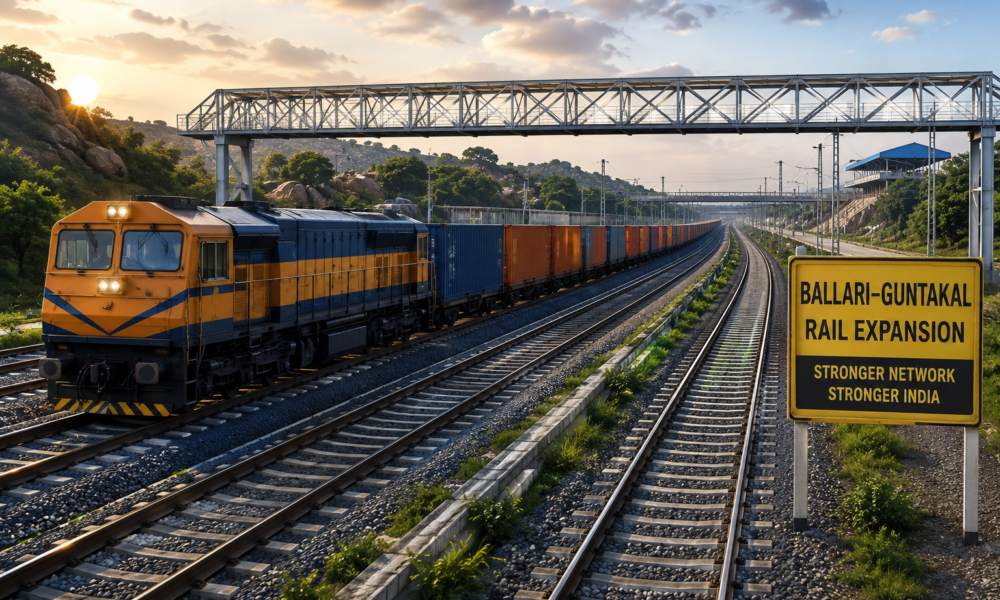
India’s railway infrastructure has received another major boost after the Union Cabinet approved a ₹1,264 crore project to add third and fourth railway lines on the Ballari to Guntakal section. The expansion is expected to increase line capacity, reduce congestion and improve freight movement across one of southern India’s strategically important rail corridors.
The approved project covers a 46-kilometre stretch connecting Ballari in Karnataka with Guntakal in Andhra Pradesh. The corridor is an important freight route serving mining, steel, cement and manufacturing industries while also supporting long distance passenger services. With rail traffic steadily increasing over the past decade, the existing double-line section has been operating close to its maximum capacity, making additional tracks essential for future demand.
According to the Cabinet decision, the project will involve laying third and fourth railway lines alongside the existing network. Once completed, the additional tracks will allow passenger and freight trains to move more efficiently by reducing delays caused by congestion. Faster train movement is also expected to improve schedule reliability and increase the overall carrying capacity of the route.
The Ballari region is one of India’s largest centres for iron ore mining and steel production. Every day, thousands of tonnes of minerals and industrial goods move through this corridor towards ports, power plants and manufacturing hubs. Expanding the rail network will help industries transport raw materials and finished products more efficiently while reducing logistics costs for businesses operating in southern India.
Apart from industrial benefits, the project is expected to improve passenger services by creating additional capacity for express and regional trains. Railway planners believe the upgraded corridor will reduce waiting times for train crossings and enable smoother operations during peak traffic periods. This is particularly important as Indian Railways continues to modernise its network while introducing more passenger and freight services across the country.
The expansion also supports India’s wider infrastructure strategy of building high-capacity multimodal transport corridors. Strengthening railway connectivity plays a key role in reducing dependence on road transport, lowering fuel consumption and cutting carbon emissions. Rail remains one of the most energy-efficient modes of transport for bulk cargo, making projects such as this an important part of the country’s sustainability goals.
The project is expected to generate employment during the construction phase while supporting long-term economic activity across Karnataka and Andhra Pradesh. Improved rail connectivity can encourage industrial investment, strengthen supply chains and improve access for businesses operating across the region.
Over the past few years, India has accelerated investments in railway infrastructure through new freight corridors, station redevelopment, electrification and capacity expansion projects. The Ballari-Guntakal upgrade adds another important link to this growing network and reflects the government’s continued focus on improving transport efficiency and supporting economic growth through modern infrastructure.
As freight volumes continue to rise alongside industrial expansion, capacity enhancement projects such as the Ballari-Guntakal rail upgrade are expected to play an increasingly important role in strengthening India’s logistics network. By removing bottlenecks and improving operational efficiency, the project will contribute to faster movement of goods, improved passenger services and greater resilience across one of southern India’s busiest railway corridors.





No Comment! Be the first one.