








India Begins Excavation of First Undersea Bullet Train Tunnel, Marking Major Engineering Milestone
India’s first high speed rail project has crossed another significant construction milestone with excavation beginning on the country’s first undersea railway tunnel beneath Thane Creek....

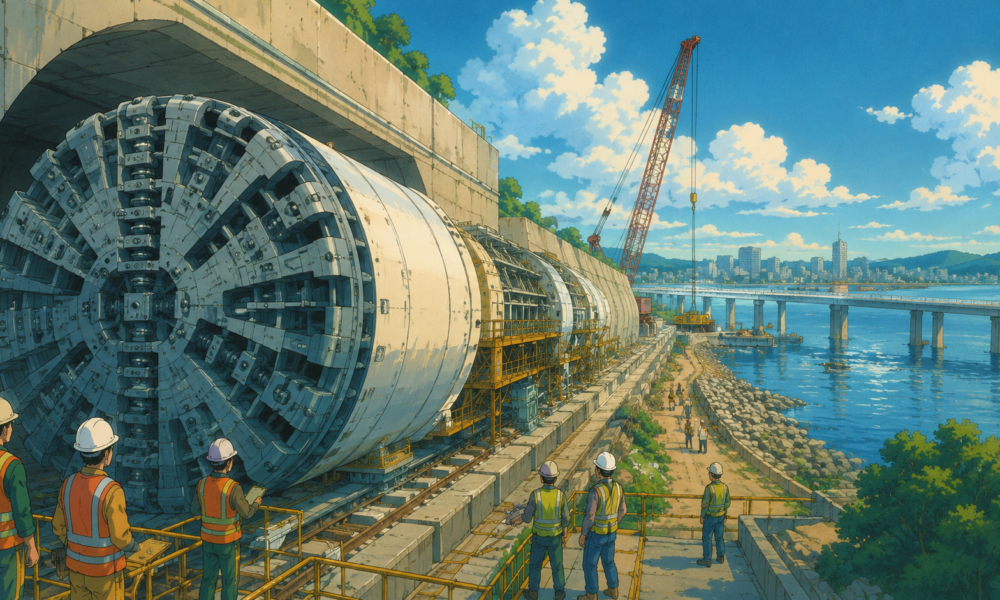
India’s first high speed rail project has crossed another significant construction milestone with excavation beginning on the country’s first undersea railway tunnel beneath Thane Creek. The latest development on the Mumbai to Ahmedabad Bullet Train corridor is expected to accelerate work on one of the most technically challenging sections of India’s flagship rail infrastructure programme.
The National High Speed Rail Corporation Limited (NHSRCL) has launched the second Tunnel Boring Machine (TBM) from Sawli near Ghansoli towards Vikhroli. The machine will excavate a 10 kilometre tunnel section, including a seven kilometre stretch running beneath Thane Creek. Once completed, this will become India’s first operational undersea railway tunnel, setting a new benchmark for railway engineering in the country.
The undersea section forms part of the project’s 21 kilometre underground corridor connecting Sawli with the Bandra Kurla Complex station in Mumbai. Of this, 16 kilometres will be excavated using massive Tunnel Boring Machines, while the remaining five kilometres have already been completed through the New Austrian Tunnelling Method (NATM), a technique widely used for complex underground construction.
The latest TBM is among the largest ever deployed for railway tunnelling in India. It features a cutter head measuring 13.6 metres in diameter, weighs more than 3,000 tonnes and extends nearly 96 metres in length. Designed specifically for challenging geological conditions, the machine will simultaneously excavate the tunnel, install concrete lining segments and maintain structural stability throughout the construction process.
The first TBM had already started tunnelling earlier this month from Vikhroli towards Bandra Kurla Complex. With both machines now operating simultaneously from opposite directions, construction is expected to progress at a faster pace, reducing project timelines while maintaining high safety standards. Engineers will continuously monitor ground movement, water pressure and tunnel alignment using advanced digital systems to ensure precision beneath the creek.
The Mumbai to Ahmedabad High Speed Rail corridor stretches over 508 kilometres across Maharashtra and Gujarat and is India’s first dedicated bullet train project. The corridor will eventually support trains operating at speeds of up to 320 kilometres per hour, reducing travel time between the two cities to around two hours while improving regional connectivity and economic integration.
Apart from improving passenger mobility, the project is introducing advanced tunnelling technologies, modern railway engineering practices and specialised construction equipment that are expected to influence future metro, railway and underground infrastructure developments across India. The successful execution of the undersea tunnel will also strengthen domestic expertise in handling complex underground transportation projects.
As construction progresses beneath Thane Creek, the project represents more than just another phase of India’s first bullet train. It reflects the country’s growing capability to execute world class infrastructure projects using advanced engineering, precision planning and international construction standards. The successful completion of this undersea tunnel is likely to become one of the defining achievements of India’s modern transport infrastructure journey.






No Comment! Be the first one.