






Delhi’s Barapullah Phase 3 Flyover Opens: Why a New Road Link Is Already Facing Traffic Bottlenecks
Delhi’s expanding road network is designed to reduce travel time and improve connectivity across the National Capital Region. However, the opening of a new flyover does not automatically eliminate...

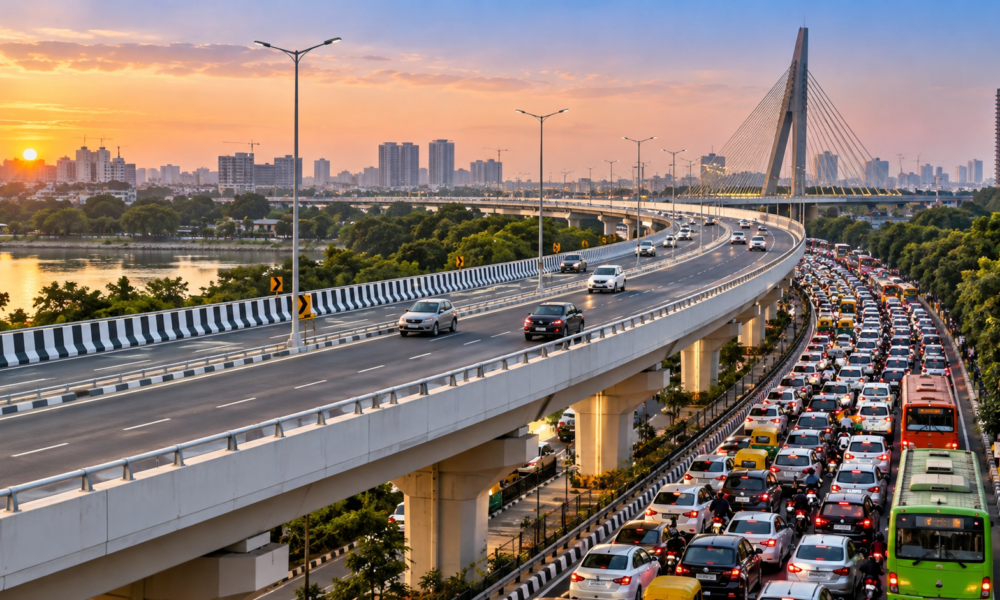
Delhi’s expanding road network is designed to reduce travel time and improve connectivity across the National Capital Region. However, the opening of a new flyover does not automatically eliminate congestion. The Barapullah Phase 3 flyover highlights a familiar urban infrastructure challenge: a road can improve movement along one stretch while creating pressure at the junctions that connect it to the wider network.
Why the Flyover Matters
The Barapullah corridor is an important part of Delhi’s elevated road infrastructure. It is intended to improve connectivity between key stretches of the city and help commuters navigate busy urban routes more efficiently.
Elevated roads can reduce interruptions caused by traffic signals and crossings. They can also separate through-traffic from local movement, potentially improving travel times during peak hours.
However, the benefits depend on how effectively the flyover connects with existing roads. If vehicles encounter bottlenecks immediately after leaving the elevated section, the time saved on the flyover may be lost at the next junction.
Why Traffic Bottlenecks Can Persist
One of the most common causes of congestion around flyovers is lane merging. Vehicles moving at different speeds must converge into a limited number of lanes, creating friction and slowing traffic.
The problem becomes more serious when a large volume of vehicles reaches a junction within a short period. Even if the flyover itself has adequate capacity, the connecting road may not be able to accommodate the sudden increase in traffic.
Poorly coordinated traffic signals, roadside parking, pedestrian movement and competing entry or exit points can further restrict vehicle flow. These factors can turn a new road link into a congestion hotspot during busy periods.
The issue is not necessarily that the flyover has failed. Rather, it may indicate that the surrounding road network needs better integration.
The Importance of Junction Planning
Infrastructure projects should be assessed as part of a larger transport system instead of being evaluated only on the basis of the structure being built.
Before opening a major road link, traffic planners need to examine vehicle volumes, turning movements, merging points and the capacity of connecting roads. Traffic simulations and on-ground studies can help identify locations where congestion is likely to develop.
Where bottlenecks emerge, authorities may need to adjust lane markings, improve signage, redesign merging points, coordinate traffic signals or restrict roadside obstructions.
Real-time traffic monitoring can also help identify whether congestion is temporary or a recurring problem that requires engineering intervention.
What It Means for Delhi-NCR Commuters
For commuters, a new flyover may still improve connectivity even if traffic remains heavy at certain points. The actual benefit depends on the complete journey, including the approach roads and exits.
For urban planners, the larger lesson is that road capacity cannot be measured by the length of an elevated structure alone. A transport corridor performs well only when its individual components work together.
Delhi-NCR continues to require major investments in roads, public transport and traffic management. But construction must be accompanied by careful junction planning, pedestrian safety measures and coordination between different road agencies.
The Barapullah Phase 3 corridor serves as a reminder that infrastructure success is not simply about opening a road. It is about ensuring that traffic can move efficiently from one part of the network to another.







No Comment! Be the first one.