






Delhi’s Slum Rehabilitation Plan: Can Public-Private Partnerships Deliver Affordable Urban Housing?
Delhi’s housing challenge extends beyond the availability of new apartments. Many families living in informal settlements face limited access to secure housing, reliable services and...

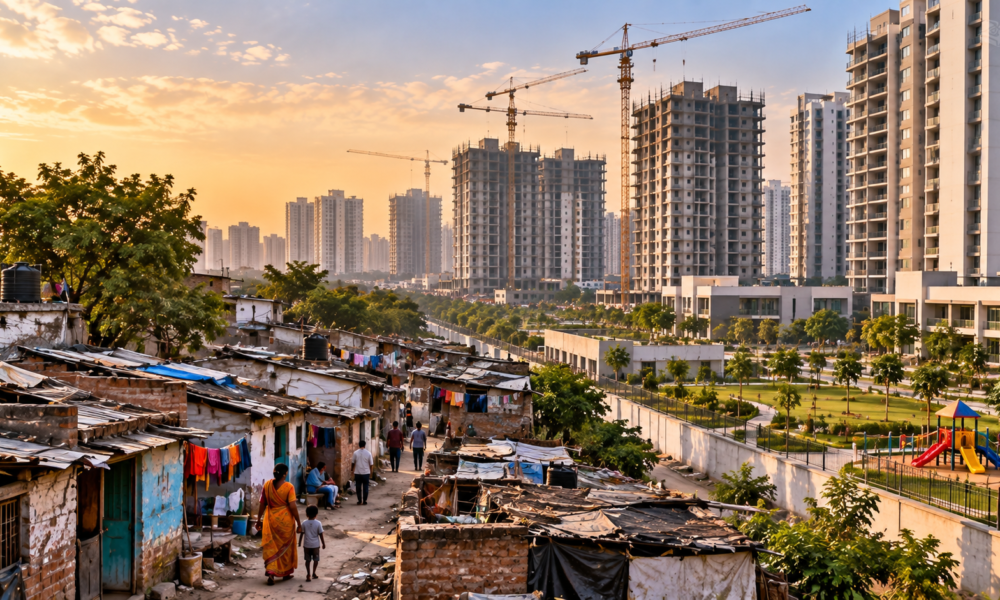
Delhi’s housing challenge extends beyond the availability of new apartments. Many families living in informal settlements face limited access to secure housing, reliable services and well-planned neighbourhood infrastructure.
The Delhi Development Authority’s reported redevelopment planning for 45 slum clusters, covering approximately 21,229 households, highlights the scale of the challenge. The wider initiative includes planning for in-situ redevelopment, an approach that seeks to improve housing where communities already live rather than simply relocating residents elsewhere.
However, turning a redevelopment proposal into safe, affordable and occupied homes requires careful planning, credible financing and meaningful engagement with residents.
What Is In-Situ Slum Rehabilitation?
In-situ rehabilitation aims to redevelop an existing settlement while allowing eligible residents to remain in or near their current neighbourhood.
The approach can help preserve access to jobs, schools, transport links and social networks. Relocation to distant areas may disrupt these connections and increase commuting costs for households that depend on nearby employment.
Redevelopment can involve replacing inadequate structures with formal housing, improving internal roads and providing services such as water, sanitation, drainage and electricity.
The precise arrangements depend on the approved scheme, eligibility criteria, land ownership and the legal status of the settlement.
Why Public-Private Partnerships Matter
Public-private partnerships, or PPPs, can bring together government oversight, private-sector execution and different sources of project finance.
In a redevelopment project, a private partner may be responsible for construction or other agreed activities, while public agencies establish the policy framework, approve plans and oversee compliance.
A well-structured arrangement can help mobilise investment and technical expertise. It can also distribute certain project responsibilities between the public authority and the selected partner.
However, a PPP is not automatically a guarantee of faster or more affordable housing. The model must be designed around the needs of existing residents rather than relying solely on the commercial value of the land.
The Main Challenges
The first challenge is eligibility. Authorities need transparent procedures to determine which households qualify for rehabilitation and what documentation is required. Unclear criteria can create disputes and undermine confidence.
The second is financial feasibility. Redevelopment costs can be substantial, particularly where projects involve dense settlements, complex land arrangements and the need to provide new infrastructure.
The third is construction and relocation management. Depending on the scheme, residents may require temporary accommodation while work takes place. Any transition must be planned carefully to avoid unnecessary disruption.
Finally, housing must be supported by essential services. Buildings alone do not create a functioning neighbourhood. Schools, healthcare access, public transport, drainage, waste management and open spaces should form part of the planning process.
What Residents Should Expect From the Process
Redevelopment announcements and consultant appointments represent preparatory steps, not proof that construction has begun or that possession dates have been established.
Residents should look for official information on the specific cluster, eligibility rules, approved layouts, rehabilitation arrangements and implementation schedule.
Public authorities should also establish channels for residents to raise questions and resolve grievances. Consultation is especially important where redevelopment affects livelihoods, access routes and long-standing community networks.
Clear communication can help reduce misinformation and make the process more accountable.
Can Delhi Deliver Inclusive Redevelopment?
Delhi’s rehabilitation challenge requires more than replacing informal housing with formal structures. It requires creating neighbourhoods where residents can live securely without losing access to economic and social opportunities.
A well-designed PPP may contribute to that objective, but its success depends on transparent selection processes, realistic financial arrangements, quality construction and enforceable commitments to residents.
The ultimate measure should be whether eligible households receive safe, affordable housing supported by reliable services. If these priorities remain central, redevelopment can become an opportunity to improve urban living standards rather than merely change the appearance of a settlement.





No Comment! Be the first one.