





Heavy Rain, Waterlogging and Schools: Is India’s Infrastructure Ready for the Monsoon?
Schools across Delhi-NCR have announced a holiday on 31 August 2026, citing heavy rainfall and flooded roads. However, there is no confirmed nationwide school holiday for 31 August 2026. Most schools...

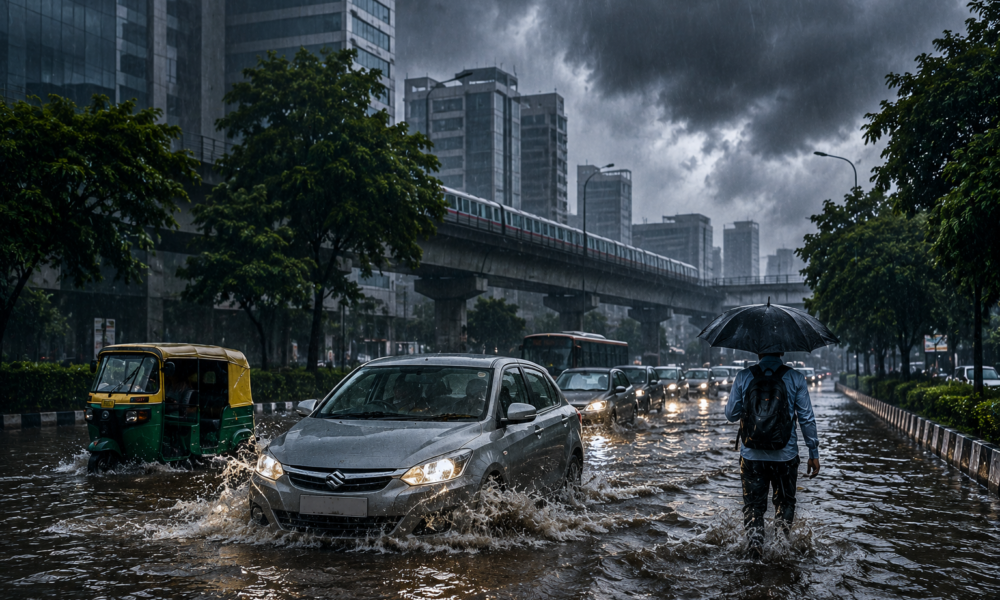
Schools across Delhi-NCR have announced a holiday on 31 August 2026, citing heavy rainfall and flooded roads. However, there is no confirmed nationwide school holiday for 31 August 2026. Most schools are expected to remain open as usual, although heavy rainfall may affect some parts of India. Local authorities may close schools if they identify flooded roads, severe waterlogging, landslide risks, unsafe travel conditions or exceptionally heavy rainfall. Parents are advised to check announcements from their schools and local authorities before sending their children to school.
The recurring incidents of waterlogging raise serious questions about the strengths and weaknesses of India’s civic infrastructure, many of which have been exposed by the arrival of the monsoon.
Many domestic workers have been unable to step out due to fears of falling ill in the adverse weather. The waterlogged conditions in the Gautam Buddh Nagar region also highlight why domestic help may not be able to arrive as usual.
Moving towards the Gurugram region, the situation becomes even more concerning, with several areas experiencing severely waterlogged roads and deep cave-ins. The Delhi-NCR region has been repeatedly affected by torrential rainfall, with waterlogging becoming an almost daily occurrence during periods of intense rain.
The drastic waterlogging seen across several cities has been attributed to changing climatic conditions in recent years, as well as rapid urban expansion driven by infrastructure development. These conditions put considerable pressure on urban transport networks and can result in significant financial losses.
India’s massive urban infrastructure can struggle during heavy rainfall because every piece of land has a distinct geography, including natural slopes and ancient water-carrying channels, locally known as naalas. These channels historically helped carry excess rainwater towards local rivers and other natural drainage systems.
Experts often argue that the rapid expansion of infrastructure in several metropolitan areas does not adequately account for geographical or climatic factors. When these considerations are overlooked, drainage systems can become overwhelmed during the monsoon.
Every region has its own natural drainage patterns and was historically capable of directing a certain amount of rainwater towards local drains and water bodies. However, when buildings, roads, footpaths and other structures obstruct these natural pathways, rainwater has fewer places to go, resulting in severe waterlogging.
Moreover, several Delhi-NCR cities have developed in a fragmented and often haphazard manner, with urban planning models being adopted without sufficient consideration of local geographical and climatic conditions. The extensive use of concrete and other impermeable materials further compounds the problem, as these surfaces do not allow rainwater to naturally seep into the ground and can also contribute to higher surface temperatures.
As cities expand, natural water bodies and open spaces are frequently replaced by buildings and other infrastructure. This reduces the land available to absorb rainwater and leaves excess water with fewer natural outlets.
To prevent cities from becoming severely waterlogged, it is necessary to acknowledge the reality of increasingly intense monsoons and focus on building proactive and climate-resilient infrastructure.
Civic agencies also need to strengthen basic infrastructure management. Responsibilities such as desilting drains, maintaining stormwater networks and enforcing building regulations need to be carried out consistently. Many drainage systems are outdated, while multiple agencies often work in silos. As a result, long-term urban planning does not always keep pace with rapid population growth and infrastructure expansion.




No Comment! Be the first one.