








Tamil Nadu Unveils ₹20,800 Crore Power Project as Electricity Demand Rises
Tamil Nadu has announced a major power infrastructure push, including a ₹20,800 crore supercritical thermal power station in Tuticorin, as the state prepares for rising electricity demand from...

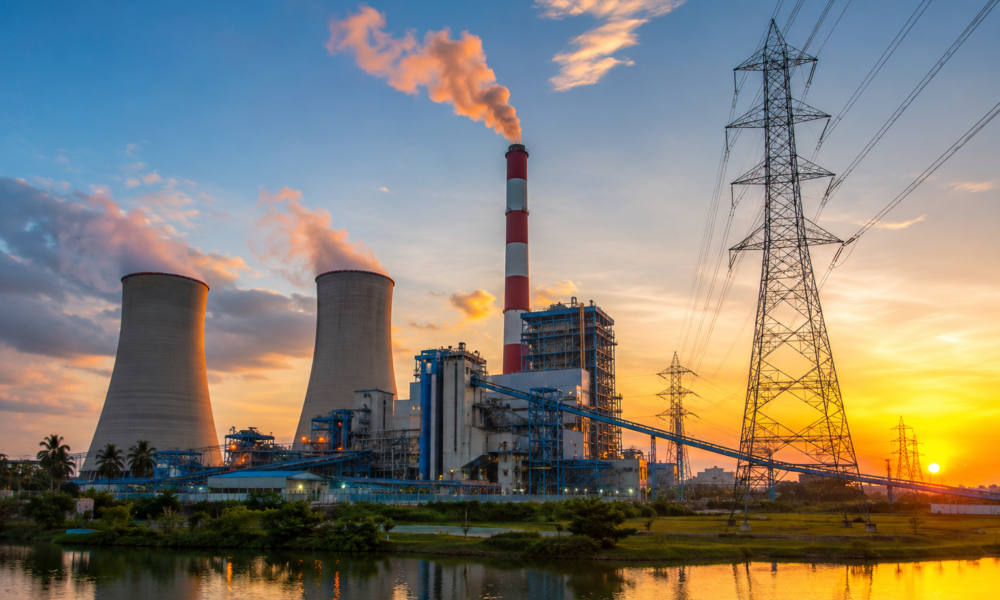
Tamil Nadu has announced a major power infrastructure push, including a ₹20,800 crore supercritical thermal power station in Tuticorin, as the state prepares for rising electricity demand from industry, urban growth and a rapidly expanding economy.
Chief Minister C. Joseph Vijay announced the 1,600 MW project in the state Assembly on 31 August. The proposed facility will comprise two 800 MW units and will be developed through a public-private partnership (PPP) model.
The project is part of a wider effort to strengthen Tamil Nadu’s electricity infrastructure. Alongside the new generation capacity, the state has announced the Tamil Nadu Transmission Improvement Scheme, with an allocation of ₹33,066 crore.
The transmission programme will involve the construction of 196 new substations and 15,000 km of transmission lines. The objective is to improve the movement of electricity from generation centres to major consumption hubs, including Chennai.
The expansion comes as Tamil Nadu’s electricity requirements continue to increase. The state has a large industrial base spanning automobiles, electronics, manufacturing, information technology and other energy-intensive sectors. Growing urbanisation and new industrial investments are also increasing pressure on the power network.
The Tuticorin project is particularly significant because it is expected to gradually replace the existing five 210 MW coal-fired units at the Tuticorin thermal power station. Those units were commissioned in phases beginning in 1979.
Tamil Nadu is also expanding renewable energy capacity, particularly through wind and solar power. However, renewable generation is not available consistently throughout the day. The state government has therefore argued that firm generation capacity and energy storage will remain important as electricity demand rises.
Battery storage systems are also being developed to store surplus renewable electricity and make it available during periods of peak demand. This points towards a broader shift in the state’s power strategy, combining renewable generation, storage, transmission upgrades and conventional generation capacity.
At the distribution level, Chennai is set to receive ₹1,762 crore worth of upgrades. The programme includes 36 new 33/11 kV substations, new distribution transformers and the replacement of ageing cables, conductors, pillar boxes and circuit breakers.
For infrastructure developers and investors, the announcements highlight a critical issue facing India’s industrial states: building generation capacity alone is not enough. Transmission and distribution networks must expand alongside factories, commercial districts, data centres and urban populations.
Tamil Nadu’s latest plan therefore goes beyond a single power station. It represents an attempt to build a larger electricity infrastructure network capable of supporting industrial expansion while accommodating a growing share of renewable energy.
The challenge now will be execution. Large-scale power and transmission projects require significant capital, land, equipment, clearances and coordinated implementation. The effectiveness of the investment will ultimately depend on how quickly the new infrastructure becomes operational and how well it integrates with the state’s evolving energy mix.
For Tamil Nadu, the message is clear: economic growth is increasingly becoming an infrastructure challenge, and reliable power sits at its centre.







No Comment! Be the first one.