







India Data Centre Boom: Why AI Is Driving Infrastructure Demand
India’s data centre sector is rapidly becoming an important part of the country’s wider infrastructure story, with the growth of artificial intelligence (AI), cloud computing and digital...

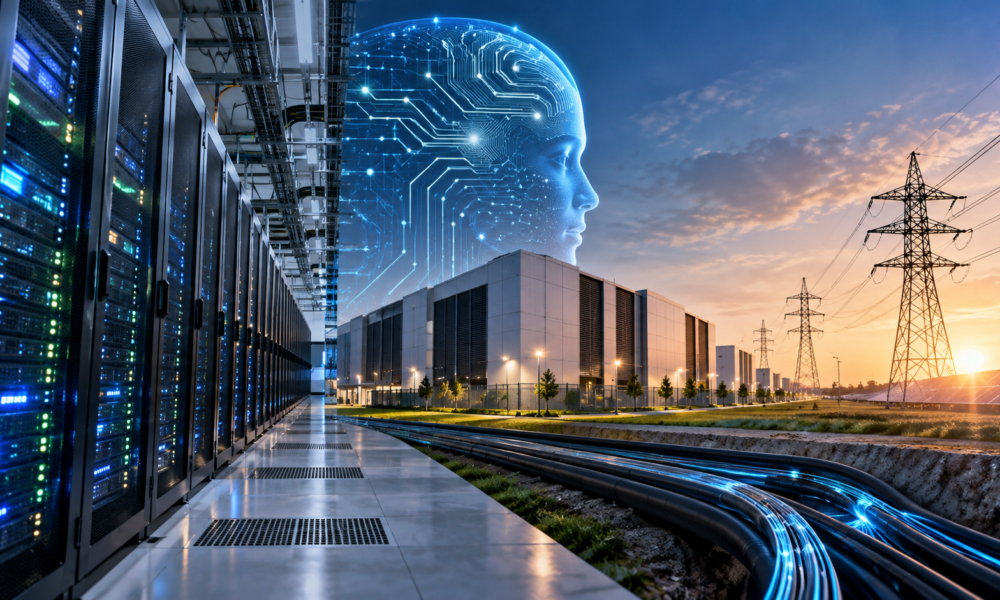
India’s data centre sector is rapidly becoming an important part of the country’s wider infrastructure story, with the growth of artificial intelligence (AI), cloud computing and digital services driving demand for new facilities.
India had nearly 1.8 GW of operational data centre capacity by the first half of 2026, according to Cushman & Wakefield, with a development pipeline of nearly 3.9 GW. Mumbai remains the country’s largest data centre market, while Hyderabad, Chennai and Delhi-NCR are emerging as major secondary markets.
The expansion is also attracting significant capital. The Centre has said that India’s data centre industry could attract around $200 billion in investment, highlighting the scale of infrastructure required to support the country’s growing digital economy and AI ecosystem.
AI Is Increasing Infrastructure Demand
The rapid growth of AI is changing the requirements of data centres. AI applications require large amounts of computing power, which means operators need facilities capable of supporting higher-density computing equipment.
According to CBRE, AI adoption is driving demand for higher-density deployments and large-scale capacity additions. Power availability, renewable energy access, network connectivity and market access are becoming increasingly important factors when companies select locations for new data centres.
This means the data centre expansion is creating demand well beyond servers and technology equipment. It is also increasing the need for land, electricity, transmission infrastructure, cooling systems and high-speed connectivity.
Power Is Becoming A Critical Requirement
Electricity is one of the biggest infrastructure requirements for a data centre. As AI workloads become more power-intensive, developers need reliable and uninterrupted electricity supplies.
The government has identified reliable power availability as one of the key requirements for expanding India’s data centre ecosystem. Discussions with industry stakeholders have included cluster-based transmission and substation planning, dual power feeders and renewable energy procurement.
The growing financing requirement is also visible in the lending market. The National Bank for Financing Infrastructure and Development (NaBFID) has sanctioned loans of more than ₹3,000 crore each to at least four data centres, highlighting the large amount of capital required to build these facilities. NaBFID estimates that India’s data centres could require around ₹1 trillion in funding through March 2031.
Land And Connectivity Matter
Data centres require large sites with access to reliable electricity, fibre networks, cooling infrastructure and transport links. This is influencing where new projects are being developed.
Mumbai and Chennai continue to benefit from strong connectivity infrastructure and submarine cable landing stations. Delhi-NCR, Hyderabad and Bengaluru are also strengthening their positions in the data centre market.
New locations are also beginning to attract attention. Cushman & Wakefield has identified Visakhapatnam as an emerging destination for AI-focused data centre investment.
A New Infrastructure Asset Class
The growth of data centres is increasingly linking India’s technology sector with real estate and infrastructure. Developers need land, buildings, power connections, cooling systems, fibre networks and supporting infrastructure before a facility can become operational.
The government has also highlighted the need for ready-to-use land, reliable power and faster approvals to accelerate the sector’s expansion.
For India’s infrastructure industry, this creates opportunities across construction, power transmission, renewable energy, real estate, fibre connectivity and specialised cooling systems.
As AI adoption continues to grow, India’s data centre expansion could therefore become much more than a technology story. It is increasingly becoming a major infrastructure development story, with power, land and connectivity emerging as the foundations of the country’s next digital growth phase.







No Comment! Be the first one.