







What investment interest has India received following the announcement of Semicon 2.0?
India has already received investment commitments worth USD 11–12 billion, or around ₹1 lakh crore, following the announcement of Semicon 2.0. The government expects the programme to create at least...

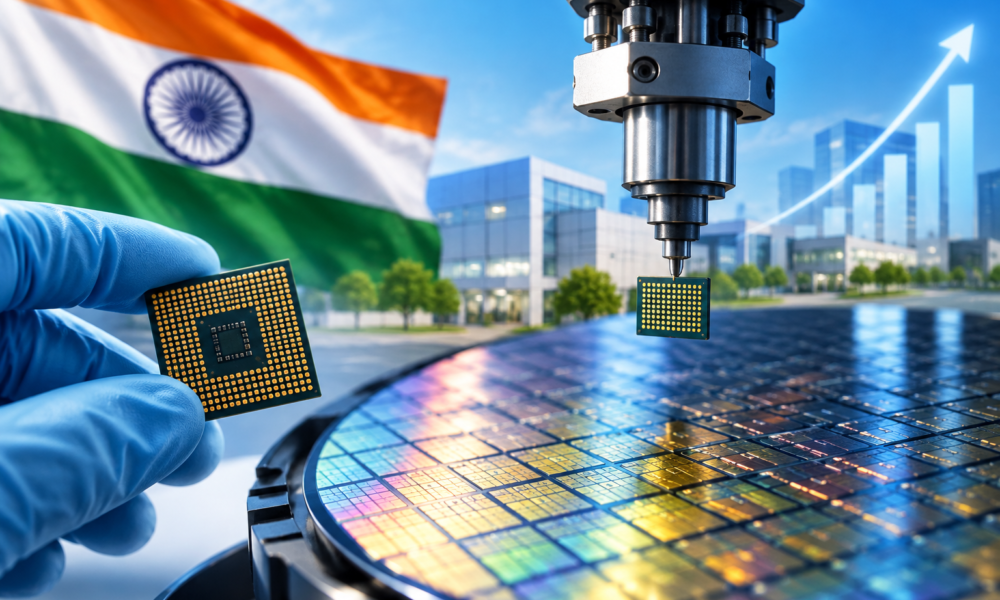
India has already received investment commitments worth USD 11–12 billion, or around ₹1 lakh crore, following the announcement of Semicon 2.0. The government expects the programme to create at least one lakh jobs across the semiconductor ecosystem.
The investment commitments span a broad range of areas within the semiconductor ecosystem, including equipment, materials, gases, chemicals, assembly, testing, marking and packaging (ATMP) units, substrates and even wafers.
The investment is expected to be made over a period of two to three years. Ashwini Vaishnaw declined to disclose the names of the companies involved because several investors did not want their names revealed yet and are expected to make announcements after securing approval from their boards and shareholders.
In terms of employment potential, Vaishnaw said that the entire semiconductor ecosystem could create close to one lakh new jobs. He added that the actual number could be significantly higher and described the estimate as conservative.
Vaishnaw described the venture capital funding secured by 20 deep-tech semiconductor start-ups under Semicon 1.0 as a very significant achievement. Another major focus of Semicon 2.0 will be to attract semiconductor equipment, materials, chemicals and gas companies to establish operations in India.
Japan’s strong base of materials, equipment, chemical and gas manufacturers helped the country rebuild its high-end chip manufacturing capabilities. For India to sustain semiconductor growth over the next two to three decades, a similar ecosystem will be critical.
Semicon 1.0 was primarily about laying the foundation for India’s semiconductor industry, while Semicon 2.0 is focused on building a complete ecosystem for the industry’s long-term growth.
Semicon 2.0 marks a shift from laying the foundation of India’s semiconductor industry to building a fully fledged ecosystem encompassing chip design, equipment and materials, fabs, advanced packaging, research and development, and talent.
Under the second phase, the government will support semiconductor design companies, including both start-ups and larger players, through investment support, tooling, design, IT infrastructure, deployment and customer discovery.
India’s IT Minister, Ashwini Vaishnaw, said that India has significant potential to create home-grown global semiconductor companies. He also said that the country’s younger generation could see a company like Qualcomm emerging from India.
Vaishnaw described the venture capital funding secured by 20 deep-tech semiconductor start-ups under the first phase as a major achievement. He said the government had initially not expected more than one or two such companies to attract venture capital funding.
The government plans a significant expansion of semiconductor talent development in India. Around 400 universities and institutes are already teaching chip design under the first phase, while Semicon 2.0 will seek to move students from chip design towards the more complex field of systems design.
The government has set a large target for training semiconductor technicians. It also plans to work with industry and institutions such as Taiwan’s Industrial Technology Research Institute (ITRI) to build training facilities for upcoming semiconductor factories.
The IT Minister identified global macroeconomic risks and the concentration of semiconductor supply chains as major challenges for India’s semiconductor ambitions.
High levels of debt accumulated by developed economies could hurt the investment environment if the debt unwinds in a disorderly manner. This could affect global investment and fund flows, including those into India.
The second major challenge is the concentration of semiconductor supply chains. While this is encouraging companies to diversify and build more resilient supply networks, it can also create constraints that are difficult to overcome.
The government has said that companies themselves will decide where to locate semiconductor manufacturing units in India. Their decisions will depend on factors such as government support, policy certainty and the strength of local ecosystems.
The location of semiconductor manufacturing units will depend on factors including government support, policy certainty and the strength of local manufacturing and semiconductor ecosystems.
Quality and cost have been central considerations in the selection of semiconductor projects since the beginning of the programme.







No Comment! Be the first one.