






Super El Niño 2026: Why India Could Face Major Risks to Agriculture, Water and Power
The threat from a powerful El Niño is growing, with climate forecasts pointing to a potentially very strong event during the second half of 2026. The US National Oceanic and Atmospheric...

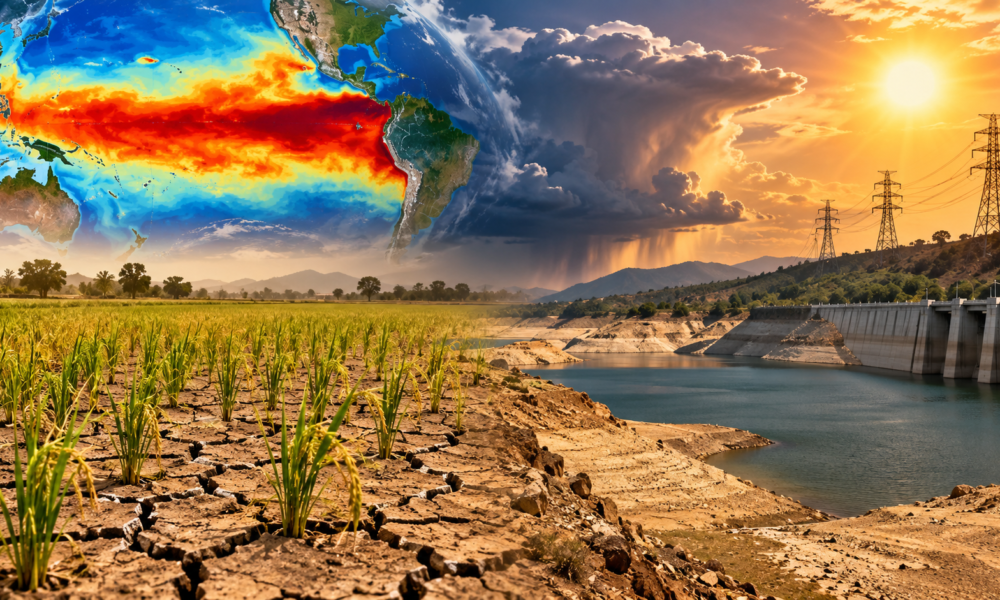
The threat from a powerful El Niño is growing, with climate forecasts pointing to a potentially very strong event during the second half of 2026. The US National Oceanic and Atmospheric Administration (NOAA) said in September that there is a greater than 90 per cent chance of a very strong El Niño during the Northern Hemisphere autumn and winter of 2026-27. NOAA also estimates a 75 per cent chance that the October-December period could see an event reaching historic strength.
For India, the development is important because El Niño can influence monsoon behaviour, temperatures, agriculture, water availability and electricity demand.
What is El Niño?
El Niño is a climate pattern in which sea-surface temperatures in the central and eastern tropical Pacific Ocean become warmer than normal. This warming affects atmospheric circulation and can change weather patterns across different parts of the world.
El Niño events do not affect every region in the same way, but stronger events can increase the likelihood of major weather disruptions.
What makes 2026 different?
Current observations show that El Niño is strengthening rapidly. NOAA said sea-surface temperature anomalies in the eastern equatorial Pacific had exceeded 3°C in September, while the Niño 3.4 index had reached 1.8°C. The agency said the event is expected to strengthen through the end of the year.
NOAA’s September strength outlook shows a very high probability of strong or very strong El Niño conditions during late 2026.
Why does India need to watch it?
India’s weather is closely linked to the southwest monsoon. El Niño has historically been associated with weaker monsoon rainfall in several years, although the relationship is not automatic and other climate factors can influence India’s rainfall.
India Meteorological Department data shows that several historical El Niño years recorded below-normal southwest monsoon rainfall. For example, rainfall during the 2015 monsoon was around 86 per cent of the long-period average in IMD’s forecast, while its historical El Niño database shows below-normal seasonal rainfall during several strong El Niño years.
A weaker monsoon could create pressure on agriculture, reservoirs and water resources.
What could happen to agriculture?
Less rainfall and longer dry periods can increase irrigation requirements and raise farming costs. Rain-dependent agriculture would be particularly exposed if rainfall deficits become widespread.
Possible risks include lower production of crops such as rice, pulses, sugarcane and oilseeds, depending on the timing and geographical distribution of rainfall.
Lower agricultural output could also put upward pressure on food prices if supplies become tighter.
What about India’s water and power systems?
A weaker monsoon can affect reservoir levels and water availability. This matters not only for farming but also for drinking water and electricity generation.
At the same time, hotter conditions can increase demand for air conditioning, cooling and electricity. This creates a potential double pressure on the power sector: higher electricity demand alongside possible constraints on water-dependent generation.
Could heatwaves become worse?
A strong El Niño can alter rainfall and atmospheric circulation, increasing the risk of hotter and drier conditions in some regions. However, the exact impact varies by location and season.
For India, stronger heat can increase risks to public health, agriculture, water supplies and energy demand.
What should India prepare for?
The developing El Niño highlights the importance of early preparation. Authorities can strengthen heatwave warning systems, monitor reservoirs, improve water management, support climate-resilient agriculture and prepare power systems for periods of high cooling demand.
The key point is that a strong El Niño does not automatically mean drought across India. Its effects depend on several interacting climate factors. But the latest forecasts make it important for India to prepare for possible stress on its monsoon, agriculture, water resources, infrastructure and power systems.






No Comment! Be the first one.