







NHAI Introduces New Design Framework for High-Speed National Highways
The National Highways Authority of India (NHAI) has introduced a new set of planning and design guidelines for high-speed access-controlled national highways, marking a fresh push towards...

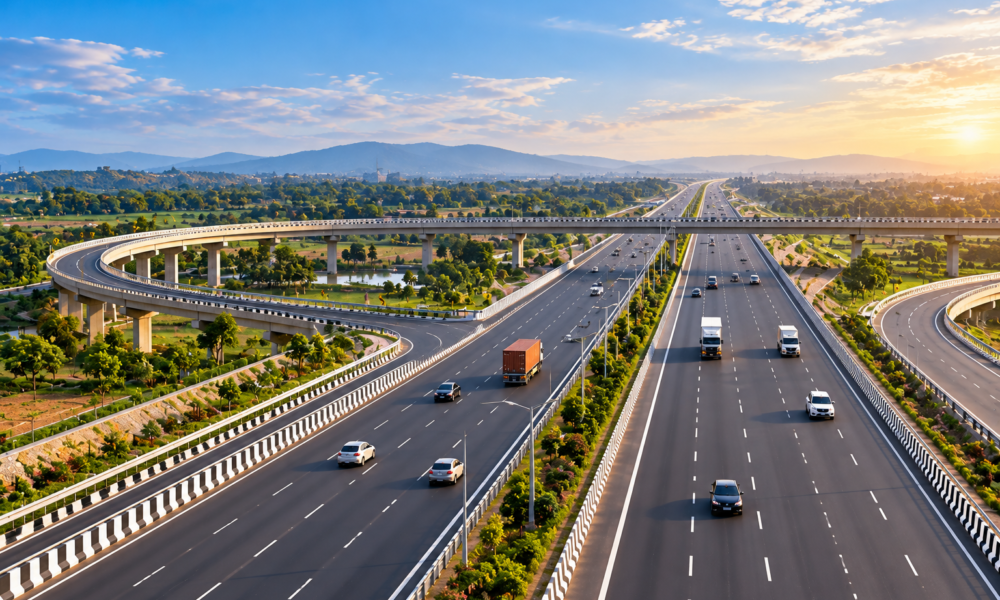
The National Highways Authority of India (NHAI) has introduced a new set of planning and design guidelines for high-speed access-controlled national highways, marking a fresh push towards standardising the development of future road corridors across the country.
The guidelines, released by NHAI on September 24, are intended to improve the planning, safety, technology integration and environmental performance of upcoming high-speed national highways.
The framework will apply to new four-lane and six-lane greenfield as well as brownfield high-speed access-controlled national highways, excluding expressways.
One of the central themes of the new framework is planning roads around future traffic requirements rather than only current demand. This approach is increasingly important as vehicle ownership, freight movement and inter-city travel continue to expand across India.
Better traffic forecasting can influence the number of lanes, interchange locations, service infrastructure and road geometry used in a project. Designing for future demand at the planning stage can also reduce the need for expensive modifications after construction.
Technology integration is another major component of the new guidelines. NHAI has highlighted the need for modern systems that can improve highway operations, safety and traffic management.
The framework also focuses on smoother tolling systems. As electronic toll collection becomes increasingly integrated into India’s highway network, road design and toll infrastructure need to work together to reduce congestion and improve travel efficiency.
Drainage has received specific attention as well. Effective drainage is a critical component of highway engineering, particularly in regions exposed to intense monsoon rainfall. Poor drainage can damage pavement, weaken embankments and increase maintenance requirements.
The guidelines also place greater emphasis on greener highway corridors. This indicates a broader shift in highway planning, where environmental considerations are incorporated into project design alongside conventional engineering and traffic requirements.
The move comes as India continues to expand its national highway network and develop higher-speed road connections between major economic centres.
High-speed access-controlled highways can play an important role in reducing travel times, improving freight movement and connecting industrial and logistics clusters. Their impact also extends beyond transportation because improved road access can influence land values, warehousing, manufacturing locations and new urban development.
For the construction sector, standardised guidelines could create greater consistency in how future highway projects are planned and executed. Contractors, consultants and technology providers may also have to adapt to increasingly detailed requirements around safety systems, drainage, traffic management and sustainability.
The distinction between expressways and high-speed national highways also remains important. While expressways have traditionally followed specific access-controlled design principles, the new guidelines extend a structured planning approach to another category of high-speed road infrastructure.
For India’s infrastructure pipeline, the development represents a move towards treating highways as long-term mobility systems rather than simply stretches of pavement connecting two locations.
As more corridors are planned around future traffic, digital technology, safety and environmental performance, the next generation of Indian highways could increasingly combine transport infrastructure with integrated systems for tolling, monitoring, drainage and corridor management.







No Comment! Be the first one.