







Delhi Approves ₹300.61 Crore E-Bus Charging Network Across Seven Depots
Delhi is expanding the infrastructure required for electric public transport, with the government approving ₹300.61 crore to develop e-bus charging facilities across seven depots in South West Delhi....

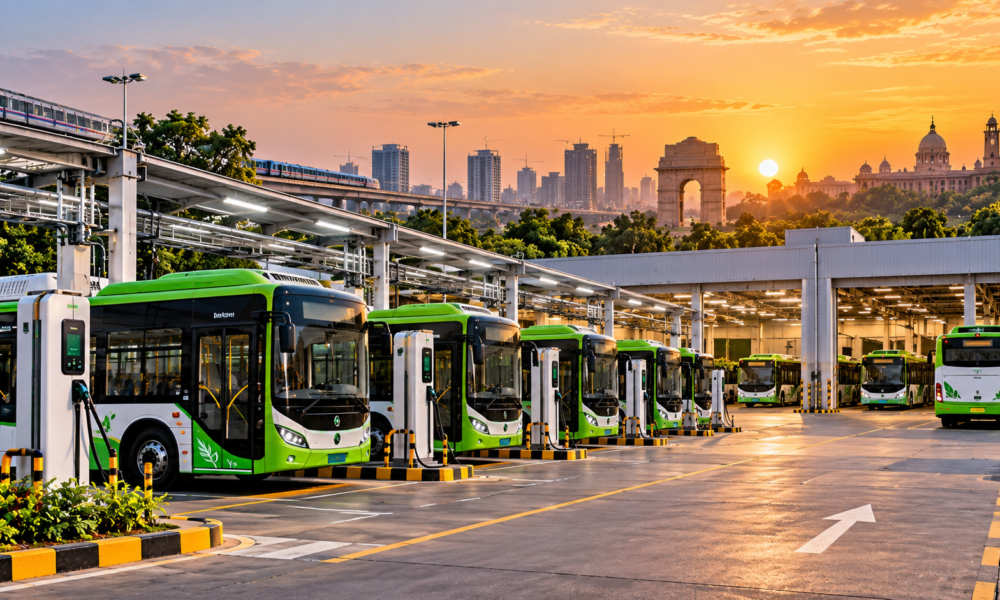
Delhi is expanding the infrastructure required for electric public transport, with the government approving ₹300.61 crore to develop e-bus charging facilities across seven depots in South West Delhi.
The project is designed to support the city’s planned expansion of its electric bus fleet. The Delhi Transport Corporation currently operates more than 5,000 electric buses, while the government has set a target of reaching 14,000 e-buses by 2029.
The charging infrastructure will be developed at DTC and cluster bus depots in areas including Dichaon Kalan, Kair, Kharkhari Nahar and Ghumanhera.
According to the project details reported by officials, the infrastructure will include 66-kilovolt power in-feeds, three 66/11 kV grids and seven 11 kV switching stations. The power distribution requirements vary between depots depending on their expected operational demand.
The project is expected to take around 18 months to complete after the necessary approvals are obtained. Of the ₹300.61 crore project cost, ₹120.25 crore is scheduled to be released initially during the current financial year. Another ₹120.07 crore has already been allocated under the Special Assistance to States for Capital Investment scheme, according to the reported project documents.
The remaining expenditure of ₹180.36 crore is planned for the following year’s budget.
The infrastructure is being developed as Delhi seeks to increase the number of electric buses operating across its public transport system. Expanding the fleet requires more than simply procuring vehicles. Depots also need sufficient electrical capacity, charging equipment, switching infrastructure and reliable grid connections.
This makes charging infrastructure an important part of Delhi’s broader electric-mobility transition.
The seven identified depots have been assigned different power-load requirements. Cluster Kair, for example, is planned for 14.2 MVA, while Ghumanhera-2 is planned for 11.4 MVA. Other locations have lower allocations based on their anticipated charging requirements.
The project is expected to be executed by BSES Rajdhani Power Limited in accordance with regulations laid down by the Delhi Electricity Regulatory Commission.
For urban infrastructure, the development illustrates a shift in the way cities must plan public transport. Traditional bus infrastructure was primarily centred on depots, roads and maintenance facilities. Electric fleets add another major requirement: large-scale electricity infrastructure capable of supporting repeated vehicle charging.
Delhi’s 14,000-e-bus target therefore creates a parallel infrastructure challenge. As more buses move from internal-combustion engines to electric power, the city’s transport system will require corresponding investments in charging capacity and electricity distribution.
The project also highlights the importance of planning charging facilities before fleet expansion reaches full scale. Without adequate charging capacity, additional electric buses could face operational constraints even when vehicles themselves are available.
Delhi’s latest approval is consequently not simply a charging-station project. It forms part of the physical infrastructure required to scale up electric public transport across a major metropolitan region.
As Indian cities expand electric bus fleets, similar investments in depot electrification, grid upgrades and charging networks are likely to become increasingly important to urban mobility planning.






No Comment! Be the first one.