







Bengaluru Metro Phase 3: Fresh Tenders Expected as Pink Line Moves Closer to Launch
Bengaluru’s metro expansion is moving through two important developments: fresh civil-work tenders are expected for Phase 3, while the Pink Line’s 7.5-km elevated section has received...

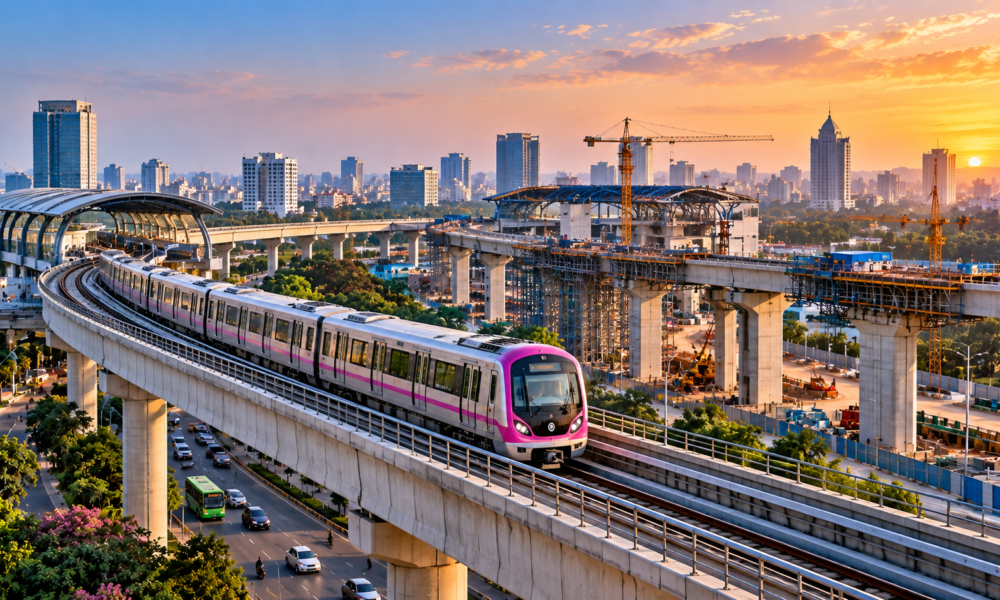
Bengaluru’s metro expansion is moving through two important developments: fresh civil-work tenders are expected for Phase 3, while the Pink Line’s 7.5-km elevated section has received Railway Board sanction for its BEML trainsets.
BMRCL is preparing to float fresh civil-work tenders for Phase 3 after revisions to the project’s double-decker design. The revised plan reduces the length of double-decker stretches to around 11 km, according to reports. Fresh tenders were expected to be floated within 45 days of the September 16 announcement.
The changes are linked to a decision to move away from the earlier proposal for an end-to-end double-decker arrangement. Under the revised approach, the road flyover-and-metro combination would cover a smaller portion of the corridor.
The revised project requires further consideration of design, safety, operational and economic factors. Reports have also indicated that the revised proposal requires approval from the Centre.
Phase 3 is an important part of Bengaluru’s longer-term effort to expand its metro network. The project has faced delays in moving from approval to construction, making the fresh tender process a key milestone for the next stage of implementation.
At the same time, the Pink Line is approaching another operational milestone.
The Railway Board has sanctioned the BEML trainsets proposed for the 7.5-km elevated Pink Line stretch between Kalena Agrahara and Tavarekere. The sanction is an important prerequisite, but it does not itself authorise passenger operations. The section must still undergo inspection and authorisation by the Commissioner of Metro Railway Safety.
The elevated section forms part of the wider Pink Line, which will eventually connect Kalena Agrahara with Nagawara. The full corridor includes a substantial underground section.
The latest trainset approval is significant because rolling stock approval is one of the requirements before a new metro corridor can enter commercial service. The Railway Board sanction allows BMRCL to submit the necessary documentation for the next stage of safety examination.
The 7.5-km elevated section includes stations serving areas such as Kalena Agrahara, Hulimavu, IIM-Bangalore, JP Nagar 4th Phase, Jayadeva Hospital and Tavarekere.
BEML has been supplying the trainsets for the Pink Line. Earlier reports indicated that eight trainsets had been delivered for the elevated section, with the fleet designed to support the corridor’s operations.
For Bengaluru’s infrastructure network, the Pink Line is expected to improve connectivity in the southern part of the city, while Phase 3 represents a much larger expansion of the metro system.
The two developments also highlight different stages of infrastructure delivery. The Pink Line is at the commissioning and safety-certification stage for its first operational section, whereas Phase 3 is still progressing through design revisions and tendering.
The immediate focus for the Pink Line is therefore regulatory clearance and passenger-service authorisation. For Phase 3, the next major milestones will be finalising the revised design, securing approvals and awarding fresh construction contracts.
Together, these developments show Bengaluru’s metro expansion moving on multiple fronts, from rolling stock and safety certification to large-scale civil works and future network planning.




No Comment! Be the first one.