







Western Disturbance and Rainfall: How Changing Weather Patterns Affect Roads, Housing and Urban Planning
Weather patterns across northern India in late September have highlighted how rainfall outside the traditional monsoon peak can create infrastructure challenges. Delhi experienced an unusually cool...

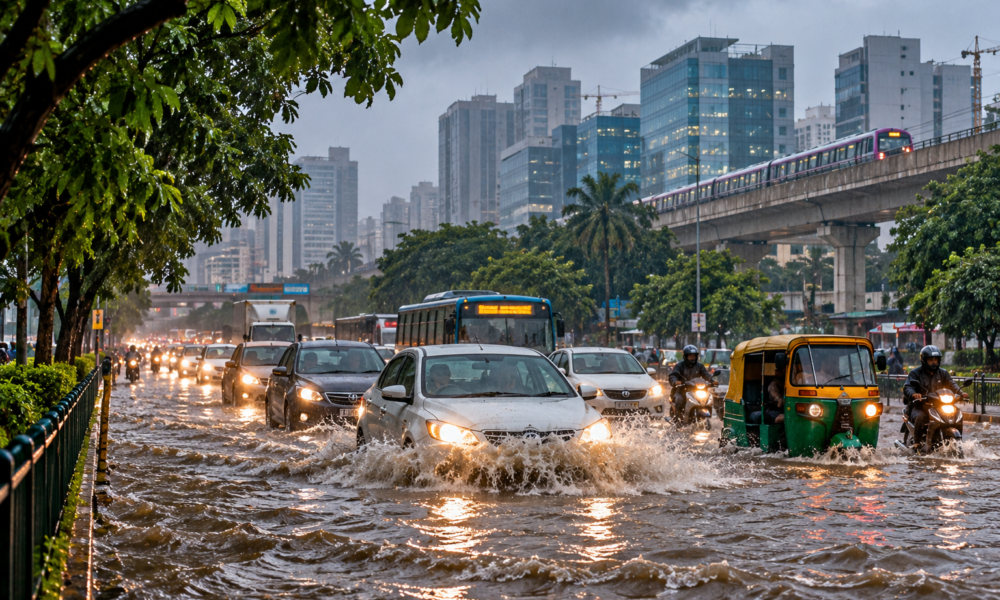
Weather patterns across northern India in late September have highlighted how rainfall outside the traditional monsoon peak can create infrastructure challenges.
Delhi experienced an unusually cool September spell, with the Safdarjung Observatory recording a minimum temperature of 21°C on September 27, three degrees below the seasonal normal. The India Meteorological Department attributed the conditions to a combination of an active Western Disturbance, a low-pressure area, cloud cover, rainfall and north-northeasterly winds.
The infrastructure significance lies in timing. Indian cities and transport systems are designed around seasonal weather patterns, but late-season rainfall can still affect roads, construction schedules and drainage systems.
Roads are particularly exposed. Heavy rain can weaken road surfaces, increase pothole formation and reduce visibility for motorists. Water accumulation can also damage road shoulders and create additional pressure on bridges and culverts.
Construction projects face a separate challenge. Rain can delay excavation, concrete work, road laying and foundation activities. For large infrastructure projects, even relatively short weather disruptions can affect scheduling because different construction activities depend on specific site conditions.
Housing and urban development are also affected. Buildings require effective roof drainage, waterproofing and stormwater connections, particularly when rainfall arrives outside expected seasonal windows.
The broader issue is climate-resilient urban planning.
Historically, infrastructure planning often relied on past rainfall patterns. But urban authorities increasingly need to consider the possibility of more variable rainfall intensity and changing weather windows.
The IMD’s late-September weather reports show why forecasting has become an important infrastructure tool. On September 27, the weather agency warned of heavy to very heavy rainfall over Uttarakhand and West Uttar Pradesh in association with a weather system over northeast Madhya Pradesh and adjoining north Chhattisgarh.
For infrastructure agencies, forecasts can support decisions ranging from road maintenance to construction scheduling and disaster preparedness.
The issue is not simply whether India receives more or less rainfall in a particular year. Variability matters. A city may experience a long dry spell followed by intense rainfall, putting greater pressure on drainage and road systems.
This makes weather-sensitive infrastructure planning increasingly important.
Road agencies need better drainage and maintenance protocols. Developers need to account for water management in building design. Urban planners need to protect natural drainage channels and water bodies. Construction companies need weather-sensitive project schedules.
The Western Disturbance itself is a natural atmospheric system. The infrastructure challenge comes from how cities and transport networks respond when weather patterns become difficult to predict or occur outside conventional planning assumptions.







No Comment! Be the first one.