




LPG Prices and Rural Infrastructure: India’s Gas Network Faces a New Cost Challenge
India’s LPG infrastructure is entering a new phase of pressure as global crude prices rise while domestic LPG prices remain politically and economically sensitive. In September 2026, Indian oil...

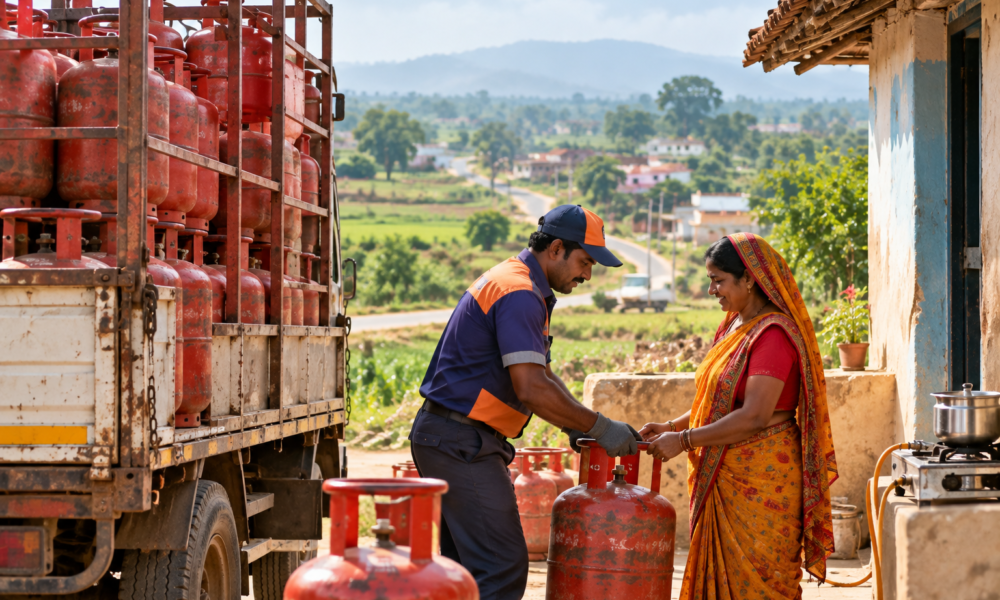
India’s LPG infrastructure is entering a new phase of pressure as global crude prices rise while domestic LPG prices remain politically and economically sensitive.
In September 2026, Indian oil marketing companies were facing LPG under-recoveries of around ₹300 per domestic cylinder, according to ICRA data reported this month. The same analysis estimated that Indian Oil Corporation, Bharat Petroleum Corporation and Hindustan Petroleum Corporation were collectively facing significant daily losses across fuel products.
The issue matters beyond the price of a cylinder. India’s LPG system is a vast physical distribution network involving refineries, import terminals, bottling plants, transport infrastructure, distributors and last-mile delivery.
Rural households are particularly dependent on the reliability of that network.
The Pradhan Mantri Ujjwala Yojana has substantially expanded access to LPG among poorer households. The official PMUY website reported more than 105.68 million connections as of September 23, 2026, including more than 2.44 million connections under the latest 25-lakh extension.
The infrastructure challenge now shifts from connection access to sustained usage.
Giving a household an LPG connection requires a supply ecosystem capable of delivering cylinders repeatedly. That means adequate bottling capacity, road connectivity, storage, distribution networks and reliable last-mile delivery.
PMUY’s design specifically targets adult women from eligible poor households without another LPG connection. The government also provides financial assistance associated with eligible new connections.
However, LPG affordability remains important because a connection has limited impact if households cannot regularly afford refills.
This is where global energy prices intersect with domestic infrastructure policy.
When international crude and energy costs increase, the financial pressure on oil marketing companies can increase even if domestic retail prices do not immediately move by the same amount.
The result is an infrastructure-policy balancing act. The country needs to maintain a reliable LPG distribution network while keeping clean cooking fuel accessible to households that have shifted away from traditional fuels.
The network is also becoming increasingly digital. Consumers can book refills electronically, track deliveries and use online services for connections and distributor portability.
For rural India, therefore, LPG infrastructure is no longer simply about pipelines or cylinders. It is a combination of physical logistics, household affordability, digital services and energy policy.
India’s next challenge is not merely extending the LPG network to more households. It is ensuring that the network remains financially sustainable and capable of delivering regular, affordable refills across geographically dispersed communities.




No Comment! Be the first one.