








₹1.86 Lakh Crore Green Energy Corridor: India’s Next Big Power Infrastructure Push
New Delhi: India has approved a ₹1.86 lakh crore Green Energy Corridor Phase III programme to strengthen the country’s electricity transmission infrastructure and support the rapid growth of...

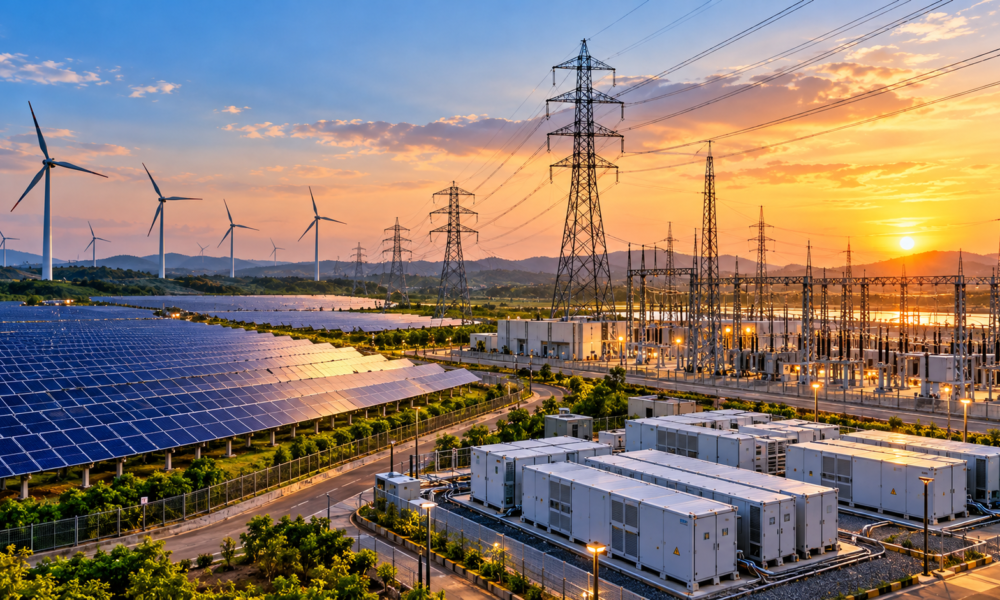
New Delhi: India has approved a ₹1.86 lakh crore Green Energy Corridor Phase III programme to strengthen the country’s electricity transmission infrastructure and support the rapid growth of renewable energy.
The programme is designed to help evacuate up to 135 GW of renewable power and includes a major battery storage component.
Of the total amount, around ₹1.36 lakh crore will be used to strengthen intra-state transmission networks. Another ₹50,000 crore will support the installation of 50 GWh of battery energy storage systems.
The programme addresses a major problem facing India’s clean-energy expansion.
Building solar and wind power plants is only one part of the renewable energy process. The electricity also needs to reach cities, factories and other areas where demand is high.
Many renewable energy projects are located far from major consumption centres.
Solar projects are often built in areas with strong sunlight, while wind farms are located in areas with good wind resources.
This creates a requirement for long-distance transmission networks.
Without sufficient transmission capacity, electricity generation can grow faster than the grid’s ability to carry that power.
The new Green Energy Corridor is designed to address this gap.
Battery storage is another major part of the programme.
Solar power generation is strongest during the daytime, while electricity demand can remain high in the evening. Batteries can store electricity when supply is high and release it when the grid needs additional power.
India currently has more than 300 GW of non-fossil fuel power capacity and has set a target of reaching 500 GW by 2030.
Meeting that target will require significant investment not only in renewable generation but also in transmission, substations and storage.
The infrastructure opportunity is therefore much larger than the construction of solar panels and wind turbines.
Transmission towers, high-voltage equipment, substations, cables, transformers and battery systems will all become increasingly important.
The programme could also create work for engineering, procurement and construction companies.
However, implementing transmission projects can involve challenges such as land acquisition, right-of-way issues and environmental clearances.
Experts have also pointed to the need for coordination between the Centre and state governments because electricity generation and consumption do not follow state boundaries.
The timing is important because India’s electricity demand is also rising.
Government data reported by Reuters showed that India experienced its highest power shortage in more than three years in September 2026, despite high coal-fired generation.
This highlights the need for a power system that can expand generation while also improving transmission and storage.
India’s renewable-energy transition is entering a stage where the hidden infrastructure behind clean power could become just as important as the power plants themselves.








No Comment! Be the first one.