




2027 Infrastructure Outlook: Railways, Airports, Roads and Digital Networks to Shape India’s Next Phase
New Delhi: The year 2027 is emerging as an important milestone for several infrastructure projects across India. Railways, airports, highways, digital networks and renewable energy systems are all...

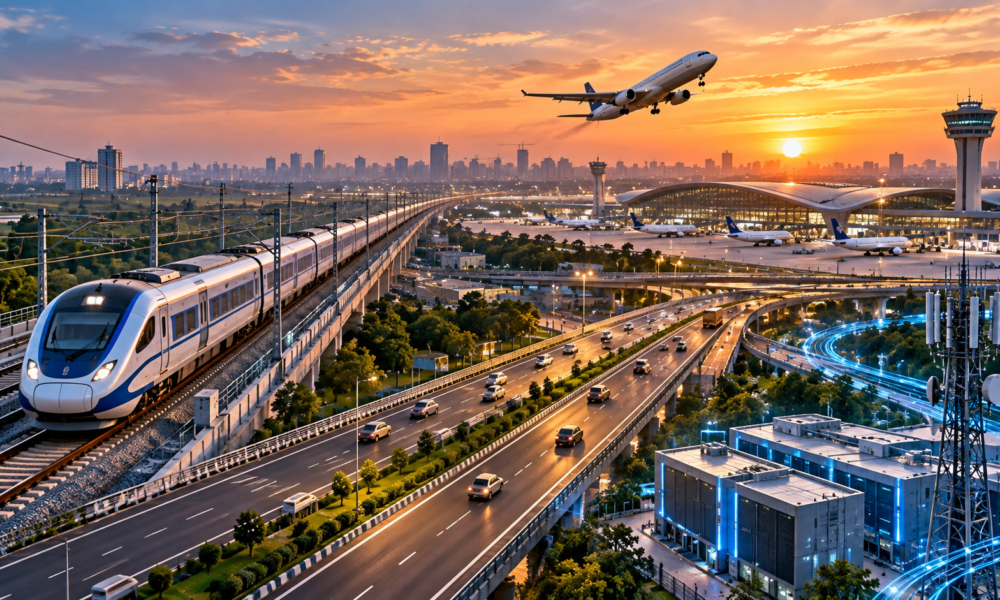
New Delhi: The year 2027 is emerging as an important milestone for several infrastructure projects across India.
Railways, airports, highways, digital networks and renewable energy systems are all moving through different stages of construction and expansion, creating a large infrastructure pipeline for the coming years.
One example is the Mumbai-Ahmedabad High-Speed Rail project. The 508-km project is currently under construction, with the government project monitoring system showing physical progress at around 60% and a revised completion date of December 2029.
Railway infrastructure is also expanding through track additions, station redevelopment and new safety systems.
The government has reported that railway electrification has reached 99.6% of the network as of July 2026, while hundreds of stations are being redeveloped under the Amrit Bharat Station Scheme.
Digital infrastructure will be another major area to watch.
India’s data centre sector is expanding rapidly because of cloud computing, artificial intelligence and online services. Mumbai has emerged as one of India’s major data centre markets, while financing for new facilities is also increasing.
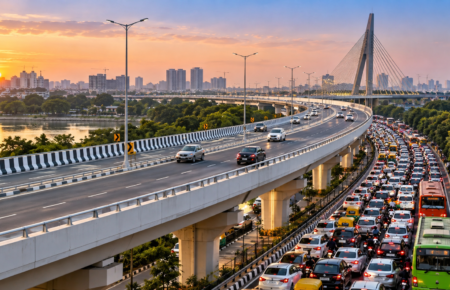
Road infrastructure will continue to remain central to the country’s logistics system.
Government data shows that India’s national highway network reached about 1.47 million kilometres by March 2026, while the length of four-lane and wider national highways has also increased significantly over the past decade.
Airports are another major infrastructure segment.
The redevelopment of airports and construction of new terminals are being carried out to meet rising passenger demand. The Varanasi airport development project, for example, is being monitored as a high-value infrastructure project with a revised completion date in July 2027.
Digital connectivity will also remain important. BharatNet is being expanded to improve broadband connectivity in rural areas, while India’s AI ambitions are increasing demand for data centres, power and high-speed networks.
Energy infrastructure could become one of the biggest areas of investment.
The Centre has approved the ₹1.86 lakh crore Green Energy Corridor Phase III programme to improve transmission infrastructure and support 135 GW of renewable power evacuation. The plan also includes 50 GWh of battery storage.
This means India’s infrastructure story is becoming increasingly interconnected.
A new airport needs highways and public transport. Data centres need power and fibre networks. Renewable energy projects need transmission lines. Industrial corridors need railways and logistics hubs.
The result is a shift from individual projects towards larger infrastructure ecosystems.
The year 2027 will therefore be less about one single mega-project and more about several large infrastructure programmes moving through construction, commissioning and expansion.
For businesses, investors and cities, the key issues will be project execution, financing, land, environmental clearances and the ability to connect new infrastructure with existing networks.
India’s next infrastructure phase is already being built.
The important question is how efficiently these projects can be completed and connected to create a larger, more integrated network.





No Comment! Be the first one.