








Bay of Bengal: How Rising Economic Activity Is Driving Demand for Coastal Infrastructure in India
India’s Bay of Bengal coastline is becoming increasingly important to the country’s infrastructure and economic growth story. The region connects major ports, industrial centres, shipping...

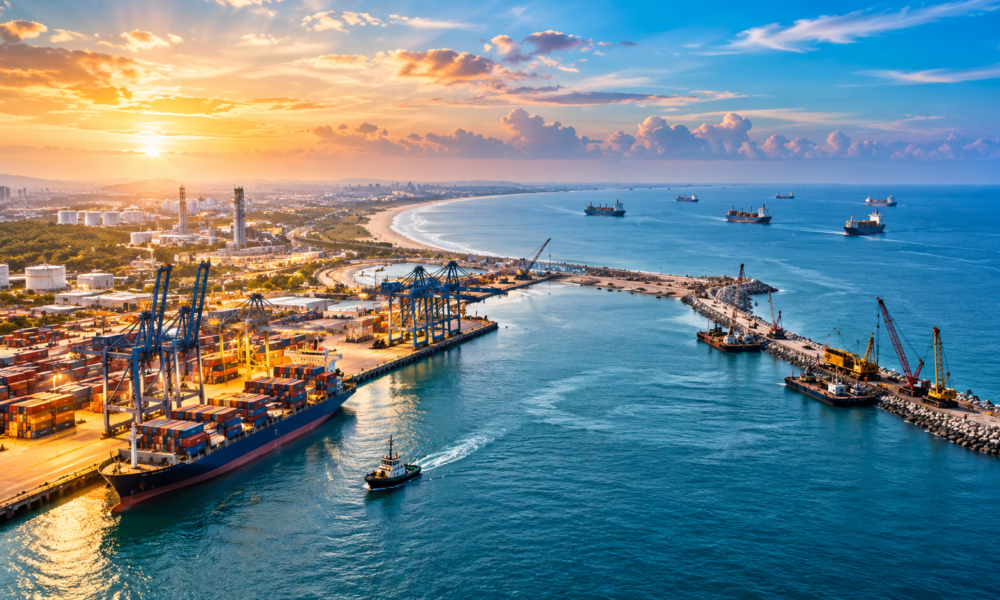
India’s Bay of Bengal coastline is becoming increasingly important to the country’s infrastructure and economic growth story. The region connects major ports, industrial centres, shipping routes, fishing communities and some of India’s fastest-growing coastal cities. As trade, manufacturing and energy activity increase, the need for stronger coastal infrastructure is also becoming more urgent.
India’s maritime economy already handles the overwhelming majority of the country’s international trade by volume. The government’s Sagarmala programme has therefore placed port-led development, port connectivity, coastal shipping and coastal economic zones at the centre of its infrastructure strategy.
The opportunity extends well beyond ports. A modern coastal economy requires roads connecting ports with industrial clusters, railway links for freight movement, warehouses, logistics parks, power infrastructure, shipbuilding facilities, container terminals and digital systems for managing cargo.
The Bay of Bengal has several strategic locations that can benefit from this infrastructure expansion. Chennai, Visakhapatnam, Paradip and Kolkata are important nodes, while emerging industrial and logistics corridors could strengthen connectivity between coastal ports and inland production centres.
One major advantage of coastal infrastructure is the potential to reduce logistics costs. Moving suitable bulk cargo by sea can be more efficient than relying entirely on road transport. Better port connectivity can also reduce the time trucks and trains spend waiting to enter or leave terminals.
However, coastal development comes with another challenge: climate risk. Ports, roads, power installations and industrial facilities located close to the shoreline are exposed to cyclones, flooding, erosion and rising sea levels. Infrastructure planning therefore needs to consider not only economic returns but also long-term resilience.
The future of the Bay of Bengal infrastructure story will depend on integration. A port by itself cannot transform a region. It needs reliable highways, railways, electricity, water, warehousing, industrial land and digital connectivity around it.
For India, the Bay of Bengal could increasingly function as an economic gateway linking domestic manufacturing with global markets. The next phase of coastal development will therefore be less about building isolated projects and more about creating connected economic ecosystems.








[…] Also Read: https://xinfra.onextelcommunication.com/bay-of-bengal-coastal-infrastructure-india/ […]
[…] ALSO READ: https://xinfra.onextelcommunication.com/bay-of-bengal-coastal-infrastructure-india/ […]