








Jio Platforms’ Expansion: What It Means for India’s Digital Infrastructure and Data Centre Industry
India’s digital economy is becoming increasingly dependent on physical infrastructure. Behind every video call, online payment, cloud application, AI service and digital transaction is a...

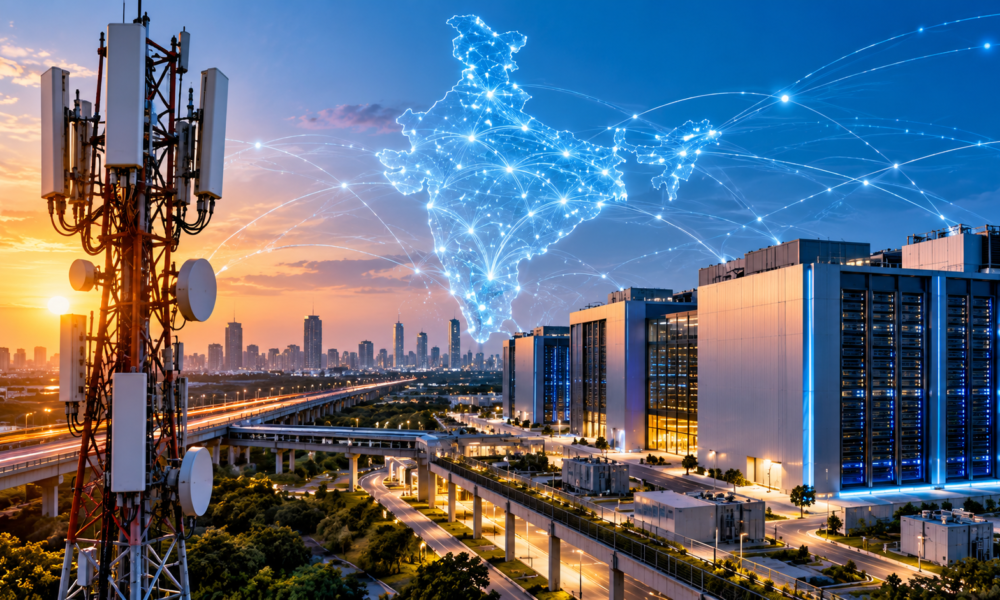
India’s digital economy is becoming increasingly dependent on physical infrastructure. Behind every video call, online payment, cloud application, AI service and digital transaction is a network of fibre, towers, data centres, power systems and computing equipment.
This makes the expansion of Jio Platforms significant for India’s broader infrastructure ecosystem.
Jio Platforms has evolved from being primarily associated with mobile connectivity into a wider digital technology platform. As of March 2026, its telecom subsidiary Reliance Jio Infocomm served 524.4 million customers, while Jio reported more than one million route-kilometres of fibre and more than 360,000 network towers.
The scale of this network illustrates a broader reality: India’s digital infrastructure requirements are becoming enormous.
The growth of 5G, cloud computing, artificial intelligence and digital services requires computing resources to be located closer to users. This is where data centres and edge computing become important.
Jio’s technology portfolio includes cloud platforms, 5G infrastructure and multi-access edge computing. Edge computing can reduce latency by moving computing resources closer to the user instead of sending every request to a distant central data centre.
This creates opportunities for a wider infrastructure ecosystem. Data centres require land, high-capacity electricity connections, cooling systems, water management, fibre connectivity, backup power and sophisticated security infrastructure.
The relationship between telecom networks and data centres is particularly important. A powerful data centre without adequate connectivity cannot efficiently serve users. Similarly, a large telecom network requires distributed computing infrastructure to manage increasing traffic and advanced applications.
Jio’s partnership ecosystem also demonstrates how digital infrastructure is becoming increasingly interconnected. Reliance has partnered with global data-centre and technology companies, while its Jamnagar development with Meta represents a major new AI infrastructure project.
The implications extend into real estate and urban planning. Locations with reliable electricity, fibre networks and access to large amounts of land are likely to attract more digital infrastructure investment.
India’s digital infrastructure boom therefore should not be viewed purely as a technology story. It is increasingly a construction, energy, telecommunications, real estate and logistics story.
As AI adoption accelerates, the demand for computing infrastructure could become one of the country’s most important infrastructure investment themes.









No Comment! Be the first one.