




South Korea vs Uruguay: How Sports Infrastructure Can Drive Urban Development and Tourism
Sports infrastructure is increasingly being planned as part of wider urban and tourism strategies rather than as standalone stadium projects. South Korea provides a major example through...

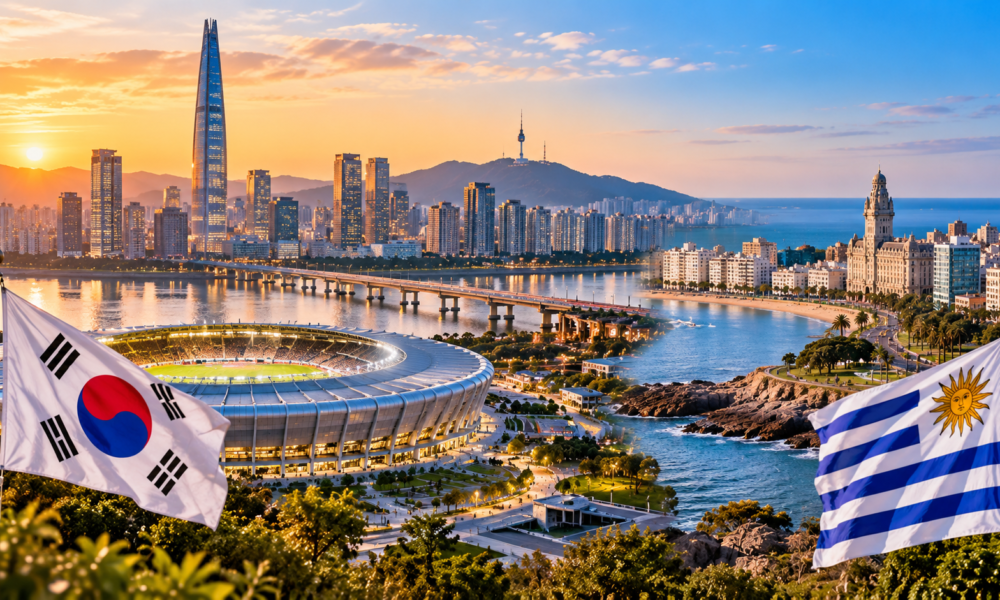
Sports infrastructure is increasingly being planned as part of wider urban and tourism strategies rather than as standalone stadium projects.
South Korea provides a major example through Seoul’s Jamsil Sports and MICE development. The Seoul Metropolitan Government has signed a private-investment agreement for a project targeted for completion in 2032. The planned complex includes exhibition and convention facilities, a 30,000-seat dome baseball stadium, hotels and commercial and office facilities.
The project is designed around more than sporting events. Seoul’s broader International District plan links sports facilities with MICE infrastructure, business activity, waterfront spaces and public transport. The city describes the district as an international business and tourism hub.
Another Seoul project illustrates the cultural side of the same strategy. The city plans to develop Chang-dong around the 28,000-seat Seoul Arena, integrating entertainment, commercial facilities, tourism routes and additional hotel capacity.
Uruguay offers a smaller-scale but different example.
In August 2026, President Yamandú Orsi attended the foundation-stone ceremony for the new Belvedere Stadium in Montevideo. The project is being presented by the government as a neighbourhood-level development, with the president highlighting its potential to change the area and strengthen attention toward western Montevideo.
Earlier in June, Uruguay also inaugurated upgrades at Complejo Celeste, its national football training centre in Canelones. The project included renovated artificial playing surfaces, a hybrid grass pitch, irrigation infrastructure and more than 15,400 square metres of green space for sporting use.
The two countries therefore illustrate different scales of sports infrastructure.
Seoul’s projects combine sports with convention centres, hotels, offices, retail and transport. Uruguay’s recent projects place greater emphasis on sporting performance, community facilities and neighbourhood development.
The economic connection is straightforward. Large sporting facilities can generate demand for hotels, restaurants, transport, retail and entertainment when they host major events.
But infrastructure alone does not guarantee tourism or economic benefits. Successful projects depend on accessibility, event calendars, surrounding development and long-term maintenance.
For cities, the emerging lesson is that stadium planning can become part of broader land-use strategy.
A sports venue can anchor a district, but the surrounding transport, hospitality, retail, public spaces and cultural infrastructure determine whether the area becomes an active urban destination or remains busy only on match days.
South Korea and Uruguay demonstrate two distinct approaches to this idea, from Seoul’s large integrated sports-MICE districts to Uruguay’s combination of football development and neighbourhood-scale projects.





No Comment! Be the first one.