







Monsoon Damage to Roads: Why Drainage and Road Engineering Are Becoming Critical Infrastructure Priorities
Every monsoon, road infrastructure becomes a frontline test for India’s construction and engineering systems. Flooding, erosion and prolonged waterlogging can damage pavement, road shoulders, bridges...

Every monsoon, road infrastructure becomes a frontline test for India’s construction and engineering systems.
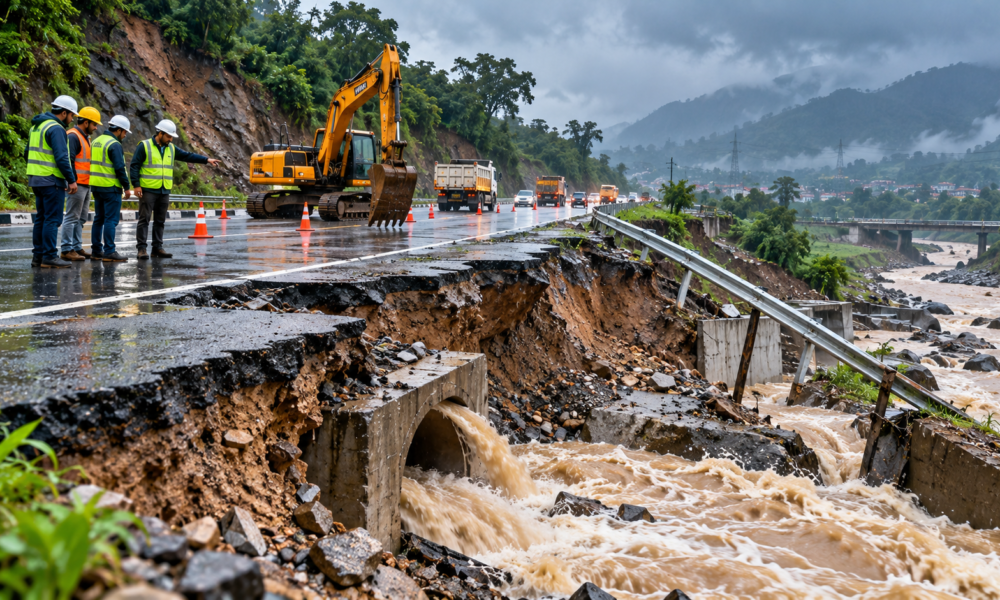
Flooding, erosion and prolonged waterlogging can damage pavement, road shoulders, bridges and culverts. In flood-prone regions, the problem can go beyond potholes, with entire road sections becoming unusable.
Bihar provides a current example. The state’s Road Construction Department recently reported flood-related damage across several districts, including East Champaran, West Champaran, Saran, Muzaffarpur and other areas. Engineers restored damaged roads and repaired small bridges and culverts after flooding and erosion affected connectivity.
In some areas, erosion created deep ditches alongside roads, requiring granular sub-base material and sandbag reinforcement. Elsewhere, permanent repairs were undertaken after floodwaters receded.
The problem highlights why road construction cannot be separated from drainage engineering.
Water is one of the biggest threats to road durability. When drainage is inadequate, water can remain around pavement layers and road shoulders. Erosion can then weaken the structural foundation, while traffic accelerates deterioration.
India is also beginning to adopt more data-driven approaches. Himachal Pradesh introduced a Road Drainage Policy in 2026 that seeks to design drainage structures using rainfall intensity and catchment characteristics rather than relying only on standardised templates. The policy was developed in response to repeated monsoon-related road damage.
Such approaches could become increasingly important as rainfall patterns become more variable.
Road resilience also involves designing culverts and cross-drainage structures to accommodate high flows. If these structures are undersized or blocked, water can accumulate rapidly on roads or erode surrounding land.
Maintenance is equally important. Desilting drains, inspecting culverts, repairing shoulders and monitoring vulnerable stretches before the monsoon can prevent smaller problems from becoming major failures.
For infrastructure developers and contractors, this creates a growing focus on lifecycle costs rather than simply construction costs. A road that is cheaper to build but repeatedly damaged by rainfall can become more expensive over its operational life.
Climate-resilient road construction therefore requires better hydrological assessment, stronger drainage systems, suitable materials and regular maintenance.
India’s expanding road network is connecting more towns, villages and industrial centres. Protecting those connections from extreme rainfall is becoming just as important as building new roads.






No Comment! Be the first one.